
Restaurant and venue discovery
Good reviews may not be enough: keep your restaurant facts current
The practical move this month is not to chase one chatbot. Give customers—and the systems they use—a current, consistent account of what you offer, when you are open, and how to book.
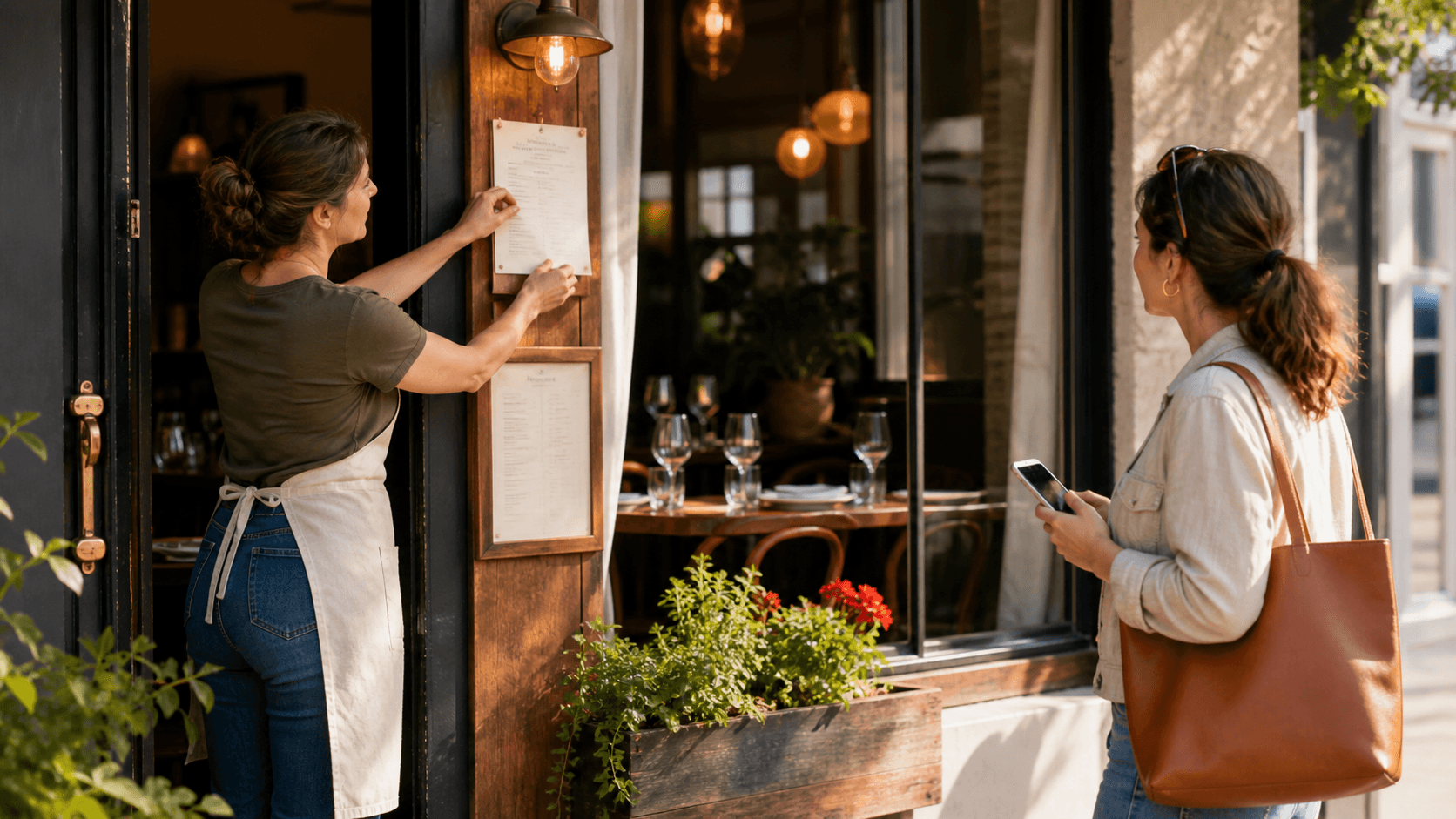
A great rating does not help a customer who is told you are closed, sent to an old menu, or given a dead reservation link. This month, restaurant and venue owners have a clearer reason to treat those basic facts as part of customer acquisition, not clerical cleanup.
A new audit of AI venue recommendations found that many established businesses never entered the answers at all, while the assistants often disagreed about which places to suggest. The owner decision is straightforward: maintain a reliable source of truth, then check for factual dead ends instead of assuming reputation alone will carry the business into every answer.
Being well reviewed and being included are different problems
The August 2026 preprint examined 2,208 search-grounded responses from ChatGPT, Claude, Gemini, and Perplexity against 4,776 food-and-drink venues in Canggu and Ubud, Bali. Within those two tourism-heavy markets, 85.6% of venues were never recommended by any tested system. Even among established venues with at least 50 ratings, 72.6% were never recommended.
The useful distinction is between getting into an answer and placing first once included. Review volume, an owned website, listed prices, and third-party mentions were positively associated with entry. Star rating was not positively associated with entry, although it did help predict first position among venues already recommended. These are associations, not proof that adding a field or earning another mention will cause inclusion. The study is also a preprint from two Bali markets, not a benchmark for your city.
The systems showed little agreement over their top-20 choices. A one-time win in one assistant therefore says little about visibility elsewhere. More importantly, the audit recorded 93 recommendations of permanently closed venues. Outright fabrication was rare; stale information was the more common practical failure observed. For an owner, that shifts attention from trying to please one assistant toward removing contradictions and dead ends at the sources you can control.
A strong rating cannot rescue an old menu, a dead booking link, or the wrong hours at the moment a customer is deciding.
Build one source of truth, then make each surface match
Start with a simple owner-approved facts sheet for every location: real-world name, precise address, primary category, phone, current hours, closure status, menu and prices where relevant, reservation or ordering links, and the date each fact was checked. Compare that sheet with the location page and Google Business Profile whenever an operational change happens. Google currently tells restaurant owners to maintain those core profile details and identifies searches, menu clicks, and completed bookings as measurements they may be able to watch.
Hours need judgment. Google's representation guidelines say restaurants should use dine-in hours as primary hours when available, followed by takeout, drive-through, or delivery hours when dine-in does not apply. Event venues with schedules that vary generally should not publish regular hours. A tidy-looking but misleading schedule is worse than an honest absence.
On the website, appropriate LocalBusiness or Restaurant structured data can state hours, menu URL, cuisine, phone, location, and price range in a machine-readable form. Use the most specific business type, validate the markup, and inspect the rendered page. This helps describe the business; Google does not promise a special search appearance, and the documentation does not establish visibility in AI assistants.
We do not yet have a privacy-safe FlashCrafter benchmark for this category, and this first edition cannot show a month-over-month change. We also do not know how quickly any assistant will absorb an update. What an owner can do is reduce avoidable ambiguity: keep the facts current, remove dead ends, and measure whether more customers reach the menu or finish a booking.