
law firm website examples
20 Real Lawyer Websites From Firms in Google Maps' Top Three (October 2026)
20 real websites of law firms from 20 US cities, captured October 2026: what they put first, how they ask for the call.
- Real websites
- 20
- Cities represented
- 20
- Measured
- Oct 2026
These real law firm website examples show how firms visible in Google Maps’ top three present their services and contact options. On October 12, 2026, FlashCrafter searched for “law firm” at nine points around each city center and selected the eligible firm appearing most often in the top three. This probe measures visibility, not the quality of a firm or its website.
Use the gallery to compare your homepage’s opening message, mobile phone link, practice descriptions and consultation invitation. Look at how clear fee explanations, client feedback, attorney credentials and case results sit alongside contact choices. Captures show firms’ own homepages, with some taken from the page linked on Google Maps. The gallery does not rank, rate or recommend firms.
The gallery
Websites, captured Oct 12, 2026
Ordered by city, not ranked. Inclusion reflects how often Google Maps showed the firm in the top three around the city center; it says nothing about the quality of the firm or its website.
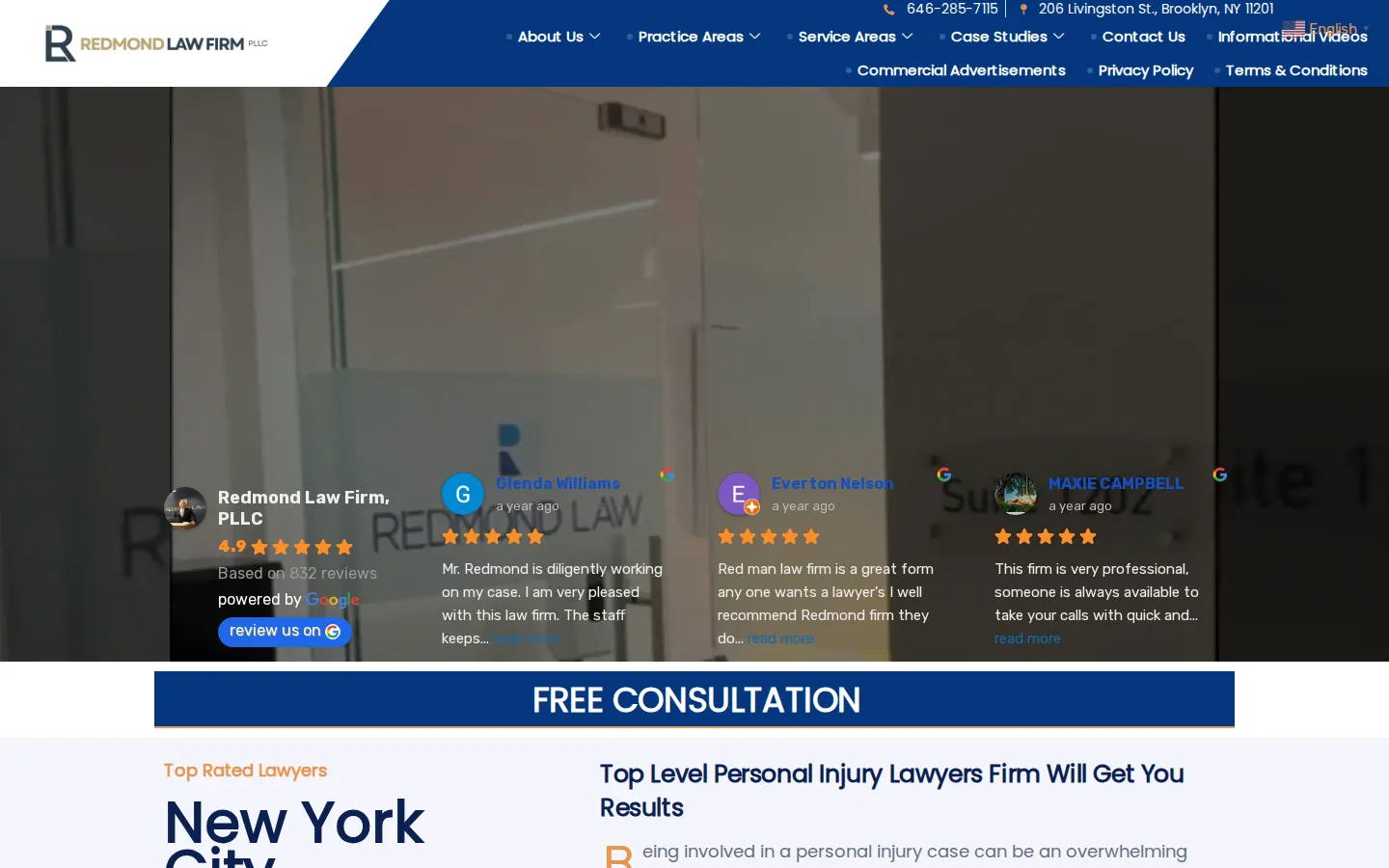
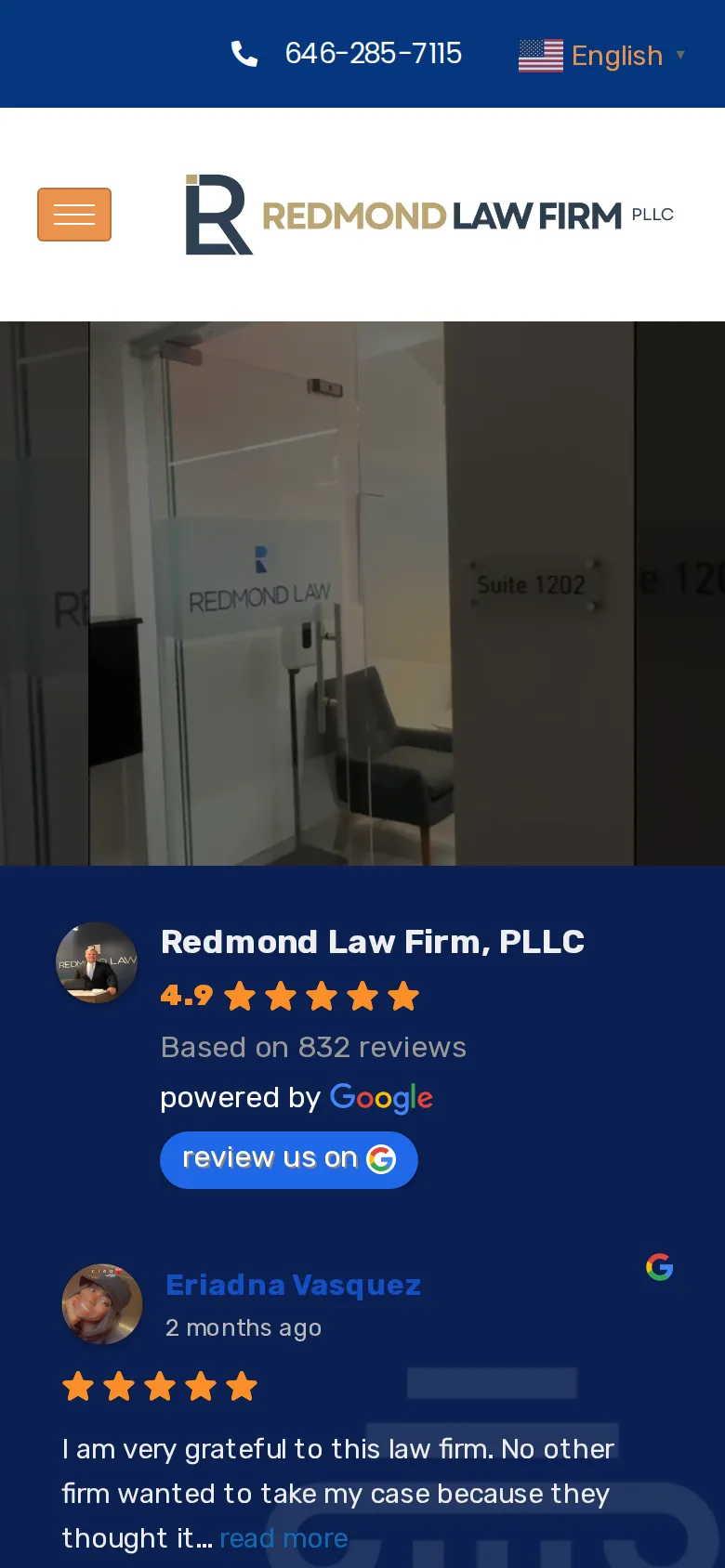
Homepage of redmondfirm.com, captured by FlashCrafter on Oct 12, 2026. New York, NY
Redmond Law Firm, PLLC
In the top three on Google Maps for “law firm” at 4 of 9 sampled points around New York’s center on Oct 12, 2026.
What it does well
- +Call to action. A free consultation offer gives prospective clients a clear reason to make contact.
- +On a phone. The phone number appears immediately on mobile, making contact easy to find.
- +Trust. A prominent rating and substantial review count give visitors an immediate signal of client satisfaction.
- +Services. Specific accident and injury categories help visitors recognize whether their situation fits the practice.
- +Navigation. The menu groups firm information, practice areas, service locations and case studies into clear paths for visitors.
- +Trust. A concise fee statement addresses a practical concern for people considering legal help.
To borrow: Pair a visible phone number and free consultation offer with client reviews and clearly organized practice areas.
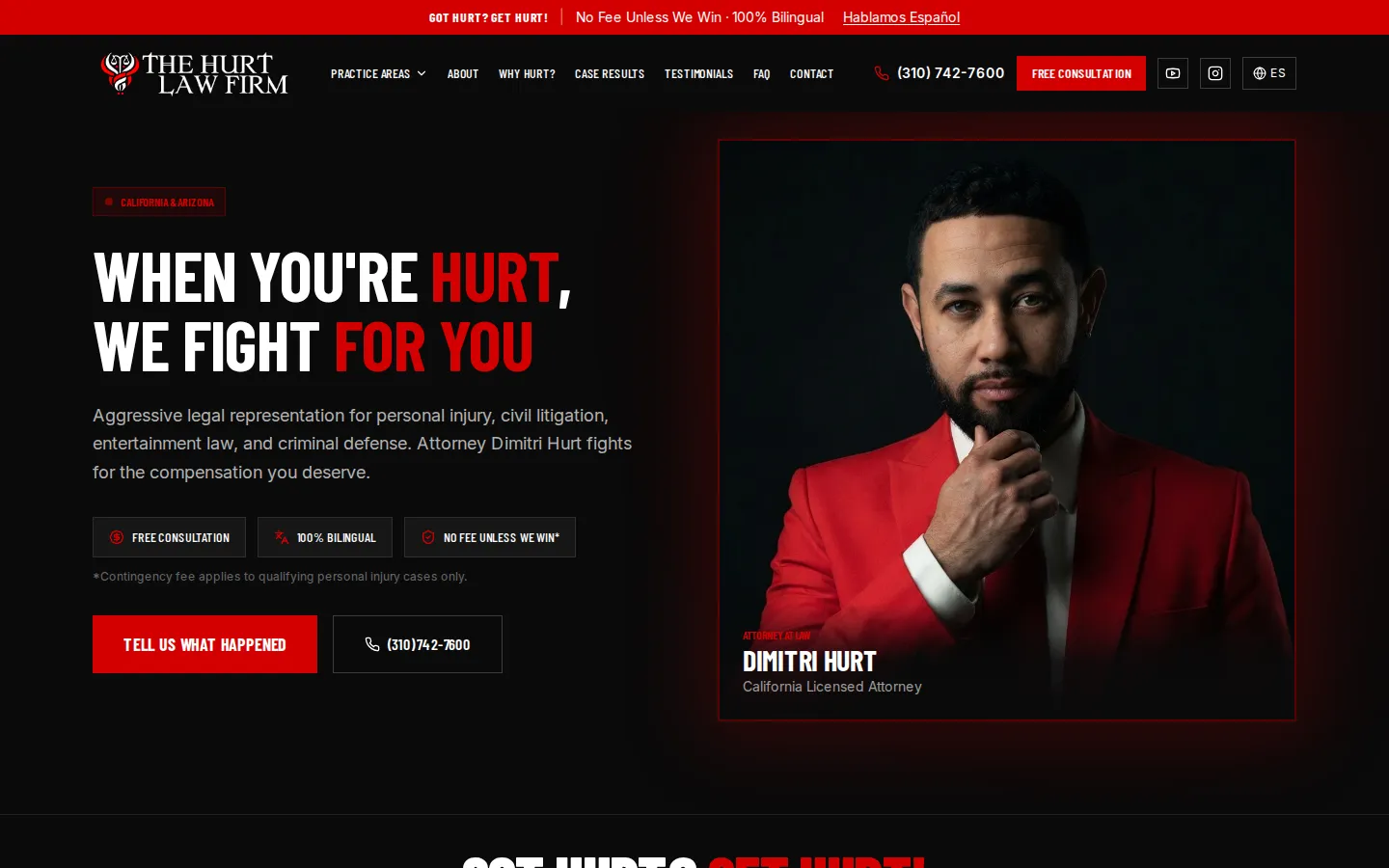
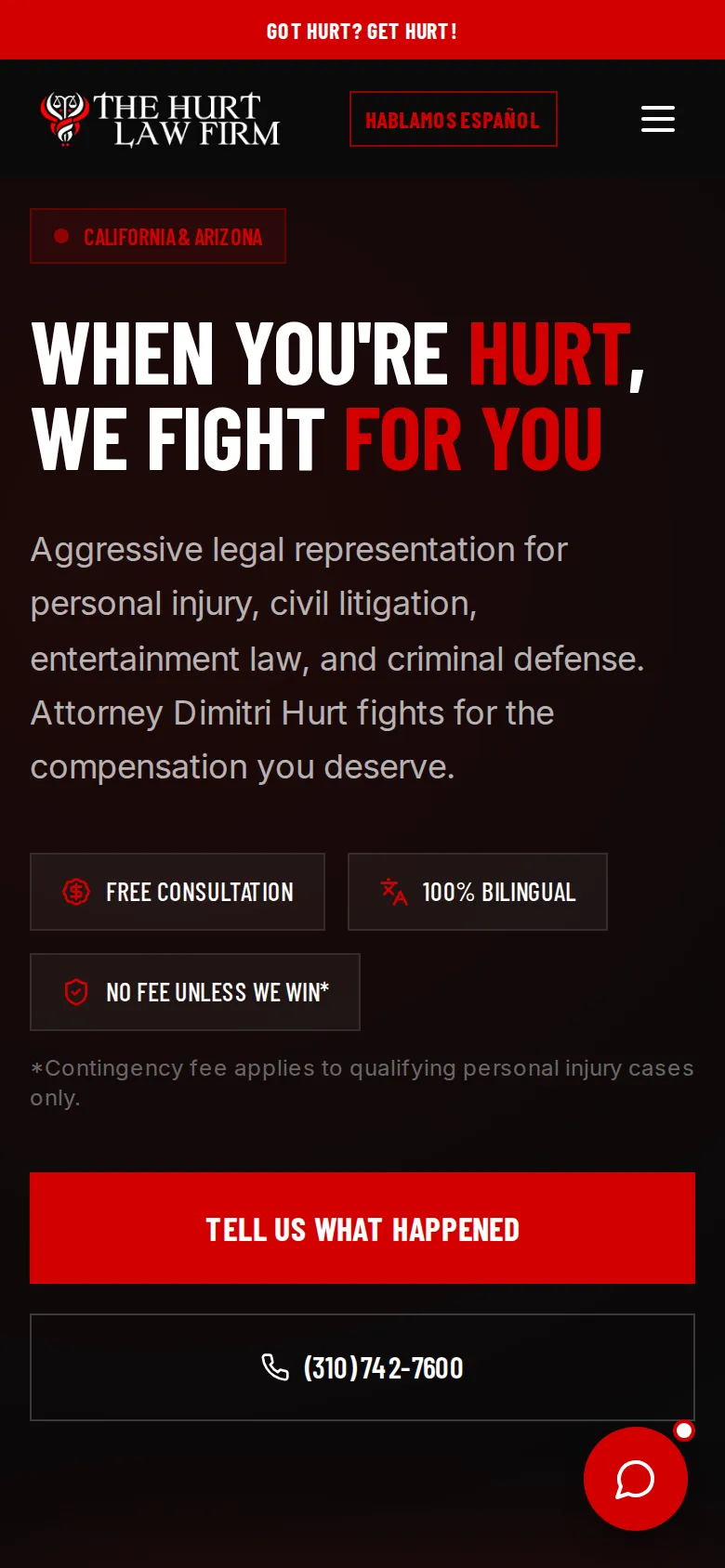
Homepage of thehurtlawfirm.com, captured by FlashCrafter on Oct 12, 2026. Los Angeles, CA
The Hurt Law Firm
In the top three on Google Maps for “law firm” at 2 of 9 sampled points around Los Angeles’s center on Oct 12, 2026.
What it does well
- +First screen. A bold headline, contrasting colors, and prominent portrait give the opening screen a clear visual focus.
- +Call to action. Clickable phone links give visitors a direct way to start a conversation.
- +Services. The opening description quickly helps visitors identify whether their legal needs match the practice.
- +Trust. Explaining bilingual support throughout the case reassures Spanish-speaking visitors that they can communicate comfortably.
- +Navigation. Clearly labeled navigation lets visitors find practice information, results, reviews, answers, and contact details.
- +On a phone. Large, stacked contact buttons and readable text make the mobile layout easy to scan and interact with.
To borrow: Pair a visually strong introduction with clear practice information, language reassurance, and prominent consultation and phone options.
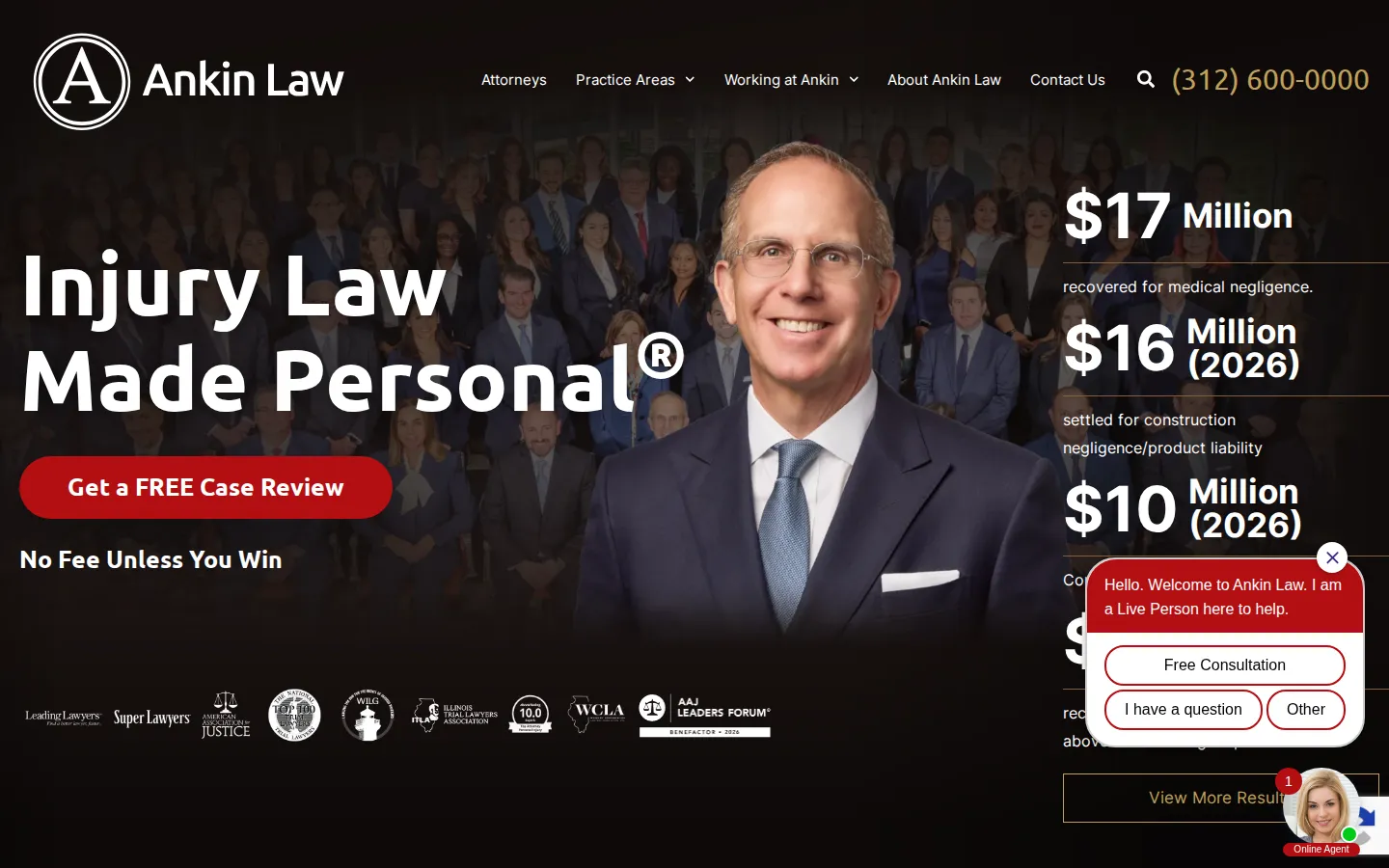
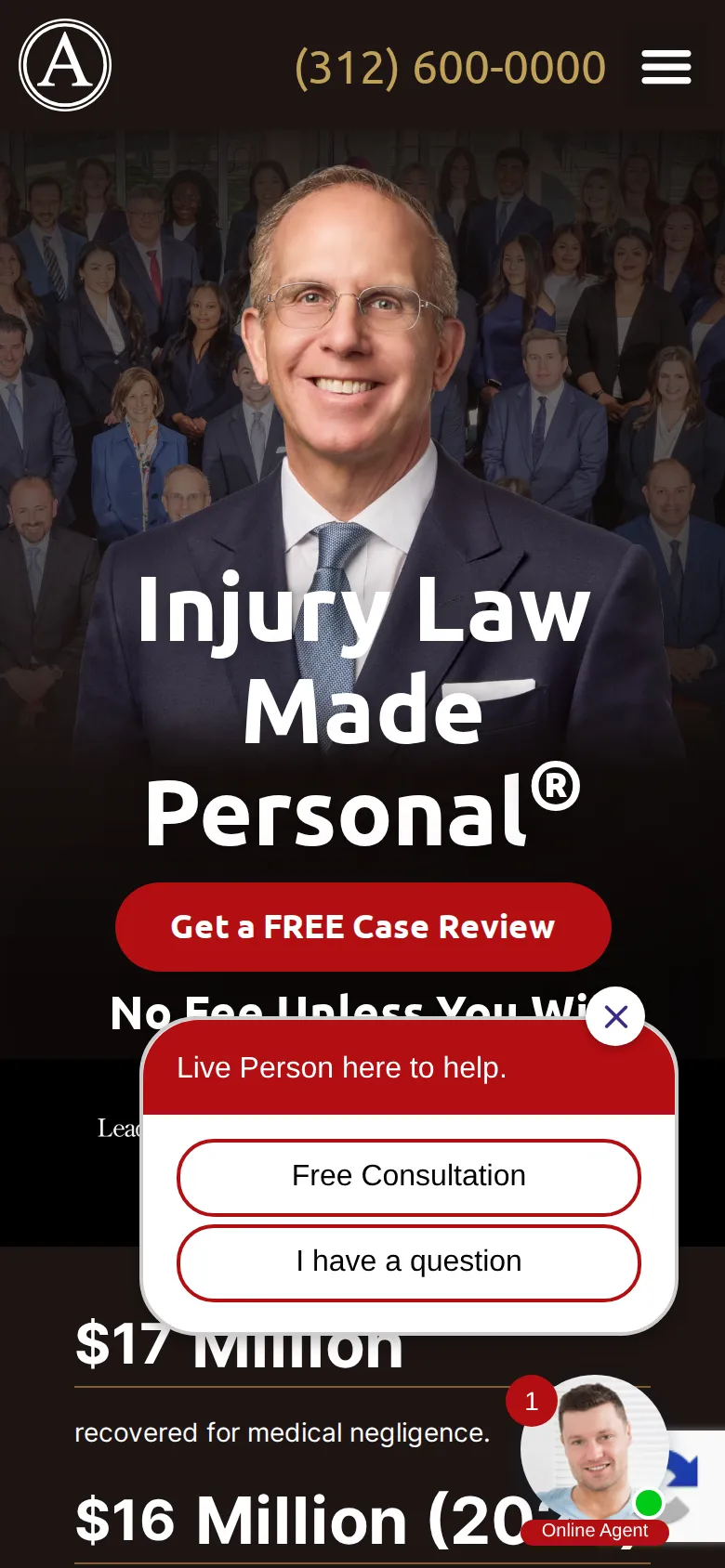
Homepage of ankinlaw.com, captured by FlashCrafter on Oct 12, 2026. Chicago, IL
Ankin Law
In the top three on Google Maps for “law firm” at 3 of 9 sampled points around Chicago’s center on Oct 12, 2026.
What it does well
- +First screen. A large headline, prominent attorney portrait and contrasting red review button give the opening screen a clear visual focus.
- +Call to action. The free case review invitation gives visitors a clear, approachable next step.
- +Trust. The fee message addresses a practical financial concern early in the visitor’s decision.
- +Trust. Specific recovery amounts paired with case types make the firm’s reported results concrete.
- +Services. Detailed examples help visitors recognize whether their accident or injury fits the available legal services.
- +On a phone. The phone link appears in the first mobile screen, making direct contact readily accessible.
- +Navigation. The desktop header offers clear routes to attorneys, practice areas and contact information.
To borrow: Pair a prominent consultation invitation with an early fee explanation, specific case results and an easily accessible mobile phone link.
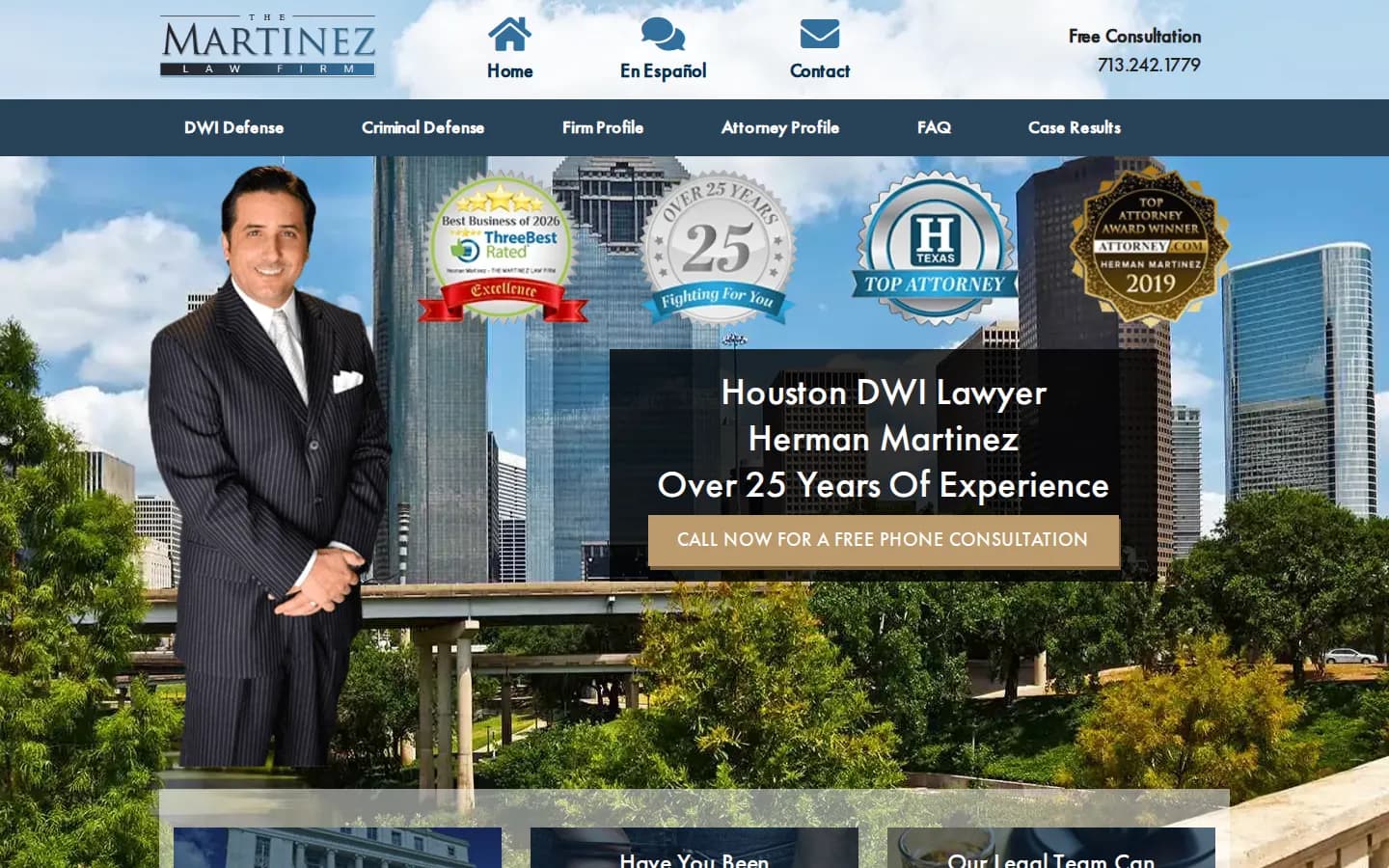
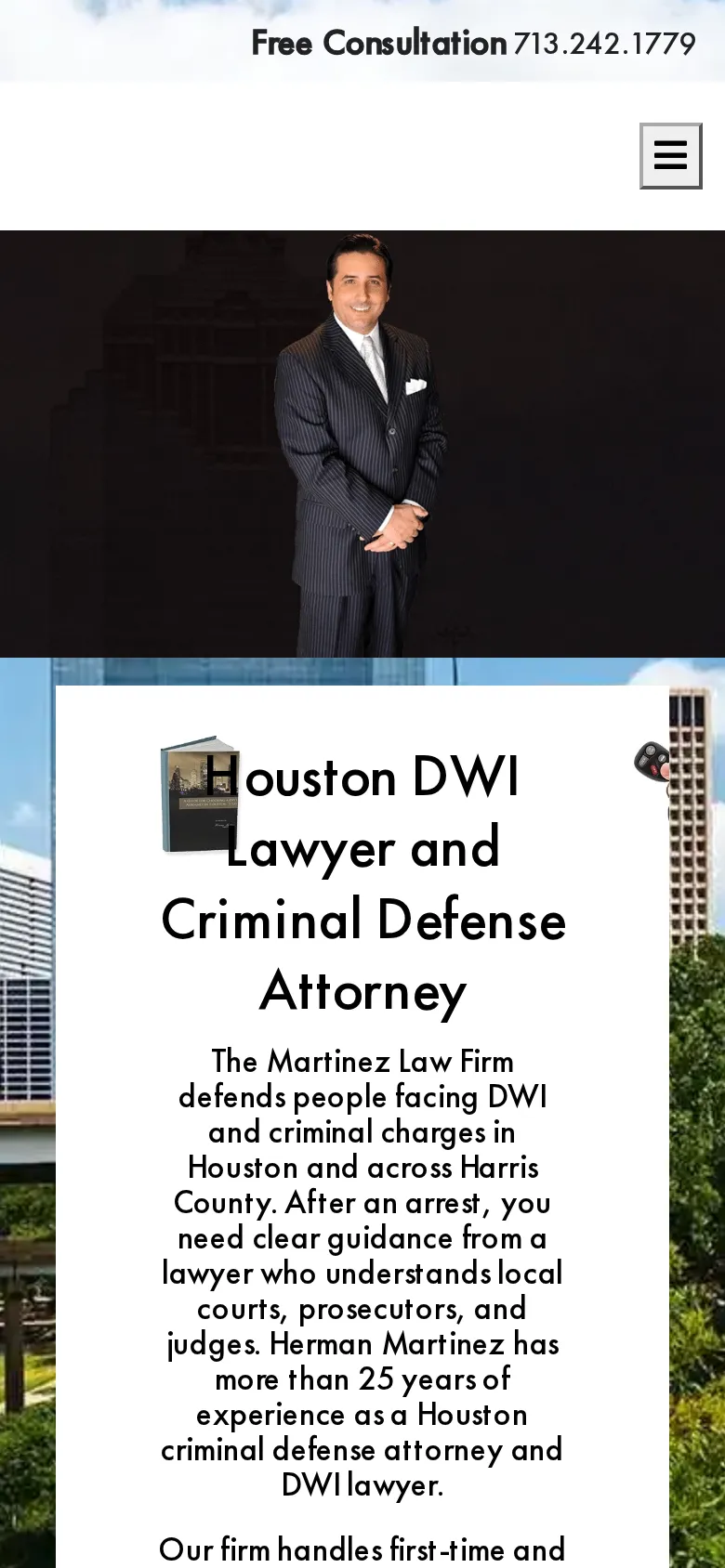
Homepage of martinezlawhouston.com, captured by FlashCrafter on Oct 12, 2026. Houston, TX
The Martinez Law Firm
In the top three on Google Maps for “law firm” at 2 of 9 sampled points around Houston’s center on Oct 12, 2026.
What it does well
- +First screen. The opening headline quickly establishes the practice focus and location, helping visitors recognize relevant legal help.
- +Call to action. A prominent invitation to a free phone consultation gives visitors a clear next step with a stated cost.
- +On a phone. The phone contact is available in the first mobile screen, making it easy for visitors to start a conversation.
- +Trust. Specific experience and prior prosecutorial work give visitors concrete background for evaluating the attorney.
- +Services. The detailed DWI service list helps visitors match their situation to the firm's assistance, including license hearings and evidence review.
- +Navigation. The desktop navigation places practice areas, profiles, common questions, and case outcomes together in a clearly visible horizontal menu.
To borrow: Pair a clear practice-and-location headline with a prominent consultation invitation, specific attorney credentials, and service details visitors can match to their needs.
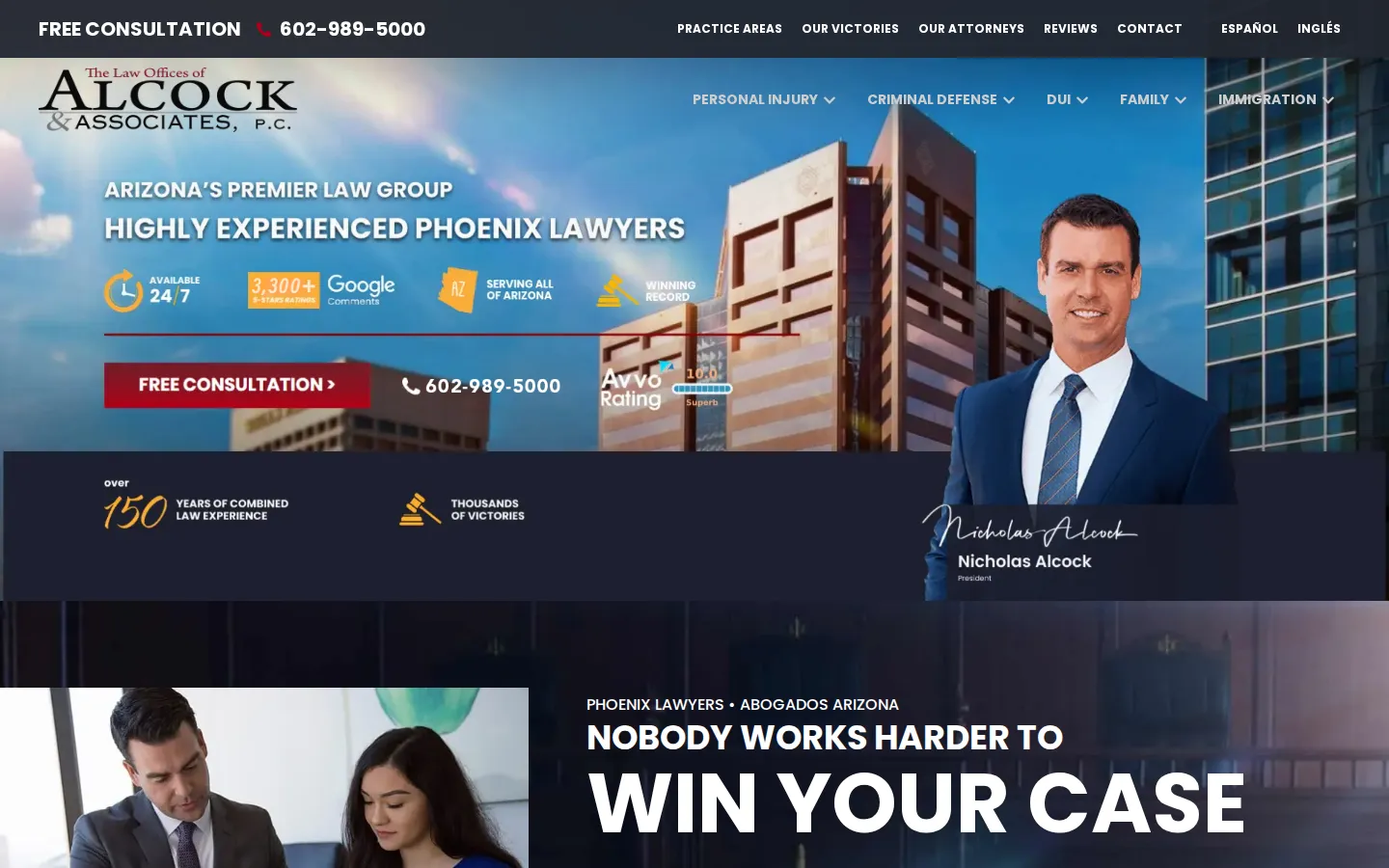
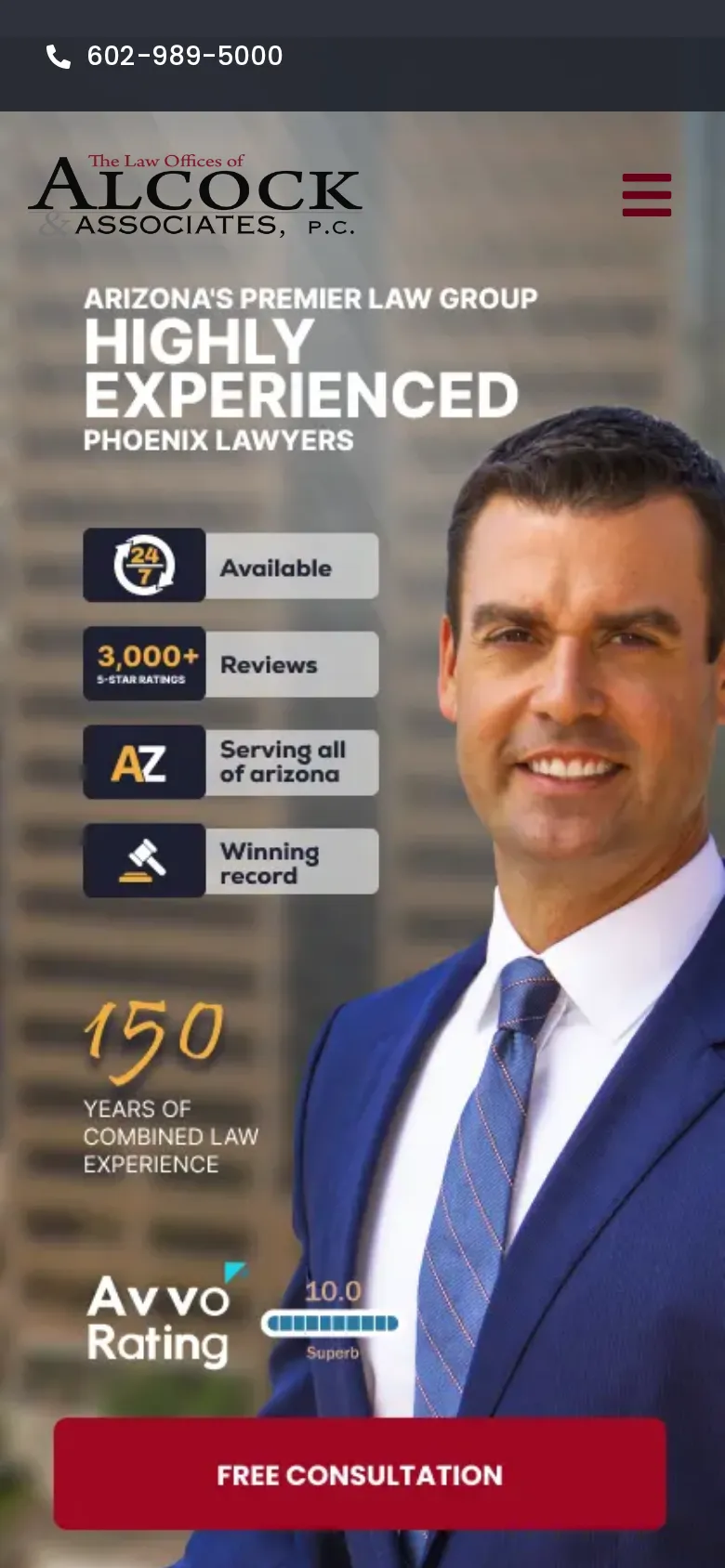
Homepage of alcocklaw.com, captured by FlashCrafter on Oct 12, 2026. Phoenix, AZ
The Law Offices Of Alcock & Associates P.C.
In the top three on Google Maps for “law firm” at 6 of 9 sampled points around Phoenix’s center on Oct 12, 2026.
What it does well
- +First screen. The desktop opening pairs a prominent lawyer portrait with a clear location headline and a contrasting consultation button.
- +Call to action. Offering a free, confidential consultation gives visitors a clear, reassuring first step.
- +Trust. Combined attorney experience and former prosecutor backgrounds give visitors concrete reasons to consider the team.
- +Services. The page clearly identifies five practice areas, helping visitors determine whether their legal issue fits.
- +On a phone. The phone number appears in the first mobile screen, making contact easy to find immediately.
- +Navigation. Main navigation gives visitors direct routes to practice areas, results, attorneys, reviews and contact information.
To borrow: Pair a prominent consultation offer and mobile phone number with clear practice areas and concrete evidence of attorney experience.
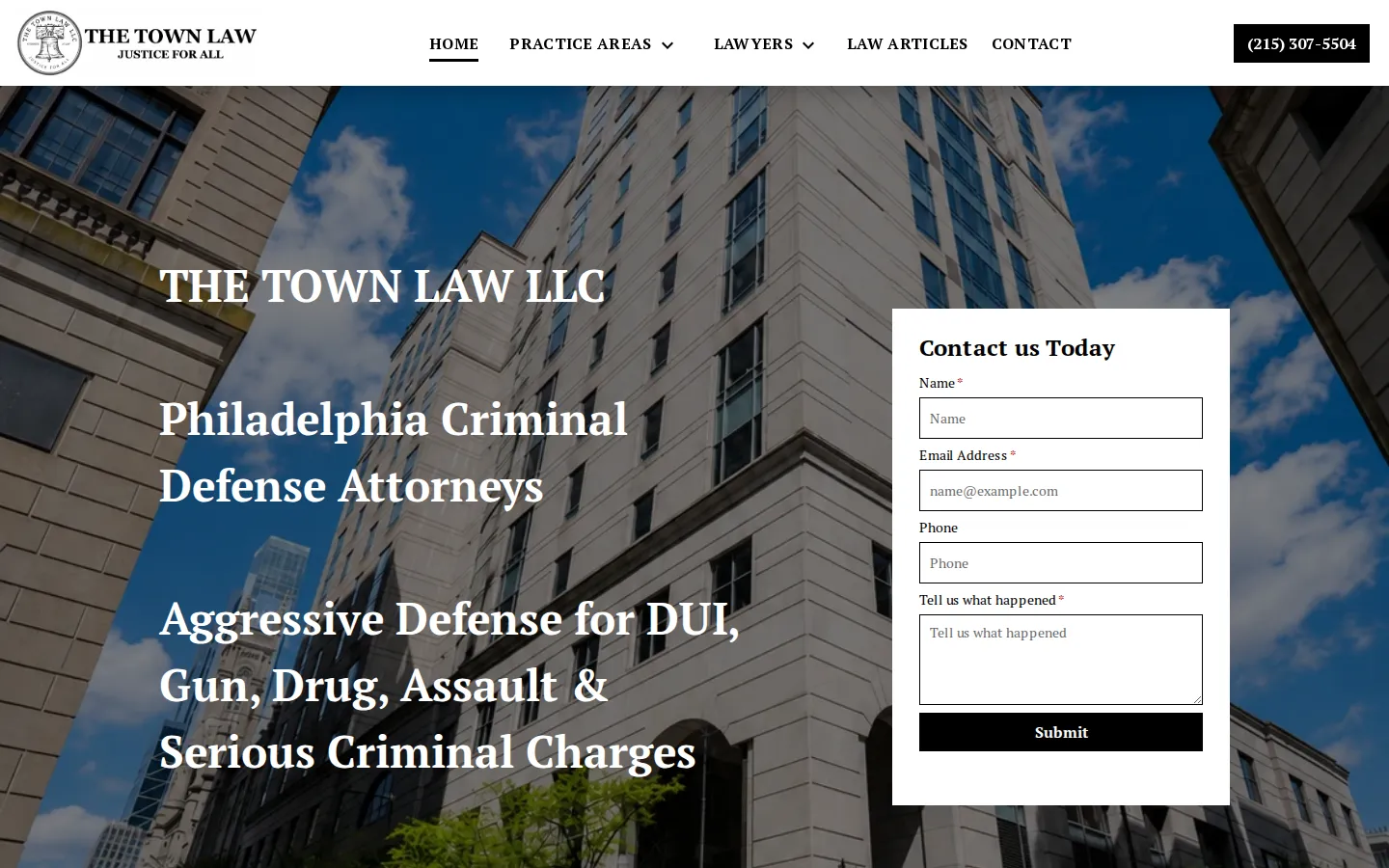
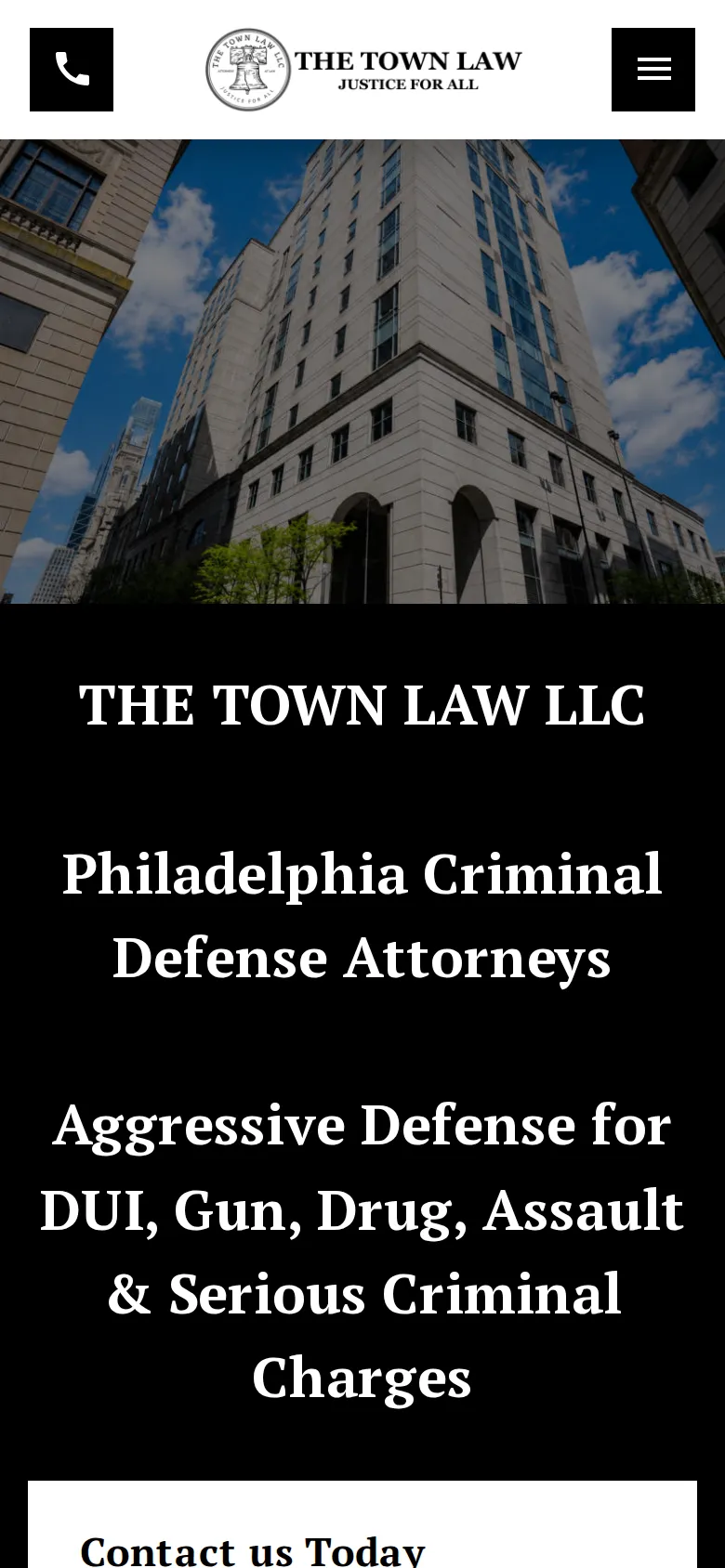
Homepage of thetownlaw.com, captured by FlashCrafter on Oct 12, 2026. Philadelphia, PA
The Town Law LLC
In the top three on Google Maps for “law firm” at 4 of 9 sampled points around Philadelphia’s center on Oct 12, 2026.
What it does well
- +First screen. The desktop hero pairs a prominent introduction with a clearly visible contact form, giving visitors an immediate next step.
- +Services. The opening message identifies the location and specific criminal charges handled, helping visitors quickly recognize relevant legal help.
- +Call to action. Clickable telephone links make contacting the office straightforward.
- +On a phone. A telephone link appears in the first mobile screen, keeping direct contact within easy reach.
- +Trust. A prominent review count and round-the-clock availability offer reassurance to visitors facing urgent legal concerns.
- +Navigation. The desktop header provides clear routes to practice areas, lawyers, articles and contact information.
To borrow: Pair a clear location and service headline with a visible inquiry form and an immediately accessible mobile call button.
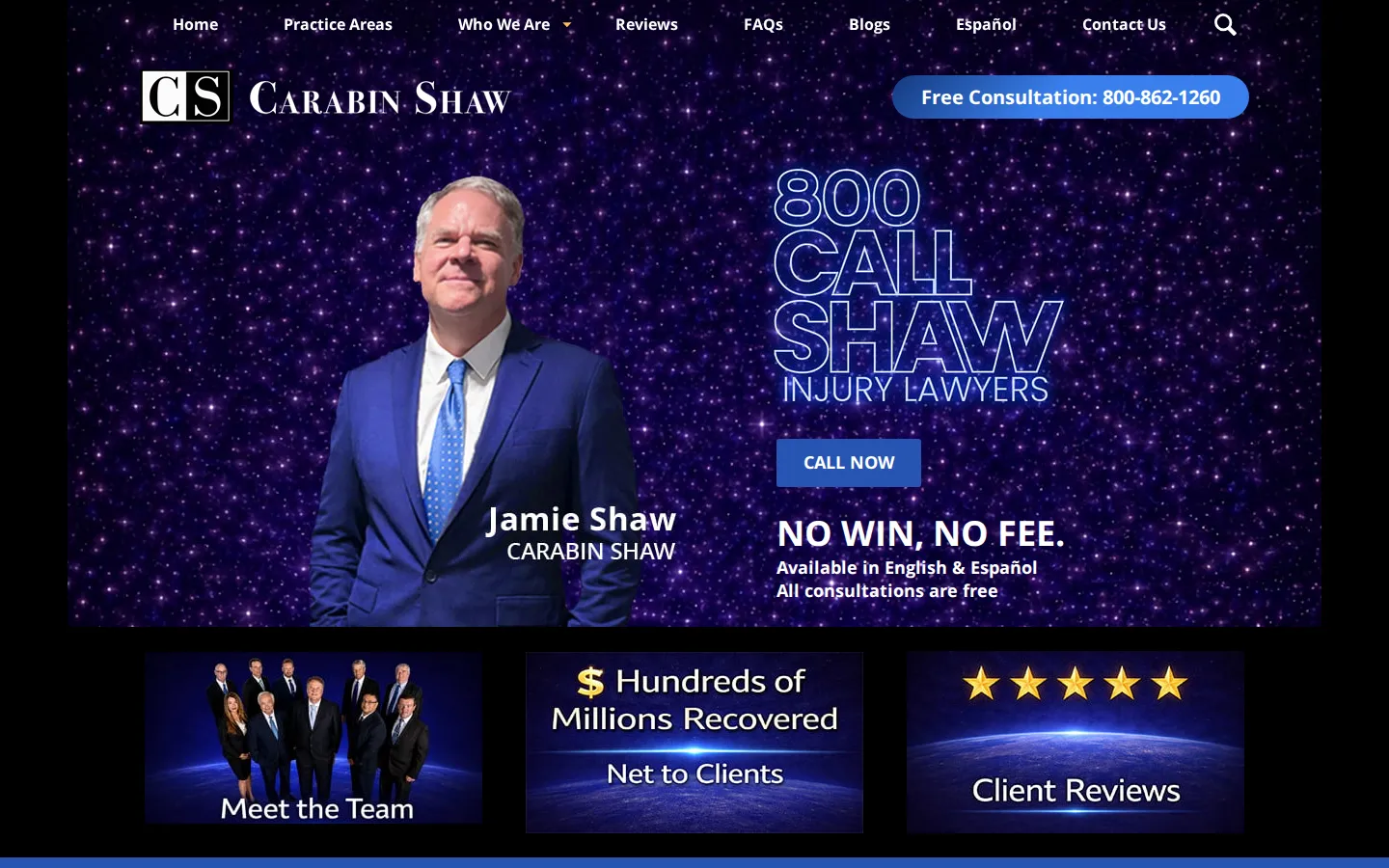
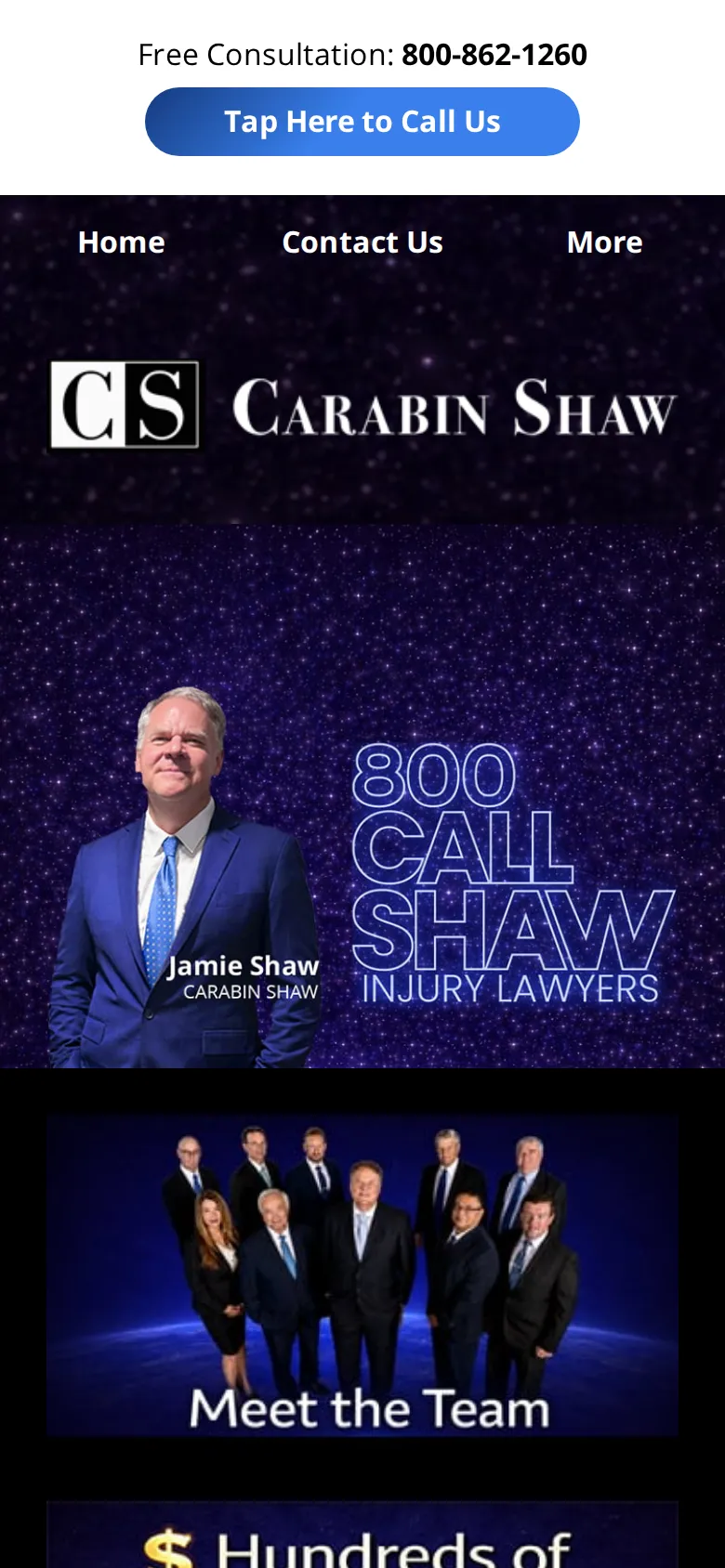
Homepage of carabinshaw.com, captured by FlashCrafter on Oct 12, 2026. San Antonio, TX
Carabin & Shaw
In the top three on Google Maps for “law firm” at 2 of 9 sampled points around San Antonio’s center on Oct 12, 2026.
What it does well
- +First screen. The desktop hero pairs a prominent portrait with a clear injury-law focus and a highly visible consultation offer.
- +Call to action. Free consultations and a fee contingent on winning reduce financial hesitation about making contact.
- +On a phone. A large call button and consultation number appear above the branding, making phone contact easy to find on mobile.
- +Trust. A prominent statement of decades of experience gives visitors a concrete reason to consider the team.
- +Services. An explicit list of accident and injury case types helps visitors recognize whether their situation fits the practice.
- +Navigation. The desktop menu gives direct routes to practice areas, team information, reviews, FAQs, and contact details.
To borrow: Pair a prominent mobile call button with clear consultation terms, recognizable case types, and visible evidence of experience.
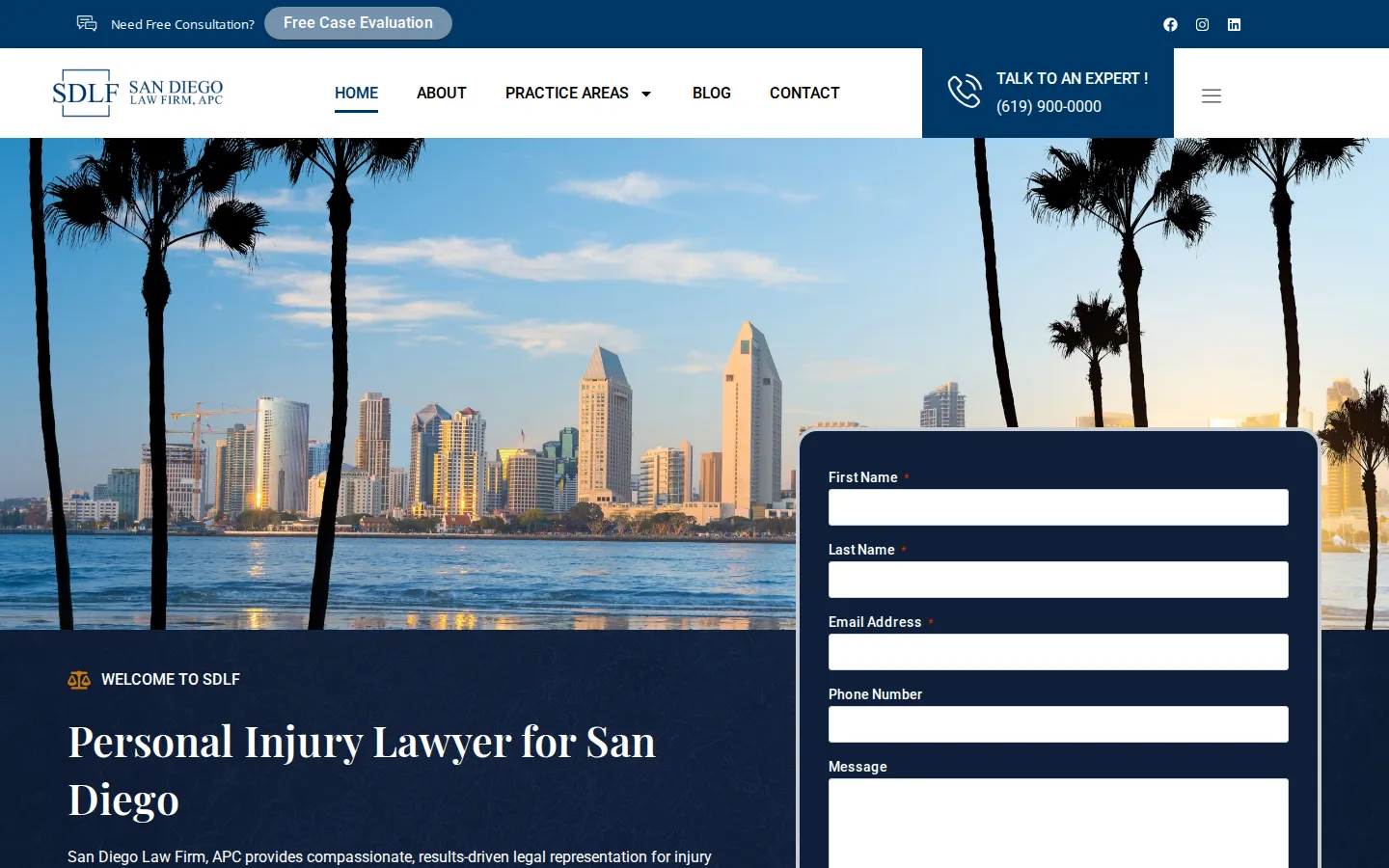
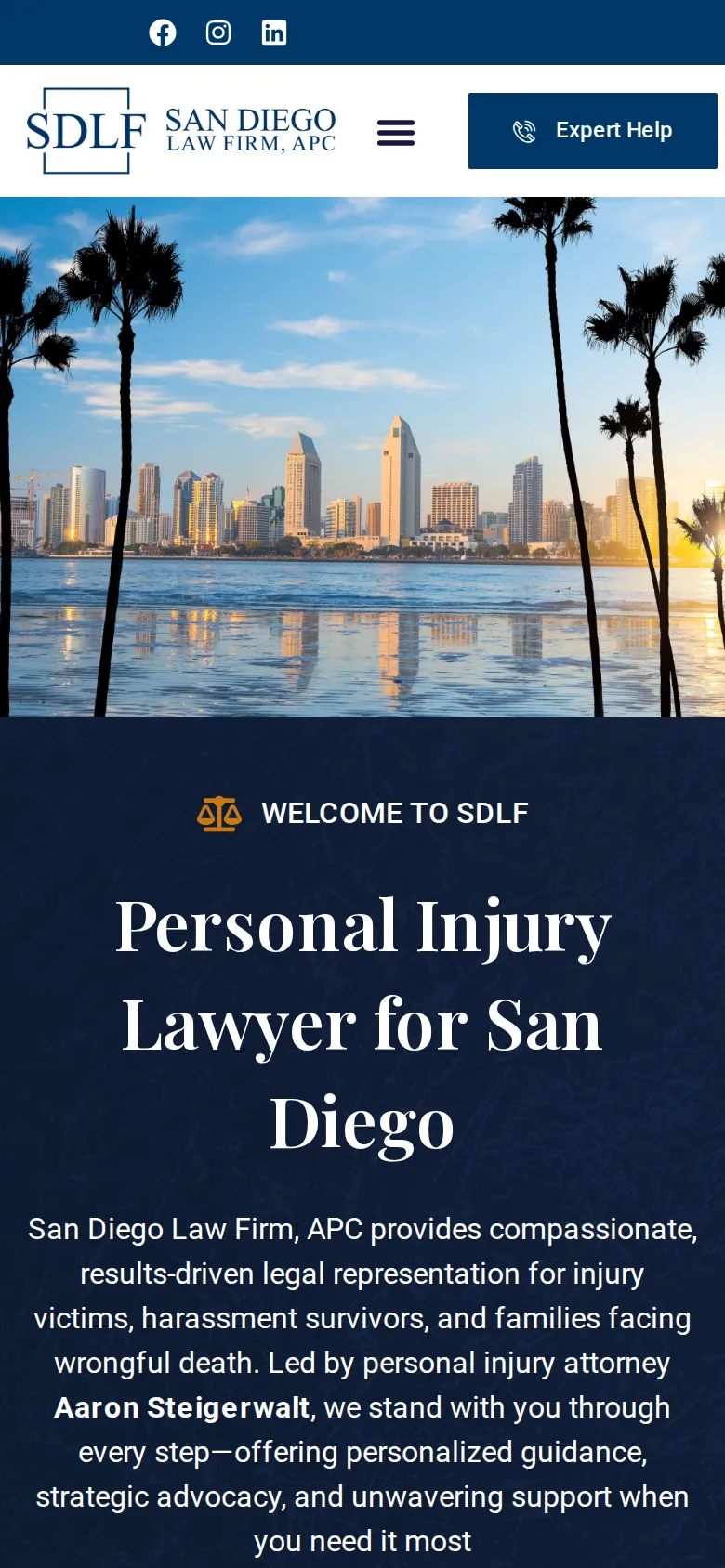
Homepage of sandiegolawfirm.com, captured by FlashCrafter on Oct 12, 2026. San Diego, CA
San Diego Law Firm
In the top three on Google Maps for “law firm” at 4 of 9 sampled points around San Diego’s center on Oct 12, 2026.
What it does well
- +First screen. The opening headline immediately identifies the legal focus and city served.
- +Call to action. A free case review invitation explains what visitors can learn and reduces uncertainty about cost or commitment.
- +Call to action. Clickable phone links give visitors a direct route to contacting the practice.
- +Trust. The promise of personal attorney involvement makes the client relationship concrete.
- +Navigation. The desktop header provides clear routes to firm information, practice areas, articles, and contact details.
- +On a phone. The mobile header keeps the menu and a prominent help button together above the main image.
To borrow: Pair a clear service-and-location headline with an approachable consultation offer and a concrete promise of personal attorney involvement.
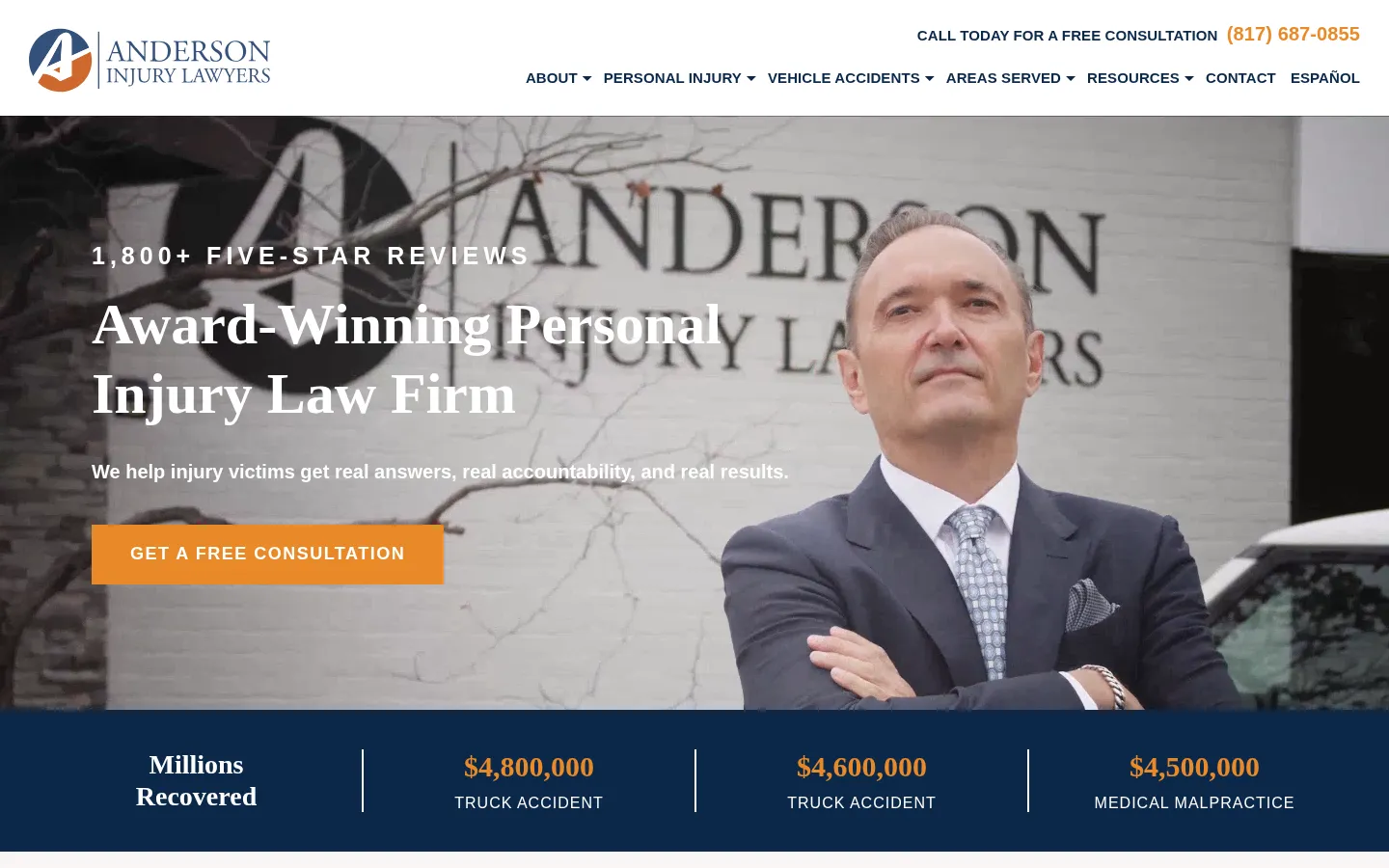
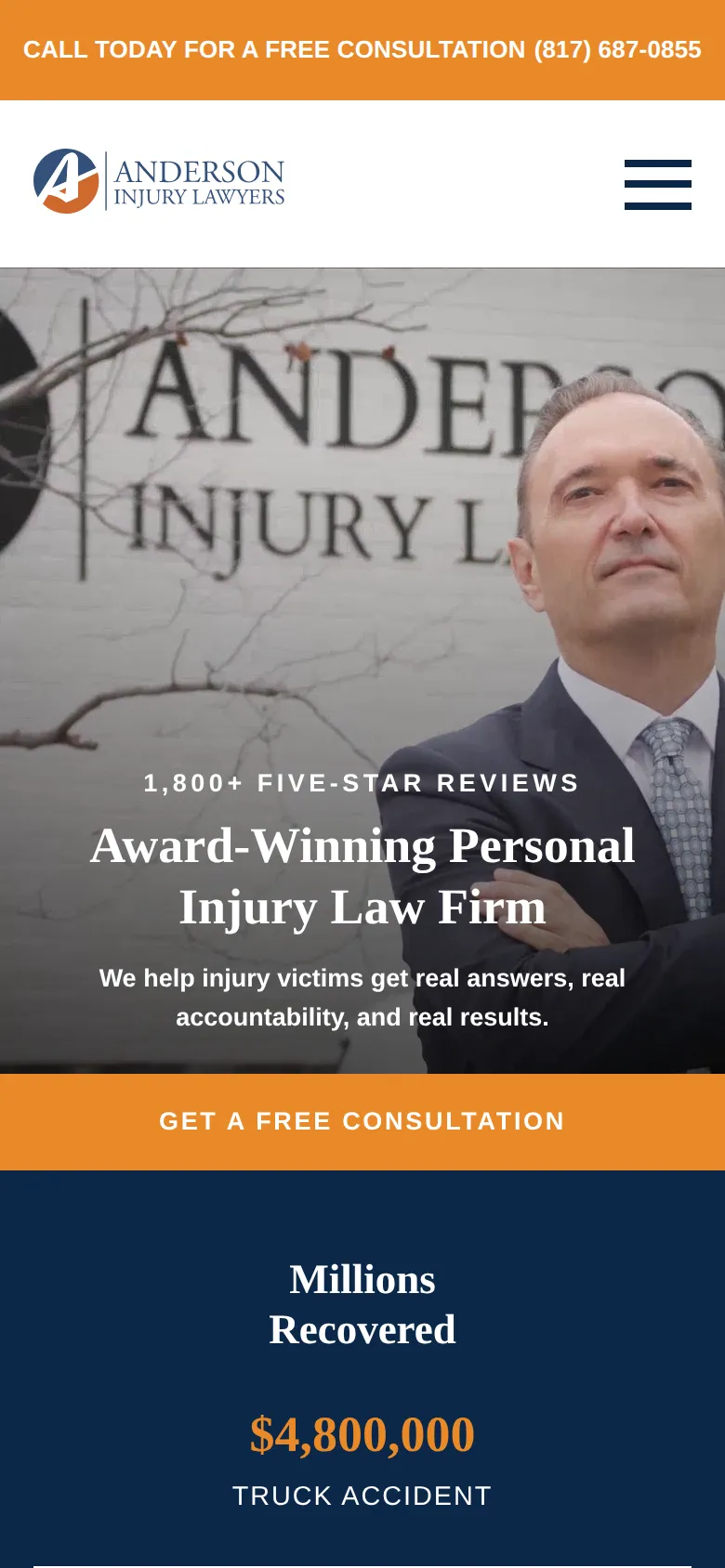
Homepage of maafirm.com, captured by FlashCrafter on Oct 12, 2026. Dallas, TX
Anderson Injury Lawyers Dallas
In the top three on Google Maps for “law firm” at 2 of 9 sampled points around Dallas’s center on Oct 12, 2026.
What it does well
- +First screen. The desktop hero pairs a clear practice focus with a prominent orange consultation button, making the next step easy to spot.
- +Call to action. Clickable telephone links give visitors a direct route to contact the office.
- +On a phone. The mobile layout places the consultation phone number in a contrasting top banner and provides a large consultation button beneath the hero.
- +Trust. A prominent review count gives visitors an immediate signal of client feedback.
- +Call to action. The free consultation and outcome-based fee message address financial concerns before visitors enquire.
- +Services. Concrete accident scenarios help visitors recognize whether their situation may warrant a legal consultation.
- +Navigation. The desktop menu groups information into clear categories and gives contact and Spanish-language access visible positions.
To borrow: Pair a clear practice-area headline with visible consultation options, client feedback, and reassuring fee information.
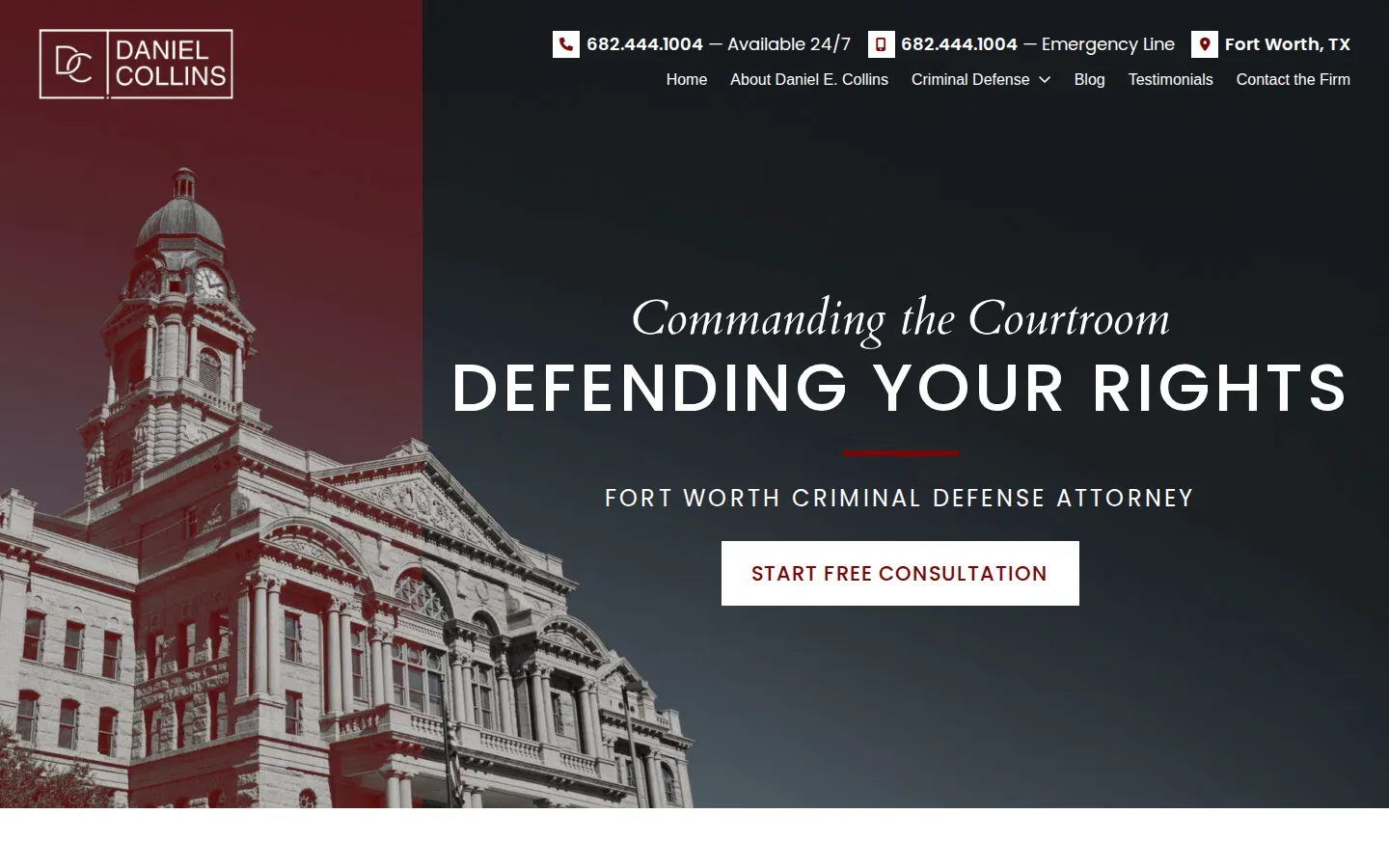
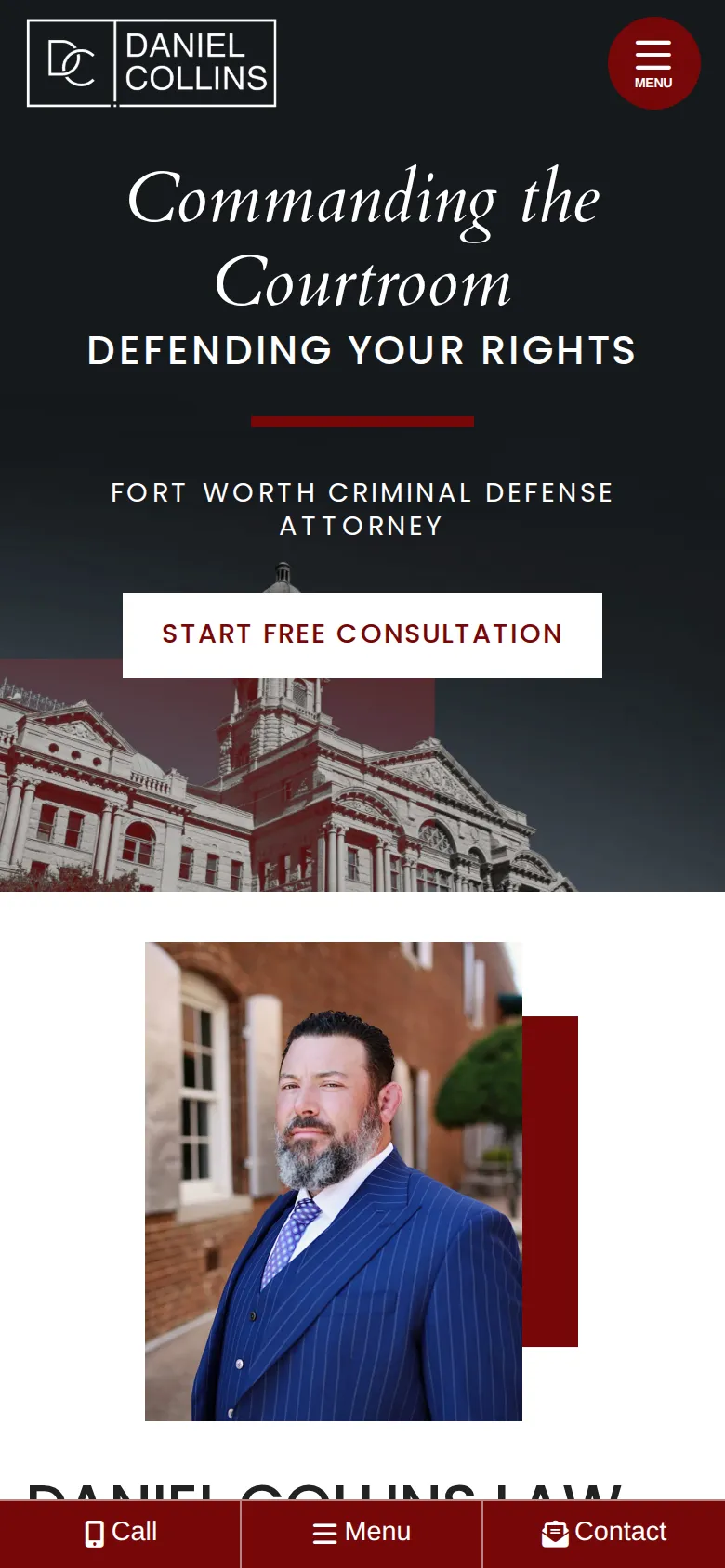
Homepage of danielcollinslaw.com, captured by FlashCrafter on Oct 12, 2026. Fort Worth, TX
Law Office of Daniel Collins
In the top three on Google Maps for “law firm” at 2 of 9 sampled points around Fort Worth’s center on Oct 12, 2026.
What it does well
- +First screen. The prominent headline and location make the firm's focus immediately clear, while courthouse imagery reinforces the legal setting.
- +Call to action. A free consultation offer gives visitors a clear, low-pressure next step.
- +Trust. The stated length of criminal defense experience gives prospective clients a concrete reason to consider the attorney.
- +Services. A dedicated probation revocation section helps visitors with that specific concern recognize relevant assistance.
- +On a phone. The persistent bottom bar keeps calling, navigation, and contact options within easy reach.
- +Call to action. Clickable phone links let visitors move directly from reading to calling.
- +Trust. Explicit round-the-clock availability reassures visitors who need help outside regular office hours.
To borrow: Pair a clear practice-and-location headline with a prominent consultation offer and persistent mobile contact options.
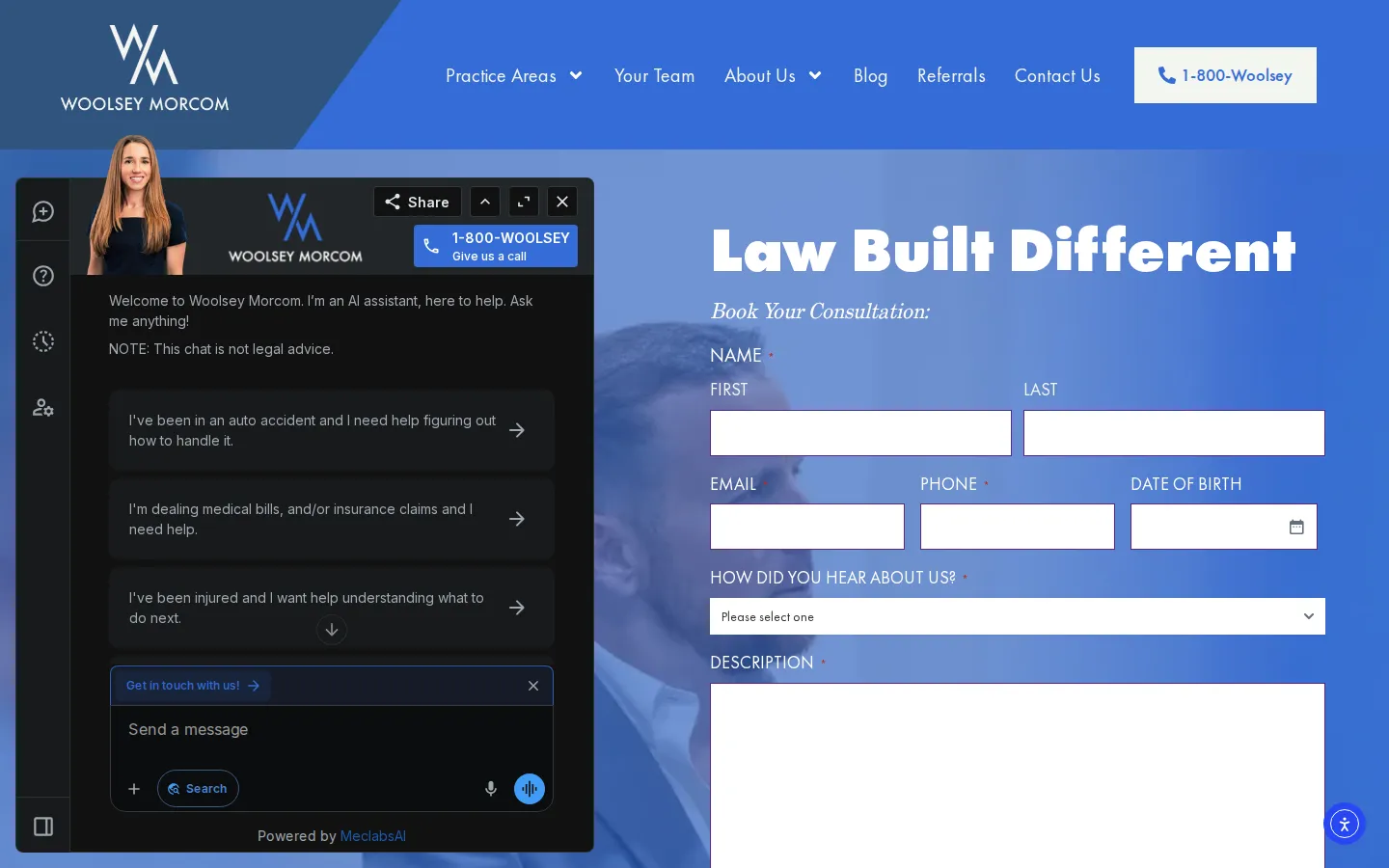
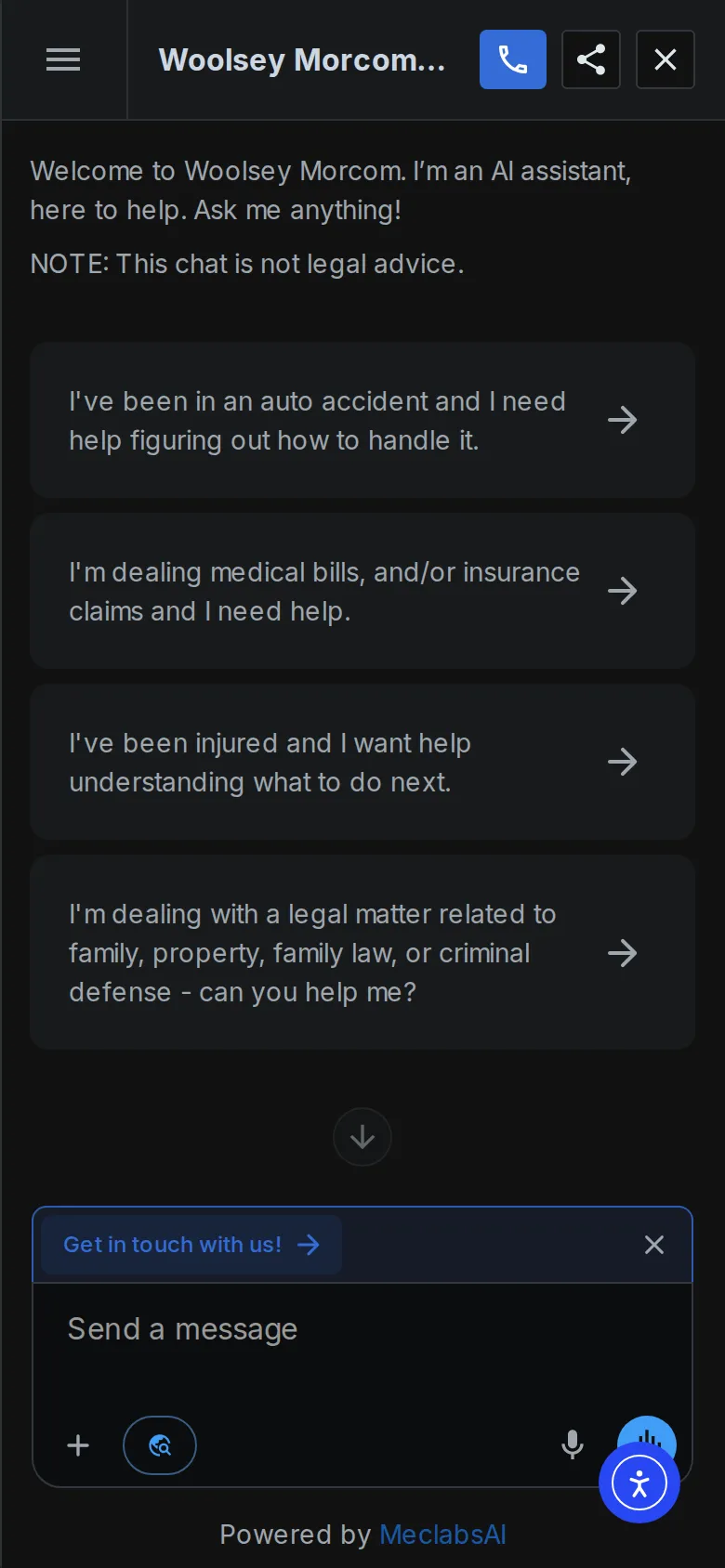
Homepage of woolseymorcom.com, captured by FlashCrafter on Oct 12, 2026. Jacksonville, FL
Woolsey Morcom Attorneys at Law
In the top three on Google Maps for “law firm” at 3 of 9 sampled points around Jacksonville’s center on Oct 12, 2026.
What it does well
- +First screen. The desktop places a clearly labeled consultation form beside a bold headline, making the next step immediately visible.
- +Call to action. A telephone link in the first mobile screen gives visitors a direct way to call.
- +Trust. Specific settlement amounts make the firm's reported results concrete and easy to scan.
- +Services. A plain-language practice list helps visitors identify whether their legal issue fits the firm's services.
- +Trust. A three-step explanation helps prospective clients understand how representation progresses from discussion to a plan and action.
- +On a phone. Large, vertically stacked chat prompts and a prominent message box make the mobile interaction easy to follow.
To borrow: Pair an immediately visible consultation option with concrete results, recognizable services, and a simple explanation of what happens next.
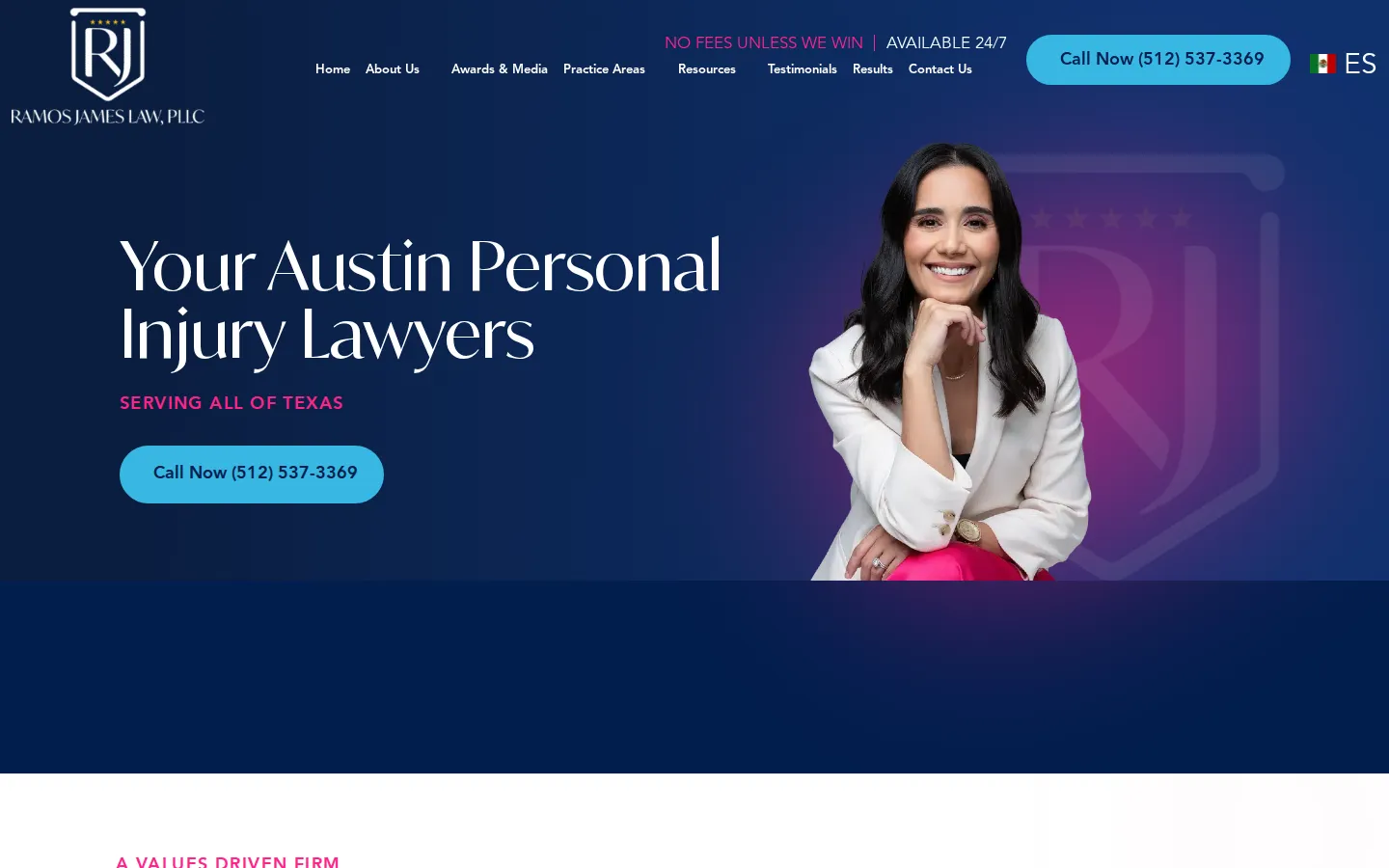
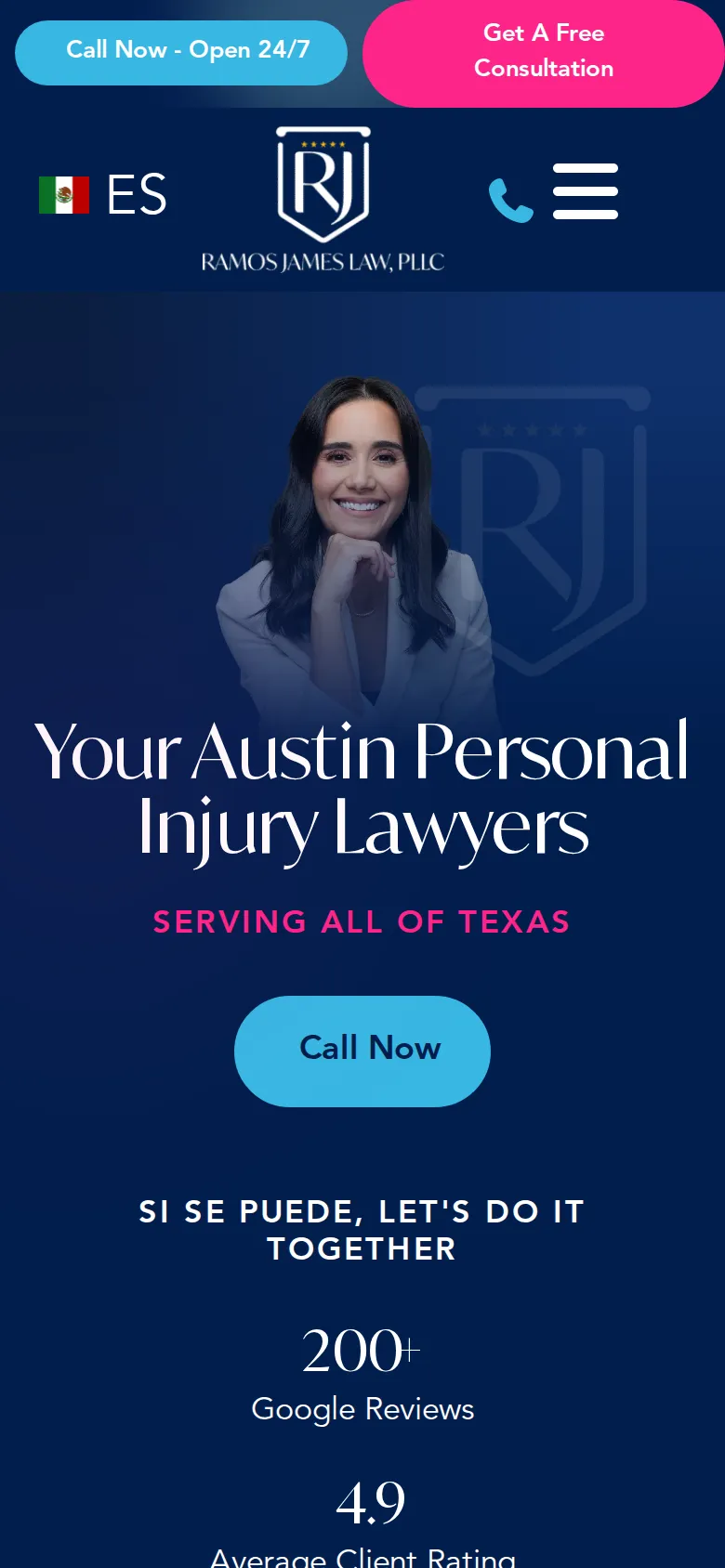
Homepage of ramosjames.com, captured by FlashCrafter on Oct 12, 2026. Austin, TX
Ramos James Law, PLLC
In the top three on Google Maps for “law firm” at 3 of 9 sampled points around Austin’s center on Oct 12, 2026.
What it does well
- +First screen. The prominent headline immediately identifies the practice focus and location, while a large portrait gives the introduction a personal feel.
- +Call to action. Clickable phone links give visitors a direct way to contact the team.
- +Trust. Specific case outcomes make the firm's experience concrete and give visitors examples of the matters it has handled.
- +Services. Practice descriptions connect common injury situations with the legal help available, making it easier for visitors to recognize a relevant service.
- +On a phone. Large call and consultation buttons at the top make the main contact options easy to spot on a phone.
- +Navigation. The desktop menu clearly separates practice areas, client feedback, results, resources, and contact information for visitors exploring their options.
To borrow: Pair a clear practice-and-location headline with prominent contact buttons, understandable service descriptions, and specific case outcomes.
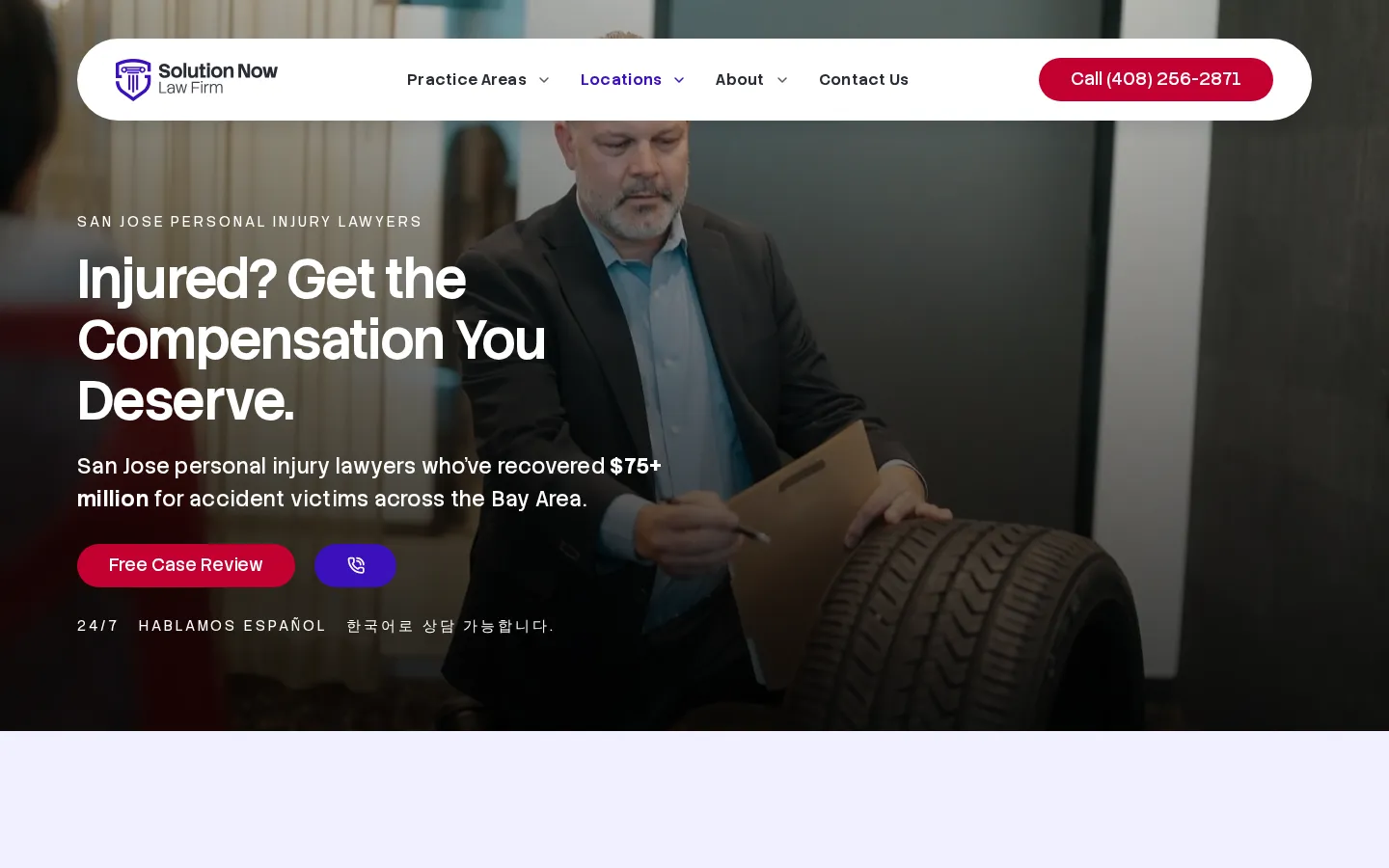
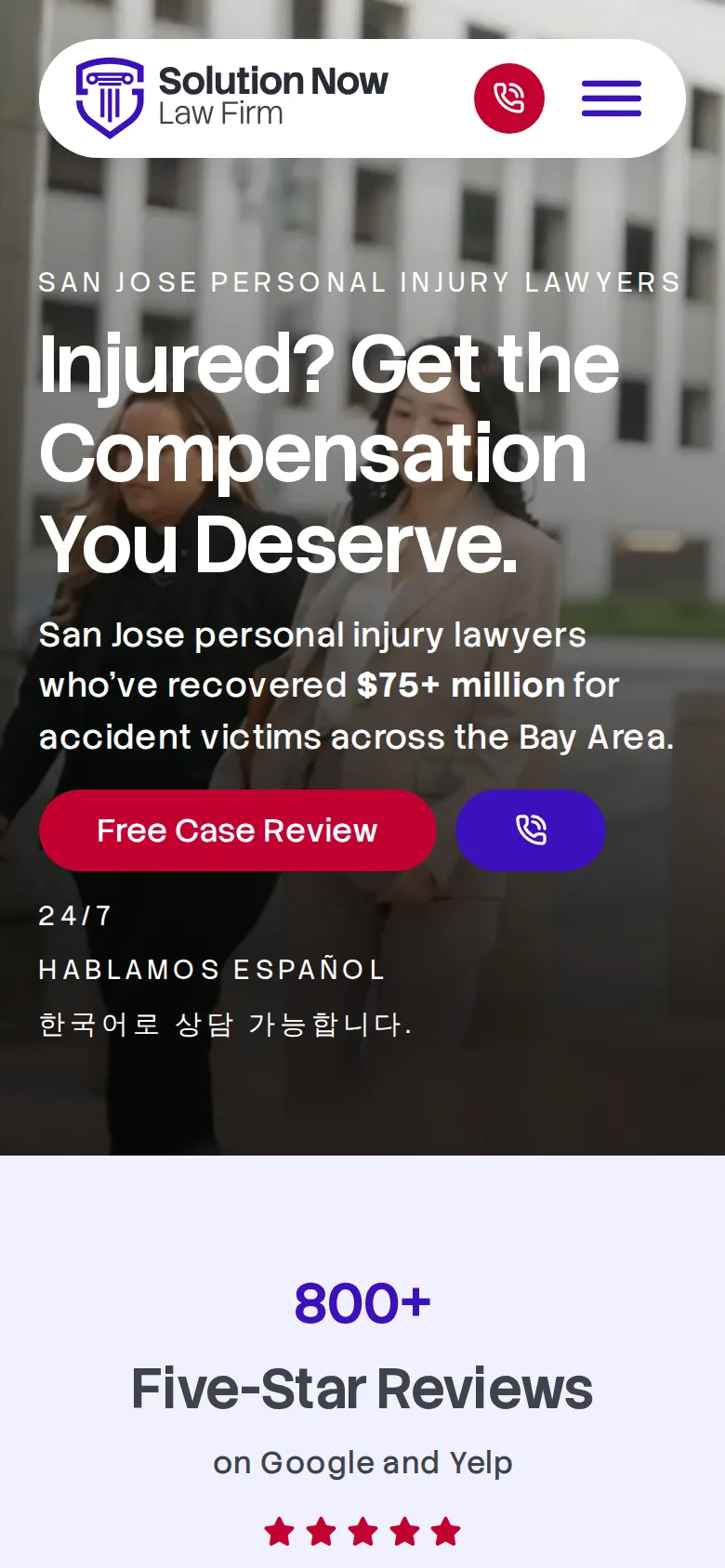
Homepage of solutionnowlawfirm.com, captured by FlashCrafter on Oct 12, 2026. San Jose, CA
Solution Now Law Firm
In the top three on Google Maps for “law firm” at 2 of 9 sampled points around San Jose’s center on Oct 12, 2026.
What it does well
- +First screen. The opening screen clearly identifies the location and legal focus, with a large headline and prominent consultation button.
- +Call to action. A free consultation and clear payment terms make the next step easy to understand.
- +Trust. Specific recovery amounts paired with accident descriptions give visitors concrete examples of past case outcomes.
- +Services. The case list helps visitors match their accident to a service, including brief explanations of each category.
- +On a phone. Phone access appears in the first mobile screen, giving visitors an immediate way to contact the team.
- +Navigation. The desktop header groups links around practice areas, locations, firm information, and contact, making common visitor tasks easy to find.
To borrow: Pair a clear local practice focus with prominent contact options, straightforward fee terms, and specific case results.
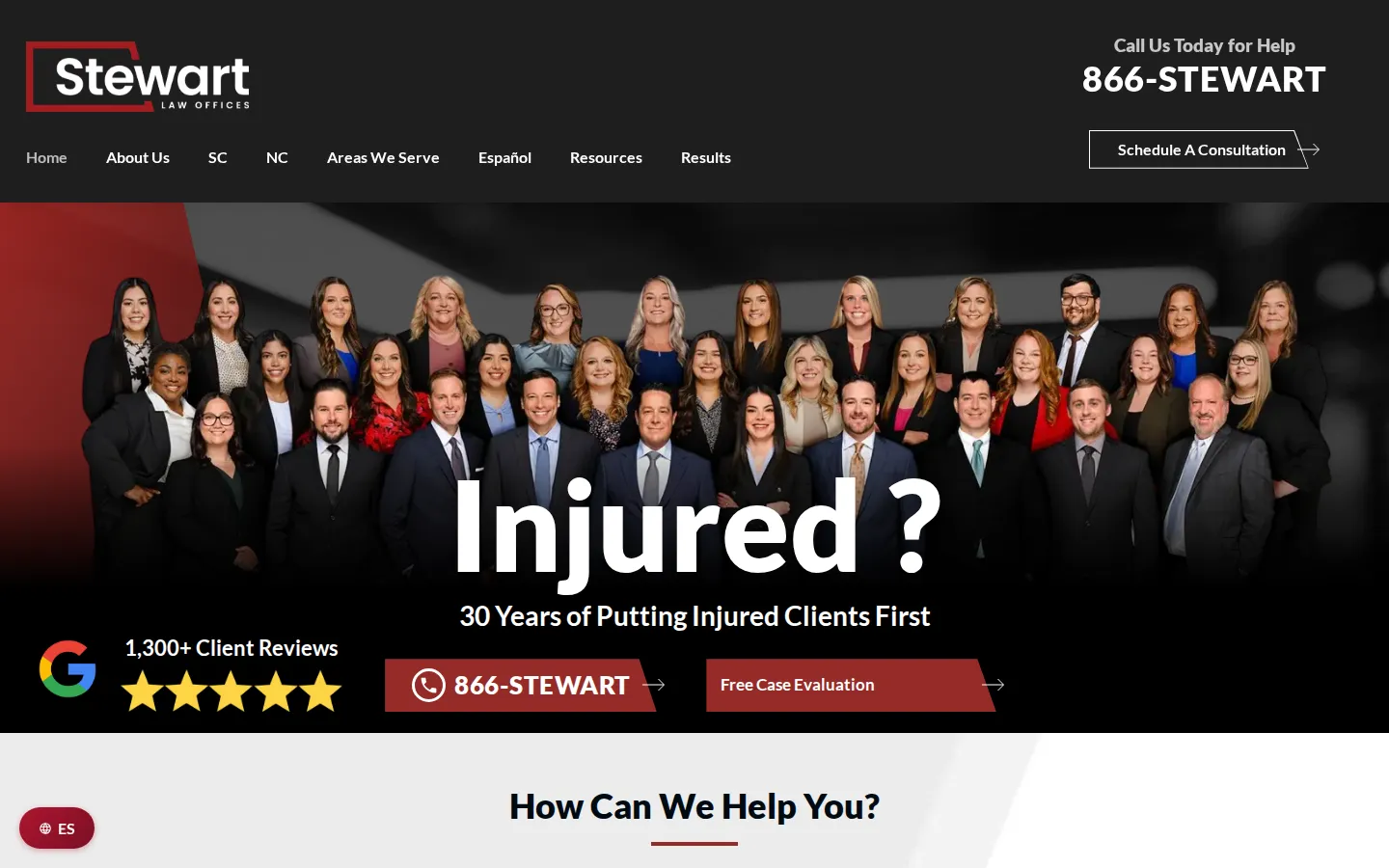
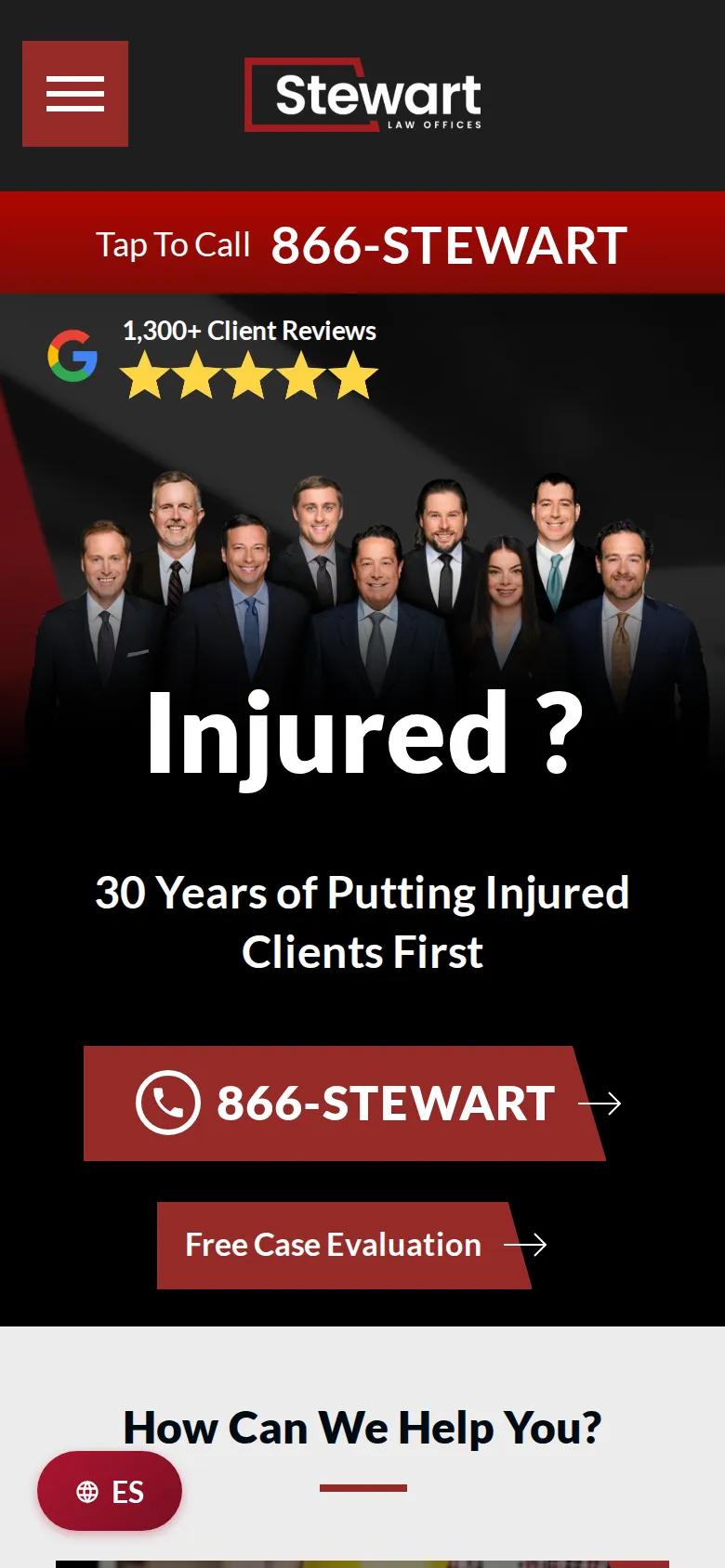
Homepage of stewartlawoffices.net, captured by FlashCrafter on Oct 12, 2026. Charlotte, NC
Stewart Law Offices - Workers Compensation & Car Accident Lawyers
In the top three on Google Maps for “law firm” at 2 of 9 sampled points around Charlotte’s center on Oct 12, 2026.
What it does well
- +First screen. A large injury-focused headline, team photograph and contrasting contact buttons make the opening screen easy to understand.
- +Call to action. A free consultation offer and round-the-clock phone availability give visitors a clear, low-pressure next step.
- +Trust. The prominent client review count gives visitors an immediate indication of substantial client feedback.
- +Trust. The opening message highlights three decades of experience while keeping the emphasis on injured clients.
- +On a phone. A phone link appears in the first mobile screen, making direct contact readily accessible.
- +Navigation. The navigation groups attorney information, state-specific options, locations, resources and results into clearly labeled routes.
To borrow: Pair a clear injury-focused opening with visible client feedback, straightforward navigation and an immediately accessible phone link.
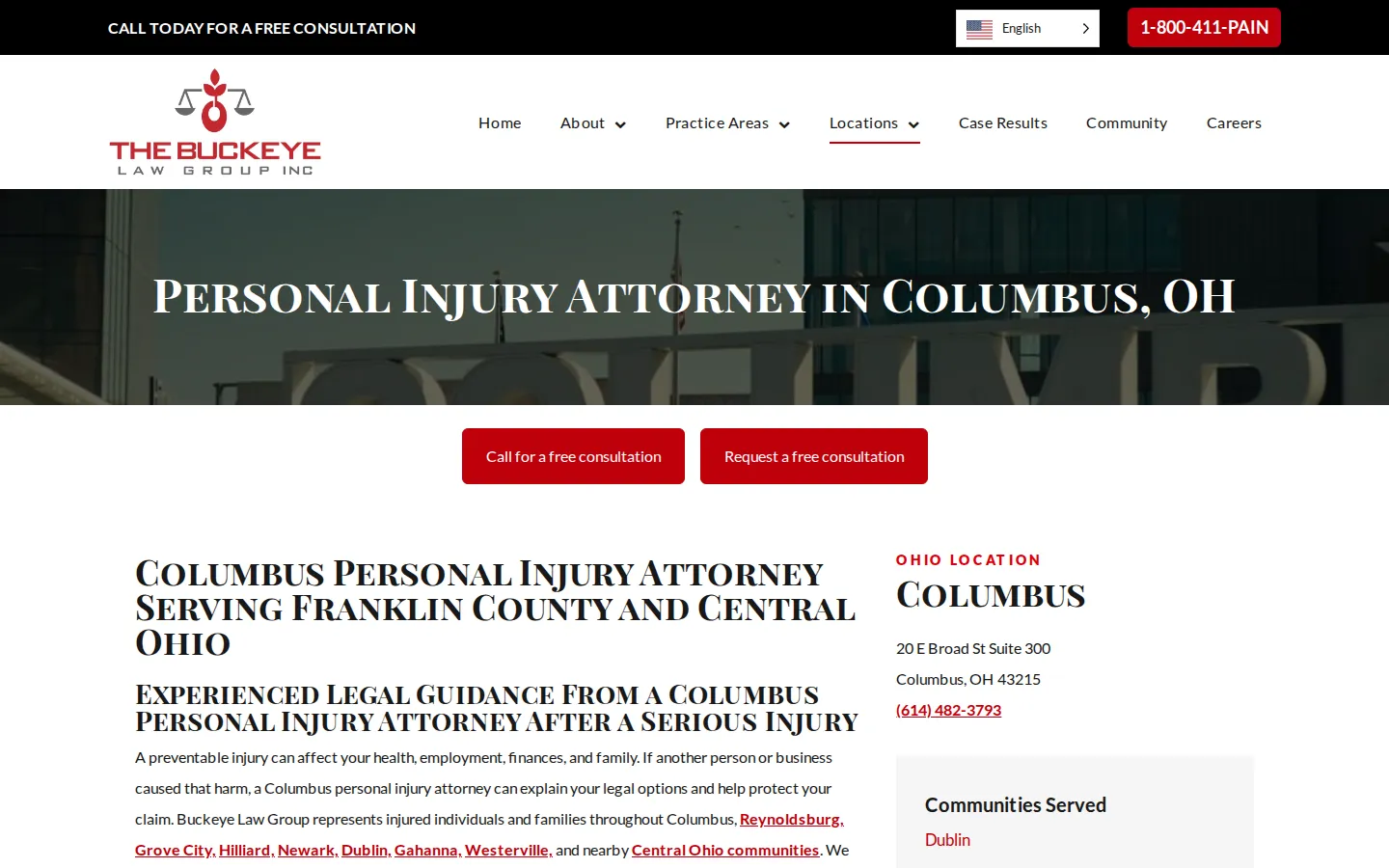
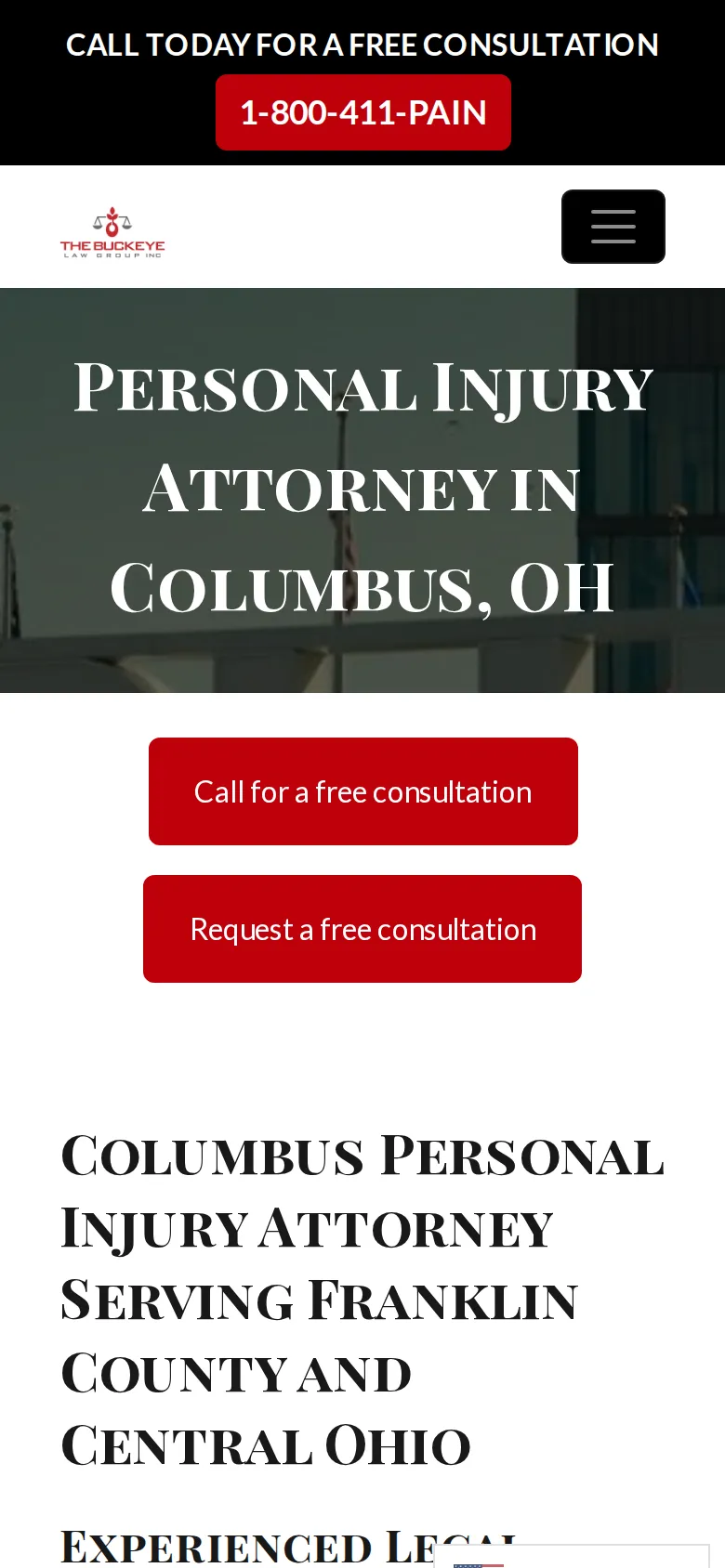
Captured page: /locations/columbus-law-office of buckeyeaccidentattorneys.com, captured by FlashCrafter on Oct 12, 2026. This is the page the firm’s Google Maps listing links to; its homepage could not be captured. Columbus, OH
Buckeye Law Group
In the top three on Google Maps for “law firm” at 4 of 9 sampled points around Columbus’s center on Oct 12, 2026.
What it does well
- +First screen. The prominent headline immediately identifies the legal specialty and Columbus location.
- +Call to action. Visitors can choose between calling and requesting a consultation, with the free offer clearly stated.
- +On a phone. A telephone link appears in the first mobile screen, making direct contact readily accessible.
- +Navigation. The desktop menu gives visitors clear routes to practice areas, locations, case results, and information about the team.
- +Trust. A specific local office address helps visitors establish where the practice is based.
- +Services. Concrete examples of injury claims help visitors recognize whether their situation fits the practice.
- +Trust. The fee explanation helps prospective clients understand when attorney fees become payable.
To borrow: Pair a clear specialty-and-location headline with prominent consultation options, a local office address, and plain explanations of services and fees.
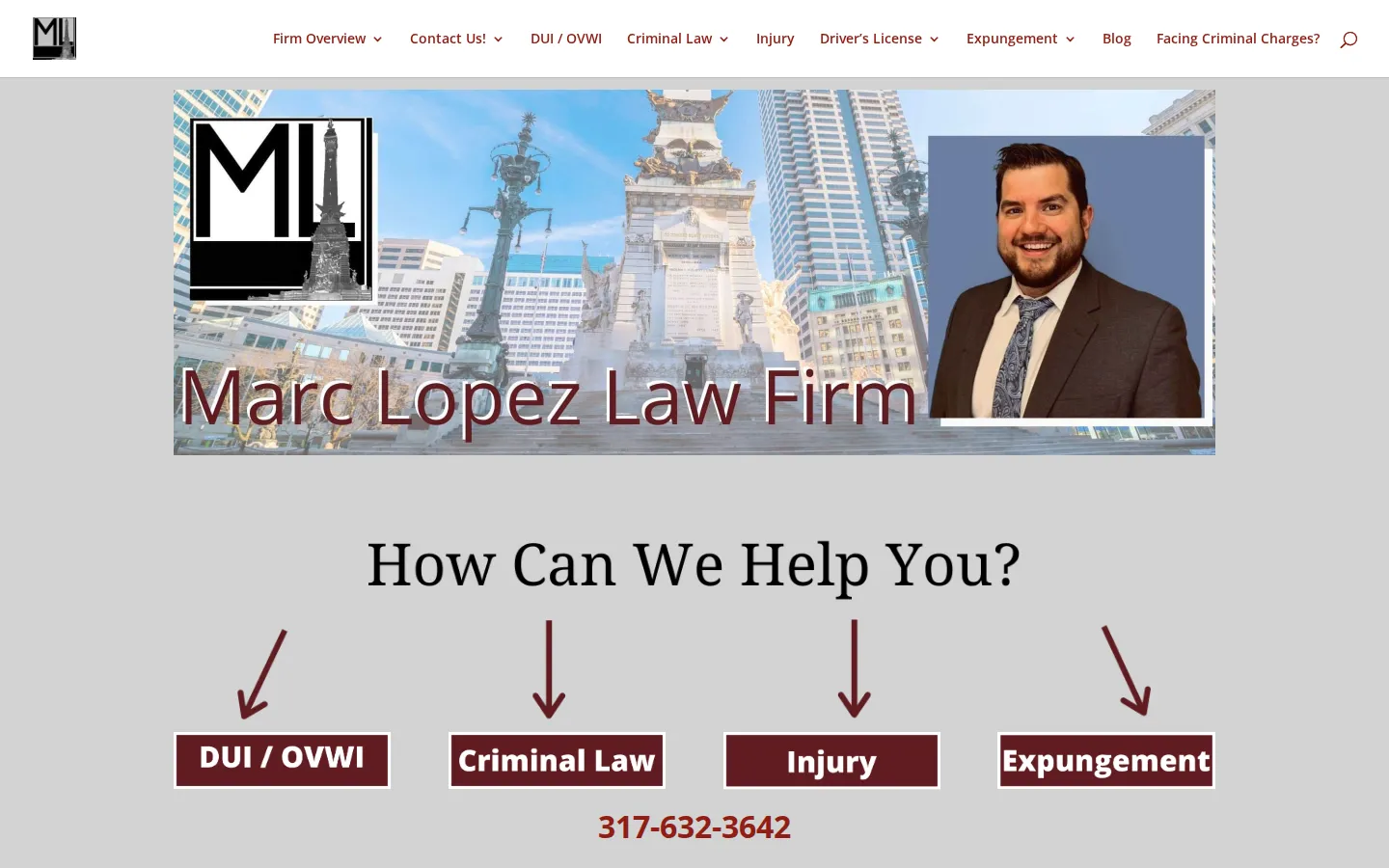
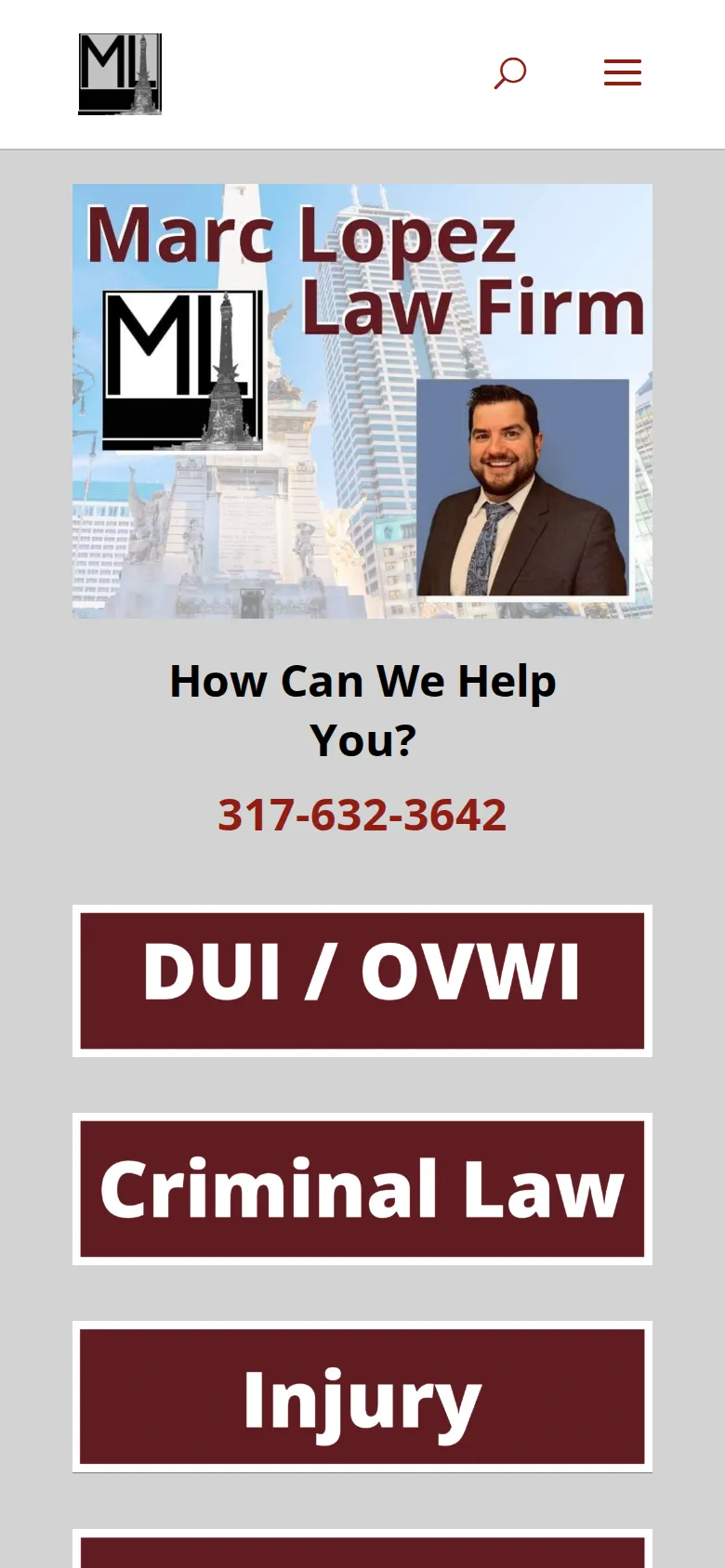
Homepage of marclopezlaw.com, captured by FlashCrafter on Oct 12, 2026. Indianapolis, IN
Marc Lopez Law Firm
In the top three on Google Maps for “law firm” at 8 of 9 sampled points around Indianapolis’s center on Oct 12, 2026.
What it does well
- +First screen. A prominent portrait and large branding give the opening screen a personal, recognizable identity.
- +Call to action. A tap-to-call number appears in the first mobile screen, making direct contact easy to find.
- +Services. Clear practice categories help visitors quickly identify relevant legal help.
- +On a phone. Large, vertically stacked buttons and a prominent phone number make the mobile layout easy to scan.
- +Trust. Client testimonials emphasize responsiveness and clear communication, offering reassurance about the service experience.
- +Navigation. The desktop header provides direct routes to practice areas, firm information, and contact details.
To borrow: Combine clear practice-area choices, a prominent mobile phone number, and client feedback to help visitors choose their next step.
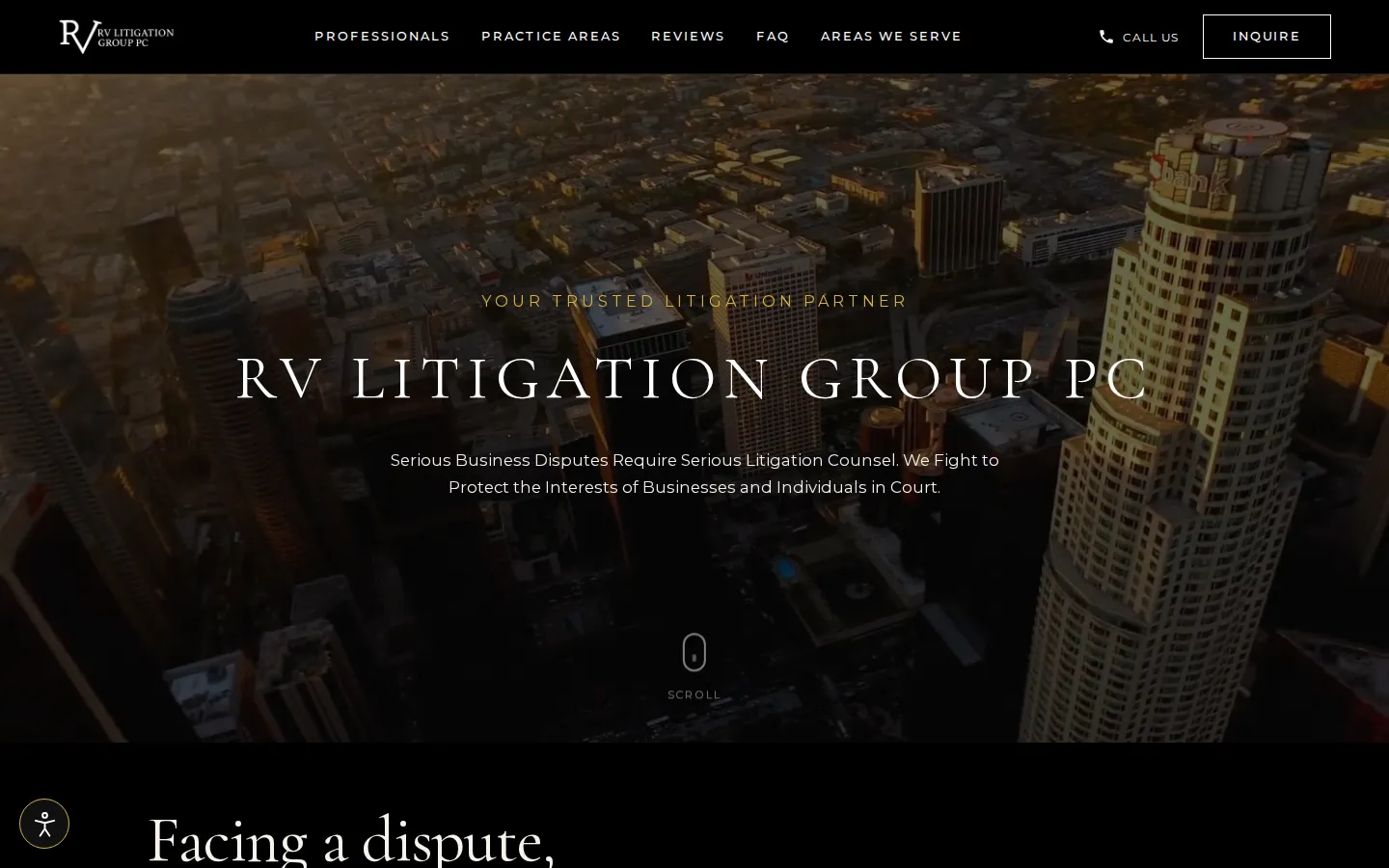
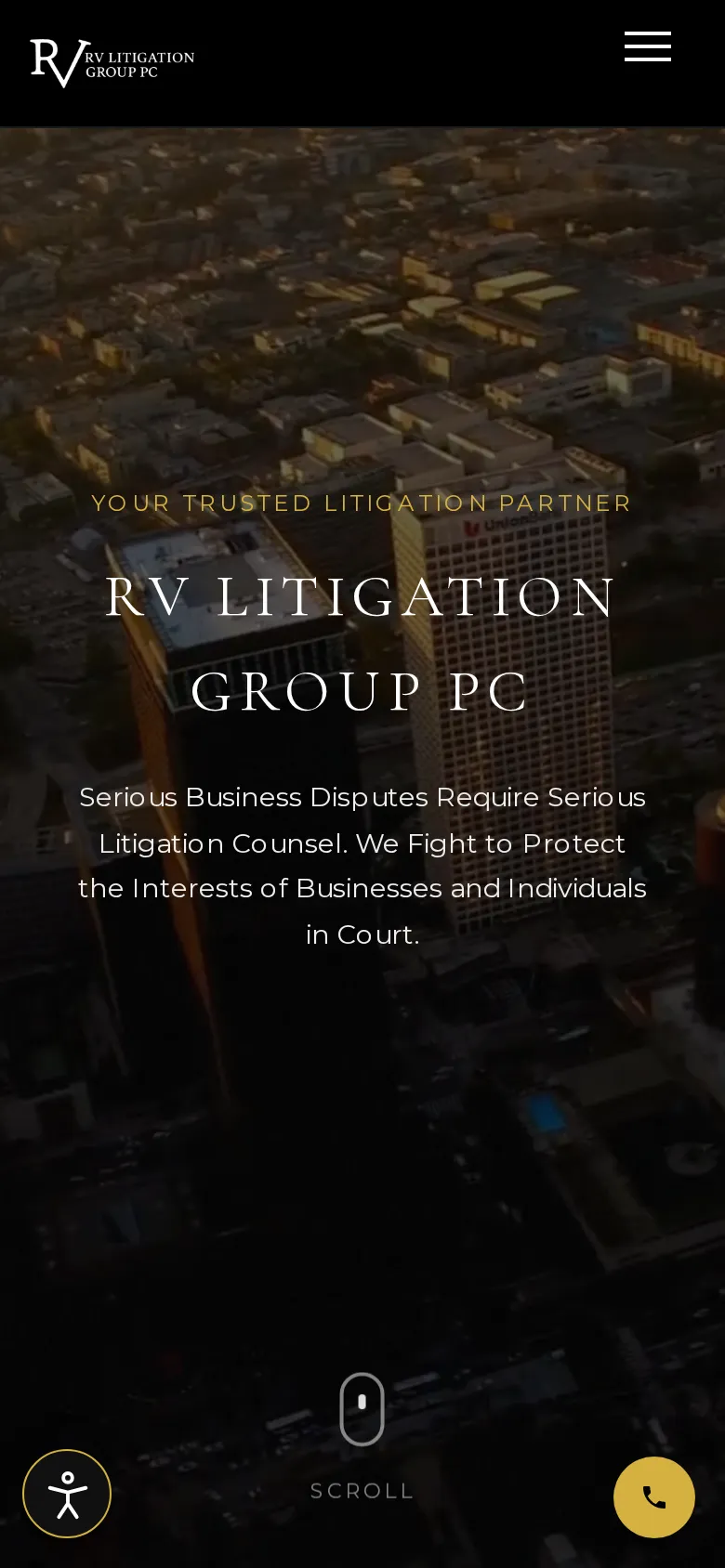
Homepage of rvlitigation.com, captured by FlashCrafter on Oct 12, 2026. San Francisco, CA
RV Litigation Group PC
In the top three on Google Maps for “law firm” at 3 of 9 sampled points around San Francisco’s center on Oct 12, 2026.
What it does well
- +First screen. A restrained palette, large headline, and city backdrop create a clear visual hierarchy with a professional tone.
- +Navigation. The desktop header groups team information, practice areas, reviews, FAQs, and service locations beside prominent contact options.
- +On a phone. A phone link appears in the first mobile screen, giving visitors immediate access to calling.
- +Services. Situation-based pathways help visitors recognize their legal problem and find a relevant next step.
- +Call to action. The inquiry prompt tells prospective clients what information to provide, making the initial contact easier to prepare.
- +Trust. A prominently stated review count gives visitors a concrete signal of client feedback to explore.
- +Call to action. The FAQ explains inquiry review and consultation topics, helping prospective clients understand what follows their submission.
To borrow: Pair a clear visual introduction with problem-based service pathways, accessible contact options, and a brief explanation of what happens after an inquiry.
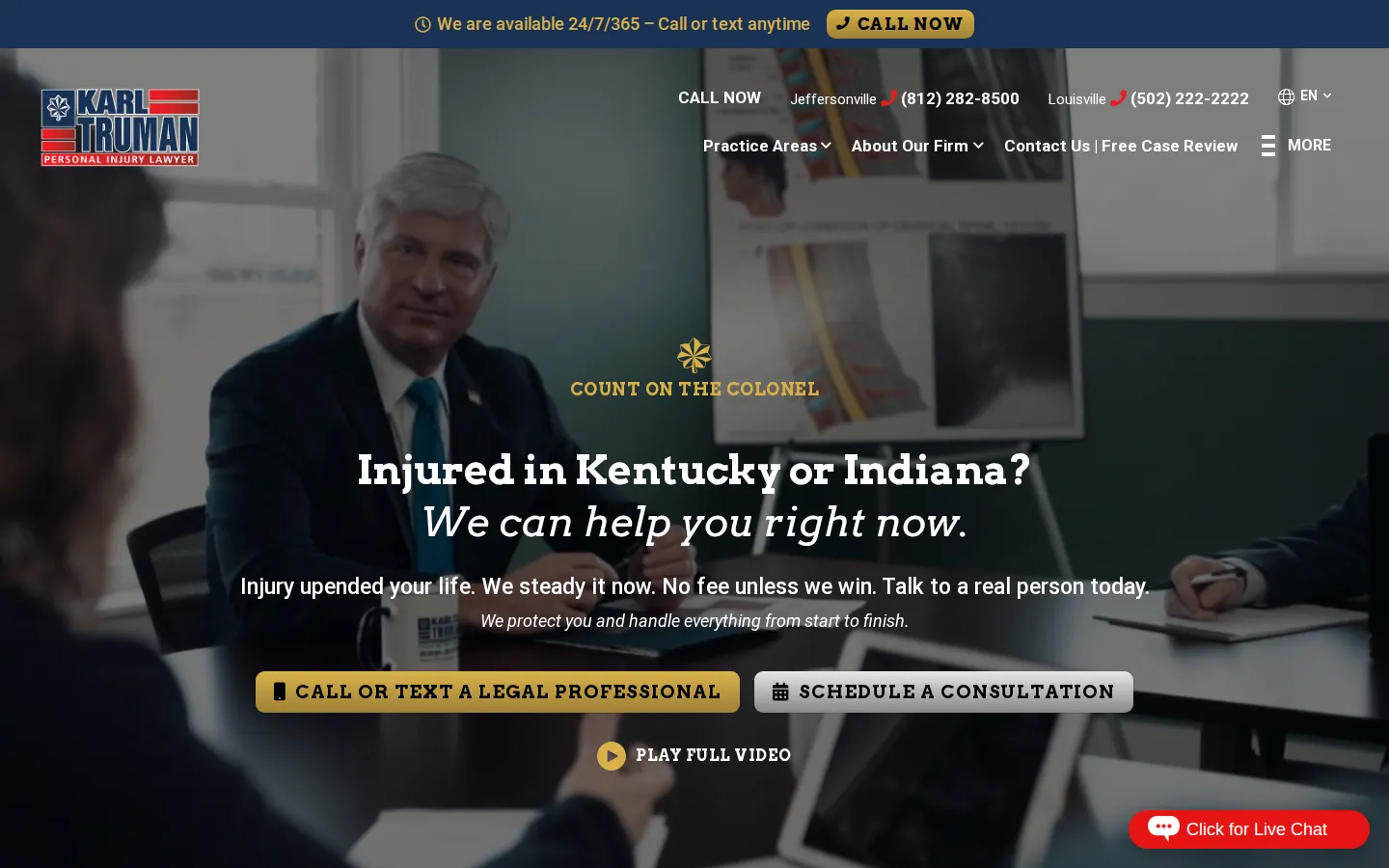
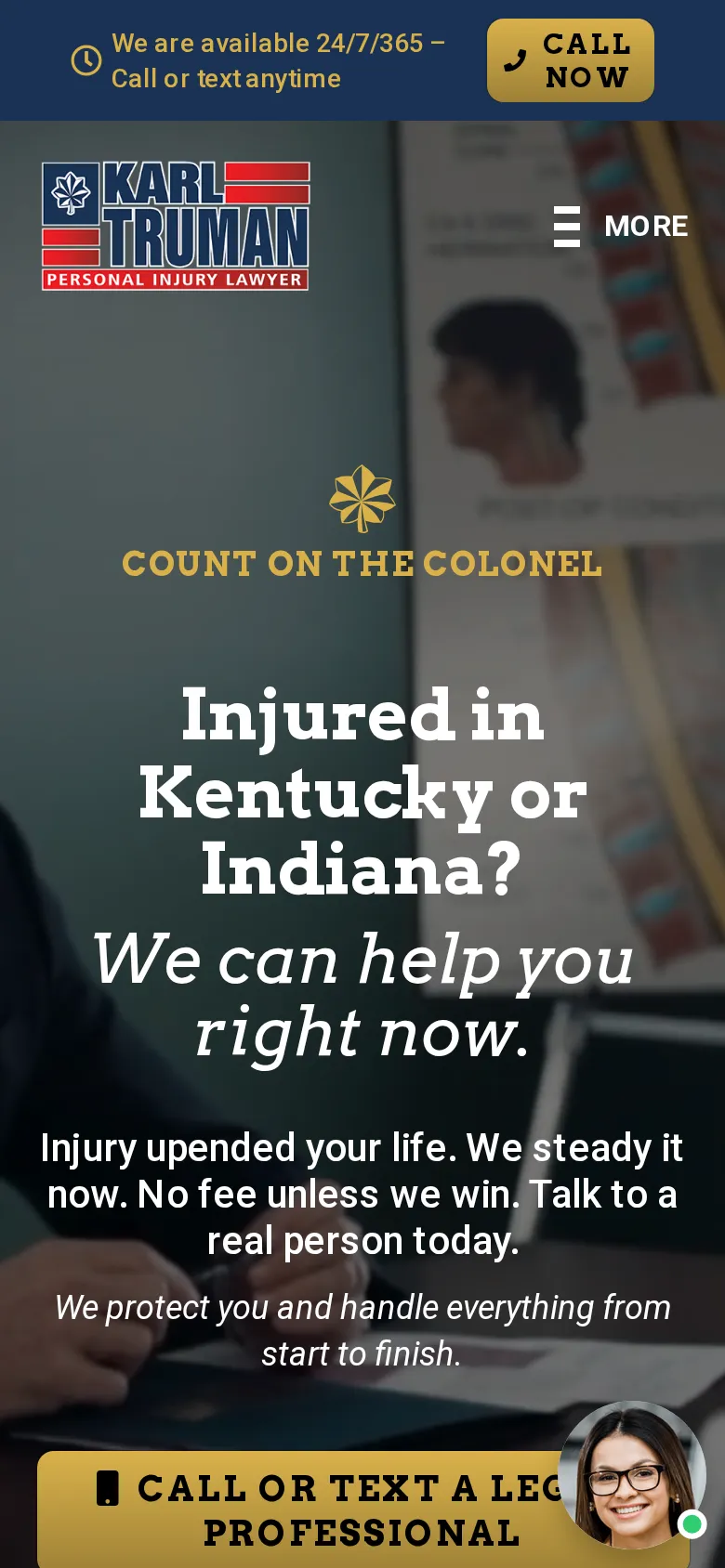
Homepage of trumanlaw.com, captured by FlashCrafter on Oct 12, 2026. Louisville, KY
Karl Truman Law Office LLC
In the top three on Google Maps for “law firm” at 2 of 9 sampled points around Louisville’s center on Oct 12, 2026.
What it does well
- +First screen. The opening headline immediately identifies the visitor’s problem and the two states served, with prominent contact options beneath it.
- +Call to action. Visitors can choose calling, texting, or scheduling a consultation, making the next step clear for different communication preferences.
- +On a phone. A phone link appears in the first mobile screen, giving visitors an immediate way to contact the office.
- +Trust. The fee explanation reduces financial uncertainty by clearly tying payment to a successful outcome.
- +Services. Practice areas are grouped into understandable categories, helping visitors locate the legal help relevant to their situation.
- +Trust. A simple explanation of intake and case handling helps prospective clients understand what will happen after they reach out.
To borrow: Pair a clear problem-and-location headline with prominent contact choices, plain fee terms, and a short explanation of what happens next.
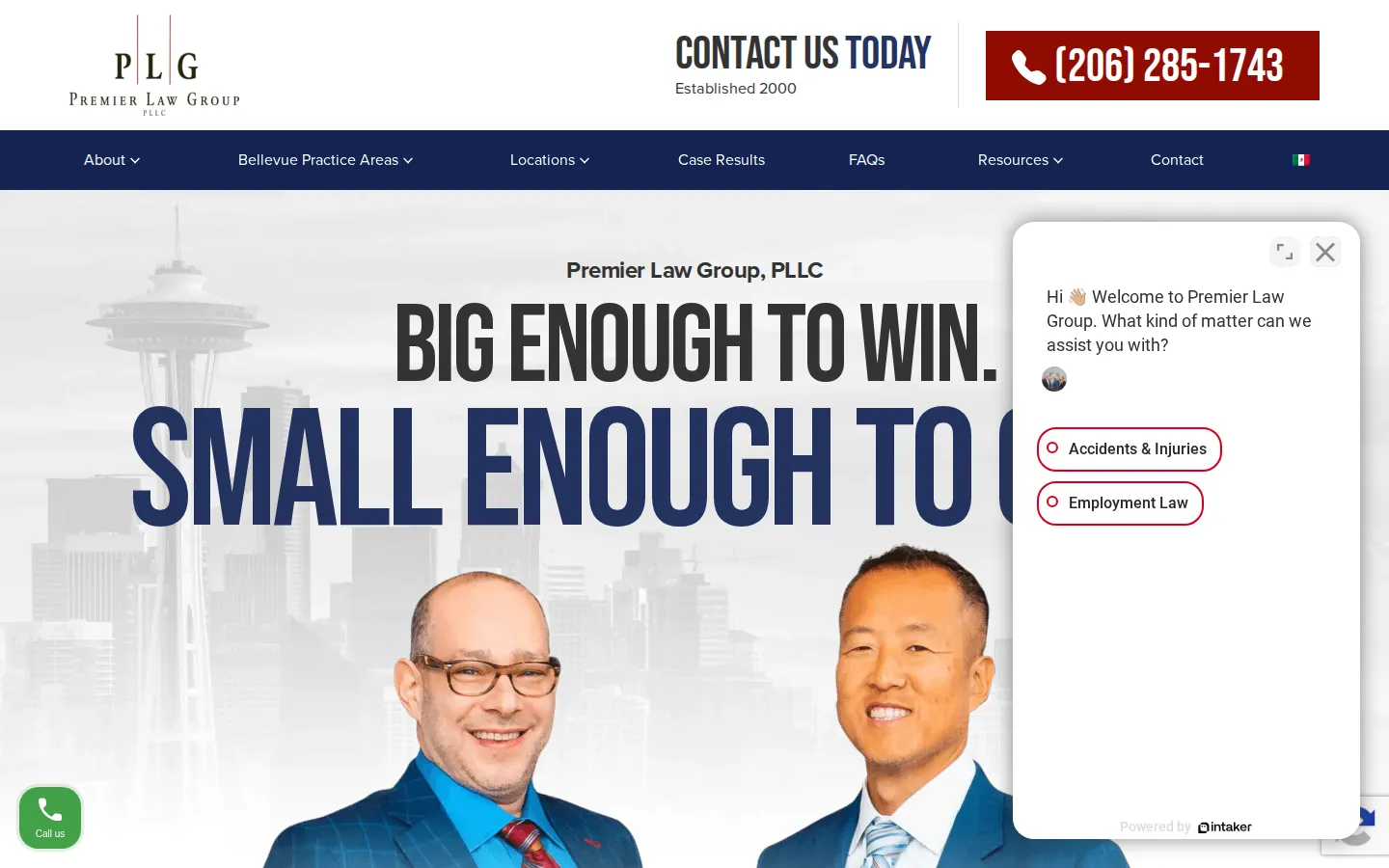
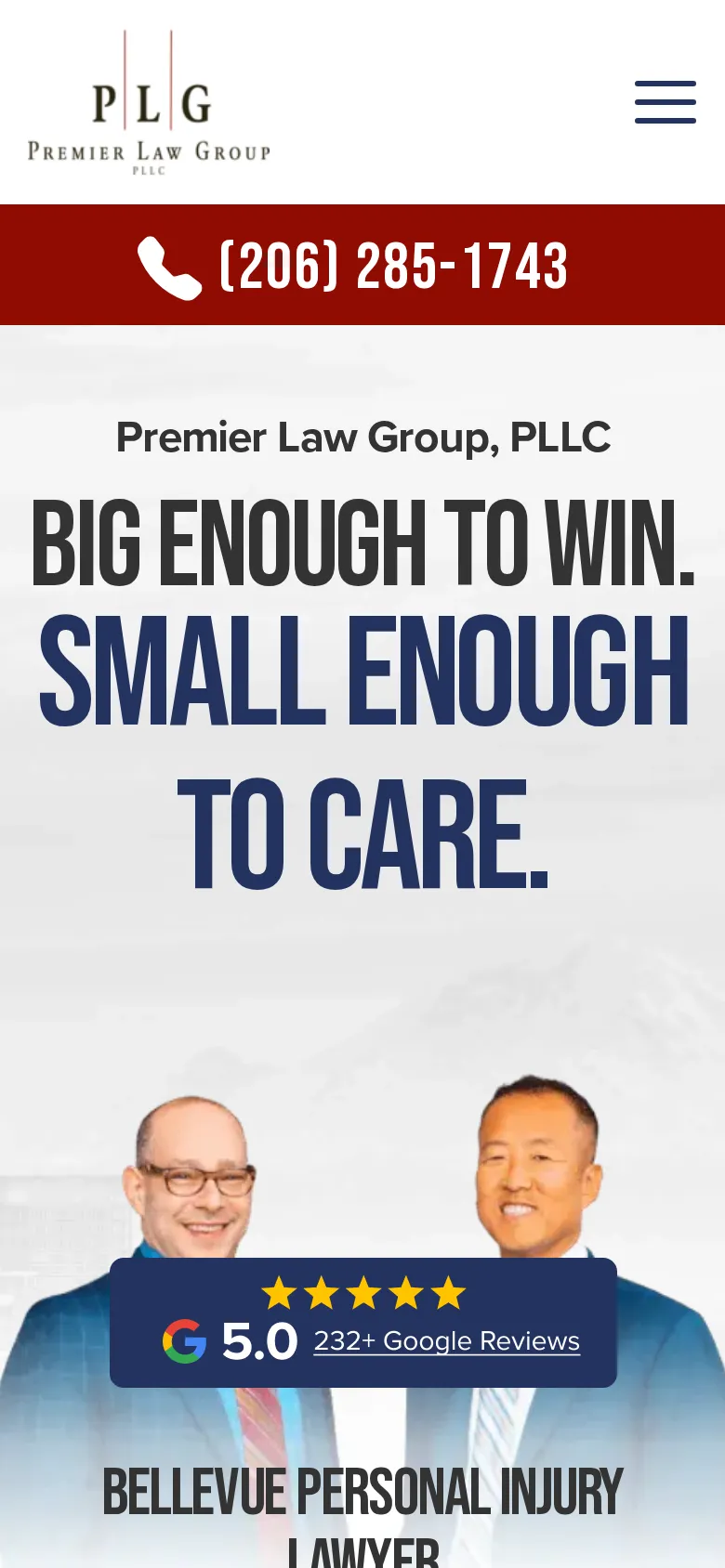
Homepage of plg-pllc.com, captured by FlashCrafter on Oct 12, 2026. Seattle, WA
Premier Law Group
In the top three on Google Maps for “law firm” at 2 of 9 sampled points around Seattle’s center on Oct 12, 2026.
What it does well
- +First screen. Large typography and portraits give the opening screen a clear, personal visual identity.
- +Call to action. A repeated invitation to speak with an attorney makes the next step clear and lowers the barrier with a free consultation.
- +On a phone. A tap-to-call option appears in the first mobile screen, making phone contact immediately accessible.
- +Trust. A review score paired with a substantial review count gives visitors concrete social proof.
- +Services. Plain explanations show how the team takes over insurance communication and gathers records to support an injury claim.
- +Navigation. The desktop menu groups firm information, practice areas, locations, results, FAQs, and resources into recognizable routes.
To borrow: Pair a prominent mobile call option and free consultation invitation with concrete reviews and clear explanations of how you help clients.
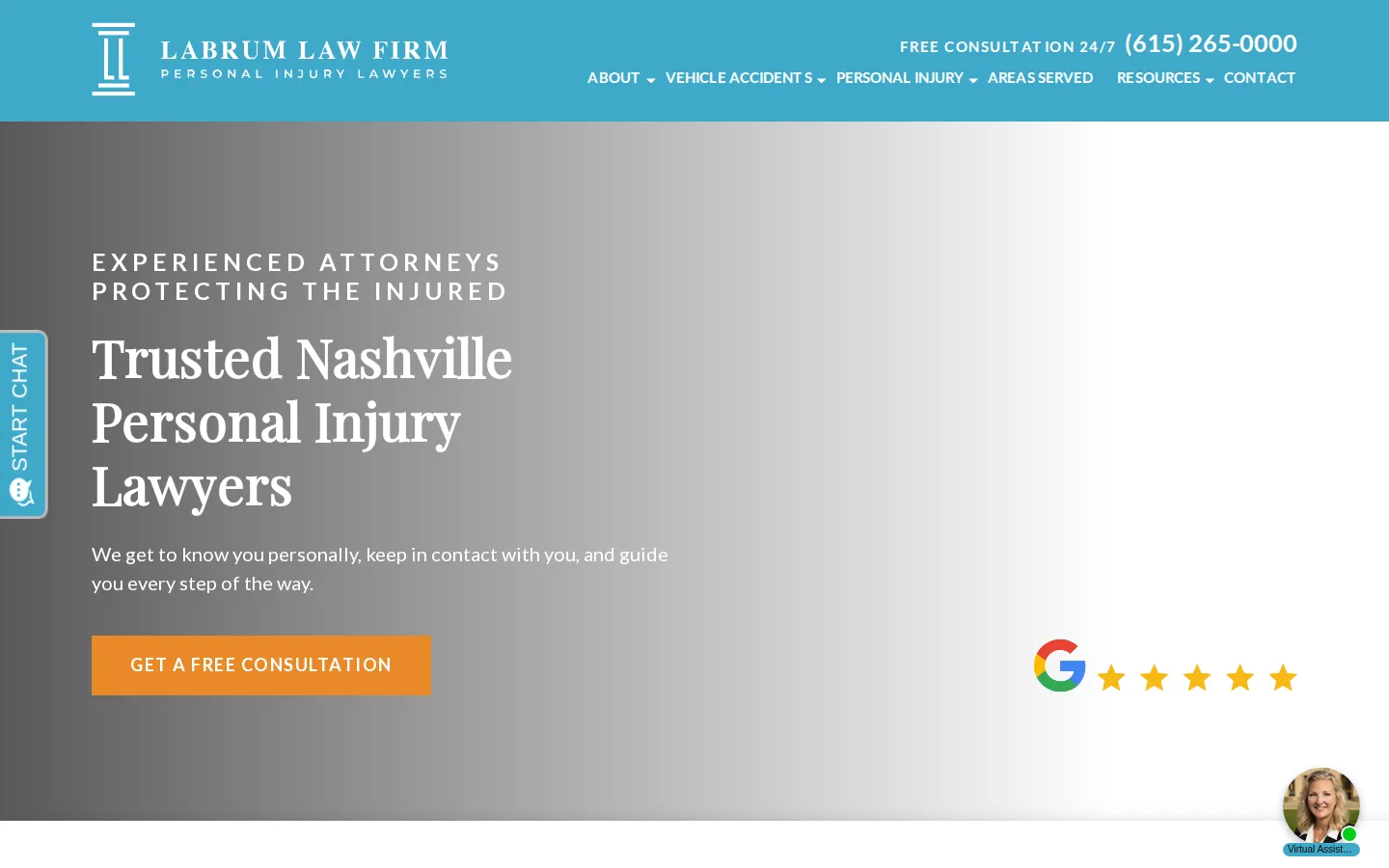
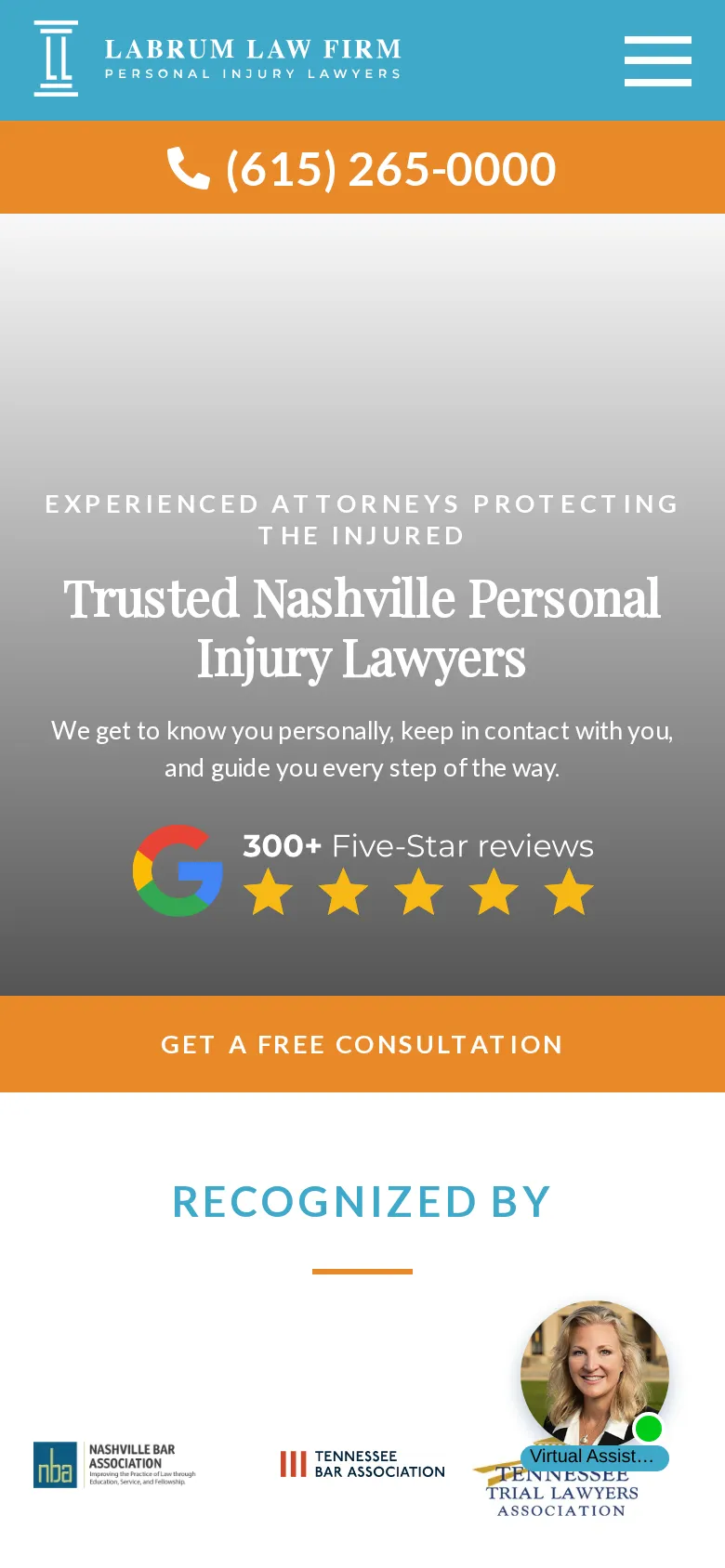
Homepage of labrumlawfirm.com, captured by FlashCrafter on Oct 12, 2026. Nashville, TN
Labrum Law Firm
In the top three on Google Maps for “law firm” at 4 of 9 sampled points around Nashville’s center on Oct 12, 2026.
What it does well
- +First screen. The opening headline immediately identifies the location and legal specialty, helping visitors recognize whether the firm fits their needs.
- +Call to action. A free consultation available around the clock gives prospective clients a clear, accessible next step.
- +On a phone. The phone link appears in the first mobile screen, making immediate contact convenient for visitors using their phones.
- +Trust. The explanation of contingency fees addresses a practical financial concern before visitors commit to contacting the team.
- +Services. Dedicated practice-area descriptions connect specific accident situations with the legal assistance visitors might need.
- +Navigation. The desktop header groups practice areas, firm information, resources, and contact options into an easy-to-scan menu.
To borrow: Pair a location-specific specialty headline with prominent mobile calling, a free consultation offer, and clear explanations of services and fees.
Patterns
What these firms share
- Phone link in the first mobile screen
- Have it19 of 20Without it1 of 20
- Online scheduling embed or link
- Have it0 of 20Without it20 of 20
- Client portal link
- Have it0 of 20Without it20 of 20
- Contact form (message box or three or more fields)
- Have it13 of 20Without it7 of 20
- Structured data (JSON-LD)
- Have it20 of 20Without it0 of 20
- No sideways scrolling on a phone
- Have it16 of 20Without it4 of 20
| Pattern | Have it | Without it |
|---|---|---|
| Phone link in the first mobile screen | 19 of 20 | 1 of 20 |
| Online scheduling embed or link | 0 of 20 | 20 of 20 |
| Client portal link | 0 of 20 | 20 of 20 |
| Contact form (message box or three or more fields) | 13 of 20 | 7 of 20 |
| Structured data (JSON-LD) | 20 of 20 | 0 of 20 |
| No sideways scrolling on a phone | 16 of 20 | 4 of 20 |
Phone links appeared in the first mobile screen for 19 of 20 firms, while contact forms appeared for 13 of 20 firms, showing two visible ways visitors could make an inquiry. Online scheduling and client portal links each appeared for 0 of 20 firms. Structured data appeared for 20 of 20 firms, and 16 of 20 firms had no sideways scrolling on a phone; these counts describe website features, without establishing their effect on visibility.
Your site
See how your firm’s site and local standing compare
Checklist
Check your own homepage
- 01
Open your homepage on a phone and check whether visitors can see and tap a phone link in the first screen.
- 02
Check that your opening headline identifies your practice or specialty and location, using words visitors can match to their needs.
- 03
Make your consultation invitation easy to find, and explain any consultation or fee terms plainly beside the contact options.
- 04
Review your practice descriptions and navigation so visitors can recognize their case type and choose a relevant service.
- 05
Check whether client feedback, attorney credentials or specific case results give concrete support to the statements on your homepage.
- 06
If your homepage includes an inquiry form, explain what happens after someone sends a message and make contact choices visible.
- 07
View your homepage on a phone and check for sideways scrolling across its text, images and contact controls.
- 08
Check whether your homepage includes structured data in JSON-LD.
Questions
Frequently asked
Does appearing in Google Maps’ top three mean a firm has a better website?
How were the Google Maps searches carried out?
What contact options appear in these examples?
Are all screenshots taken from homepages?
Method and limits
How this was measured
FlashCrafter searched Google Maps for “law firm” at 9 points around the center of each of 30 large US cities (cities-us-v2, version 2; US Census Bureau, Vintage 2025 population estimates for incorporated places (July 1, 2025 estimates; file released 2026-05-14)), a 3 by 3 grid 3.2 km apart, on Oct 12, 2026. In each city the law firm that appeared most often in the top three was chosen; ties go to the better average position. 9 of the 20 firms shown were in the top three at two or fewer of the 9 points: the top three is visibility, never first place. If that firm’s site could not be captured or did not qualify, the next firm in the same city by that measure took its place. A probe samples 9 points, not the whole city, and visibility is not quality.
20 of the 30 cities are represented. Cities were worked through in list order and one firm per city is shown, up to 20: 2 cities had a firm that qualified but was left out at the limit of 20 firms; 8 cities were not reached before that limit.
Before any website was opened, code removed 720 listings that never appeared in the top three; 268 listings in other categories; 128 listings for chains or multi-location businesses (their websites are listed under more than one location or business listing); 71 listings with no website; 22 listings of national franchise or chain brands; 4 listings set aside (directory or social-media pages, or sites that could not be verified as the business’s own). Of 1597 listings considered, 26 sites were tried and 22 qualified; those that did not were 2 sites that blocked the capture; 2 sites that are not businesses of this trade (referral sites, directories or other trades). 20 are shown, at most one per city, in city order.
Everything on a card comes from that firm’s own website, read on Oct 12, 2026: the page text, a first-screen screenshot at desktop and phone width, and the page structure measured by code. The homepage is shown; where it could not be captured, the card names the page the firm’s Google Maps listing links to instead. Screenshots are reduced, credited and linked to the firm’s site. The notes are FlashCrafter’s own words, each tied to something on the page. Firm names are the names on their Google Maps listings. The city on each card is where the Google Maps search was run, which is where the firm’s listing appeared; a firm may serve clients or be based elsewhere.
These firms are not FlashCrafter clients unless a card says so, did not endorse FlashCrafter, and FlashCrafter does not endorse their services. Nothing here rates or ranks them.
Is this your firm? Ask us to remove it or correct something. We act within two business days.
Keep reading
Related
- Legal marketing
- Legal Marketing Software
- Legal Website Cost
- Legal Templates
- Accountants Website Examples
21 sources, captured 2026-10-12 · show· hide
- Redmond Law Firm, PLLC (homepage, captured 2026-10-12)
- The Hurt Law Firm (homepage, captured 2026-10-12)
- Ankin Law (homepage, captured 2026-10-12)
- The Martinez Law Firm (homepage, captured 2026-10-12)
- The Law Offices Of Alcock & Associates P.C. (homepage, captured 2026-10-12)
- The Town Law LLC (homepage, captured 2026-10-12)
- Carabin & Shaw (homepage, captured 2026-10-12)
- San Diego Law Firm (homepage, captured 2026-10-12)
- Anderson Injury Lawyers Dallas (homepage, captured 2026-10-12)
- Law Office of Daniel Collins (homepage, captured 2026-10-12)
- Woolsey Morcom Attorneys at Law (homepage, captured 2026-10-12)
- Ramos James Law, PLLC (homepage, captured 2026-10-12)
- Solution Now Law Firm (homepage, captured 2026-10-12)
- Stewart Law Offices - Workers Compensation & Car Accident Lawyers (homepage, captured 2026-10-12)
- Buckeye Law Group (page /locations/columbus-law-office, captured 2026-10-12)
- Marc Lopez Law Firm (homepage, captured 2026-10-12)
- RV Litigation Group PC (homepage, captured 2026-10-12)
- Karl Truman Law Office LLC (homepage, captured 2026-10-12)
- Premier Law Group (homepage, captured 2026-10-12)
- Labrum Law Firm (homepage, captured 2026-10-12)
- FlashCrafter Briefs: Google Maps probe grid (contract v1)
Vendor pages change. Figures are as published on the capture date; confirm before deciding.