
CPA firm website examples
20 Real CPA Websites From Firms in Google Maps' Top Three (November 2026)
20 real websites of CPA firms from 20 US cities, captured November 2026: what they put first, how they ask for the call.
- Real websites
- 20
- Cities represented
- 20
- Measured
- Oct 2026
These CPA website examples show homepage patterns from firms that appeared in Google Maps’ top three for “cpa firm.” FlashCrafter measured visibility on October 11, 2026, using nine search points around each city center, then captured the homepages on November 18, 2026. Appearing in the top three on Google Maps measures visibility, not the quality of a firm or its website. The gallery does not rank, rate or recommend firms.
Use the desktop and mobile captures to compare how homepages introduce services, explain who they serve and make contact options visible. Look for combinations relevant to your own homepage: a specific opening message, practical service descriptions, evidence of experience and a clear next step. The observations concern homepage content and presentation; they do not establish service quality, prices or workmanship.
The gallery
Websites, captured Nov 18, 2026
Ordered by city, not ranked. Inclusion reflects how often Google Maps showed the firm in the top three around the city center; it says nothing about the quality of the firm or its website.
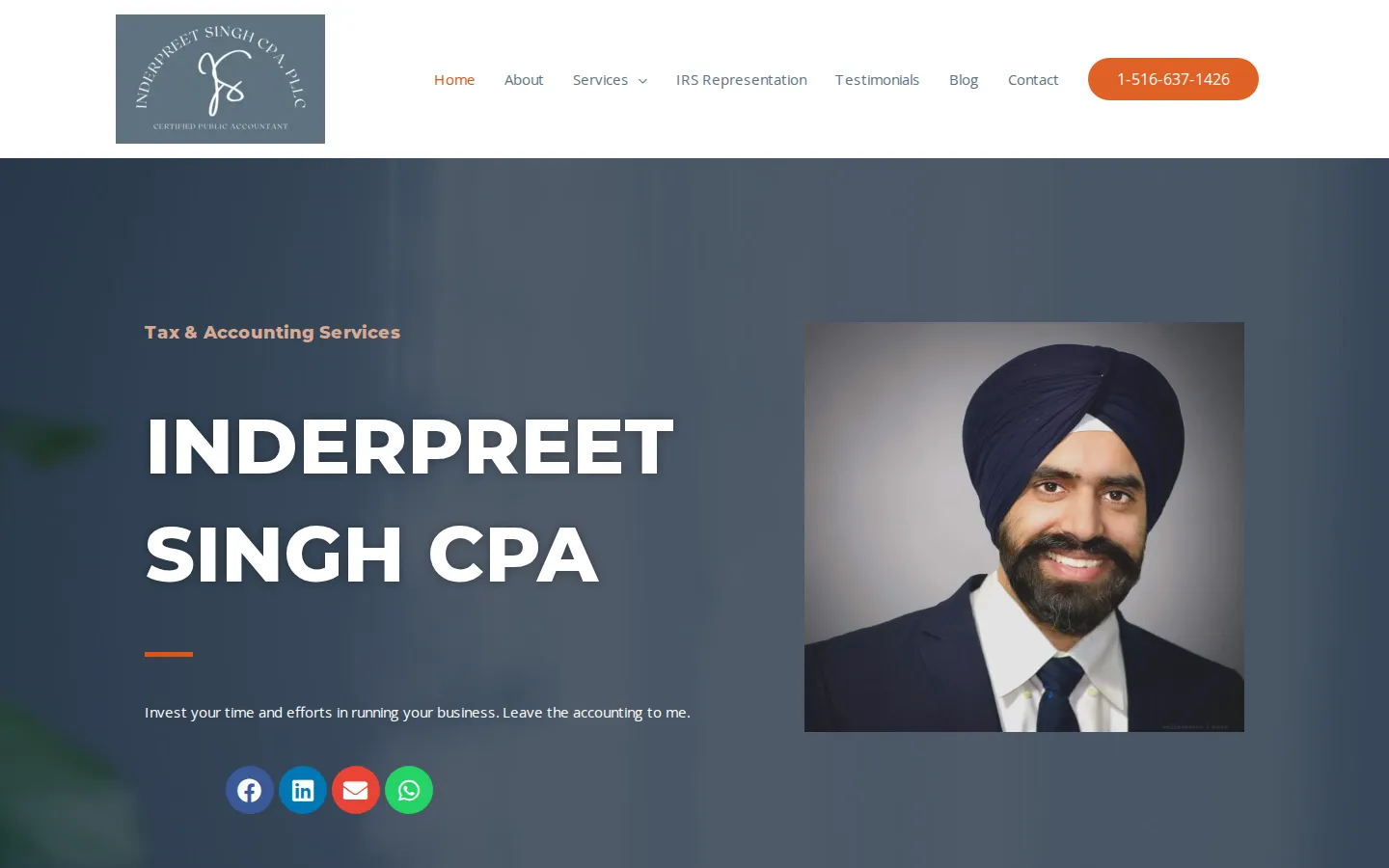
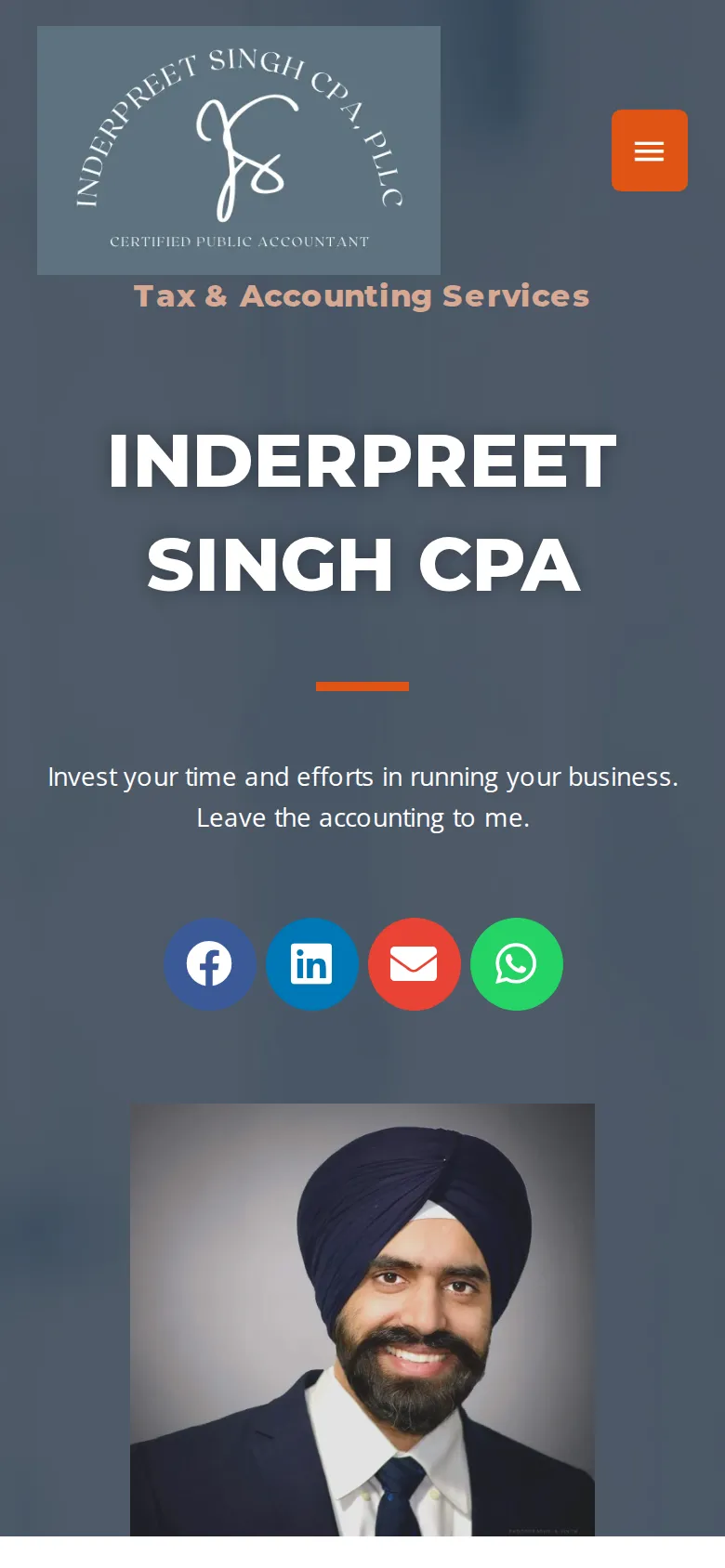
Homepage of singhaccounting.com, captured by FlashCrafter on Nov 18, 2026. New York, NY
Inder Singh CPA, NYC
In the top three on Google Maps for “cpa firm” at 2 of 9 sampled points around New York’s center on Oct 11, 2026.
What it does well
- +First screen. A prominent professional portrait and large headline give the opening screen a personal, recognizable focus.
- +Call to action. A clickable phone number gives visitors a direct way to start a conversation.
- +Navigation. The desktop menu makes services, client feedback, and contact information easy to find.
- +Services. Specific accounting tasks help business owners understand what support they can request.
- +Trust. Highlighted IRS experience gives prospective tax clients a concrete reason to consider the practitioner.
- +Call to action. A labeled inquiry form offers a written contact option alongside the phone number.
To borrow: Pair a personal introduction with specific service examples, relevant experience, and clear phone and inquiry options.
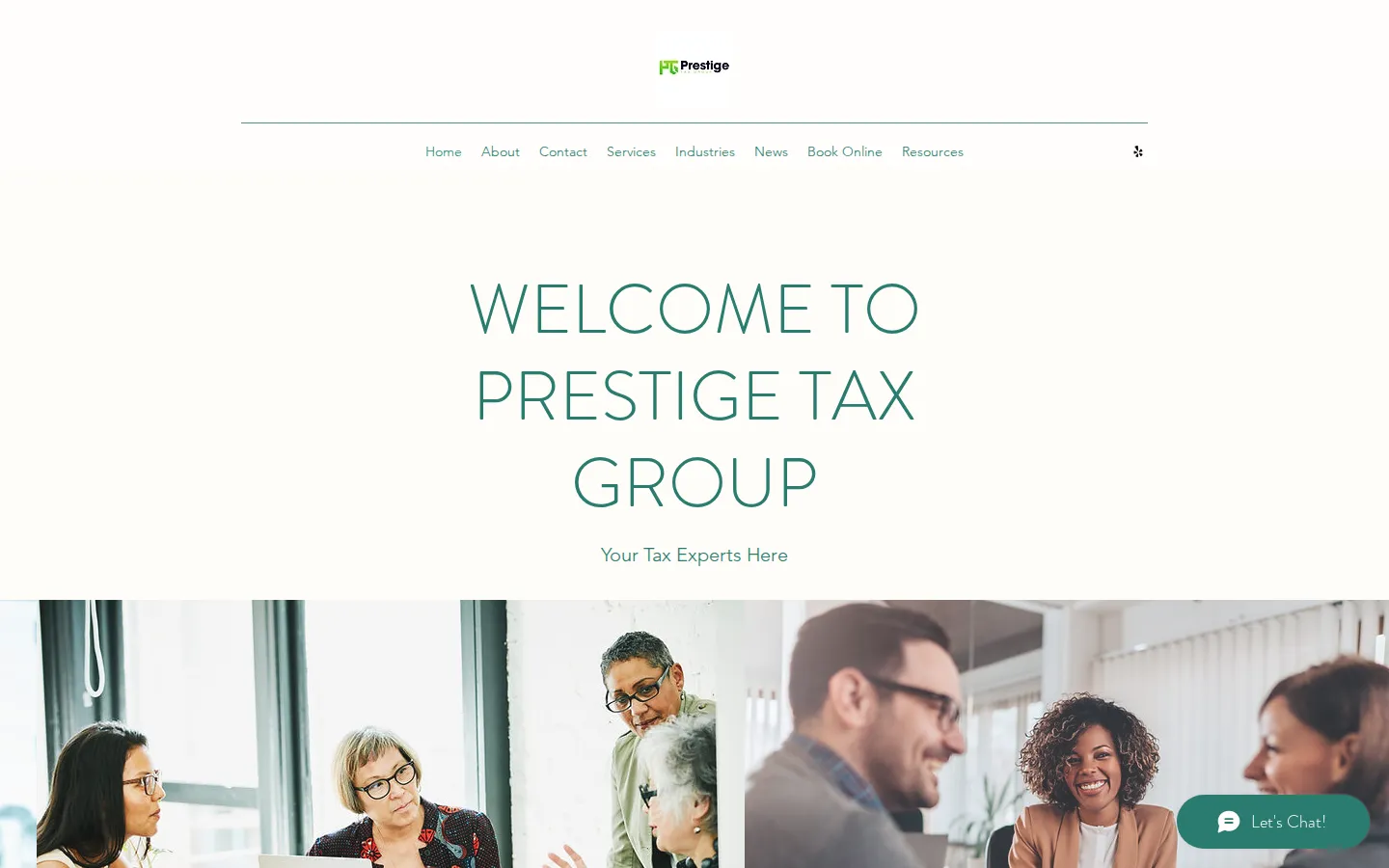
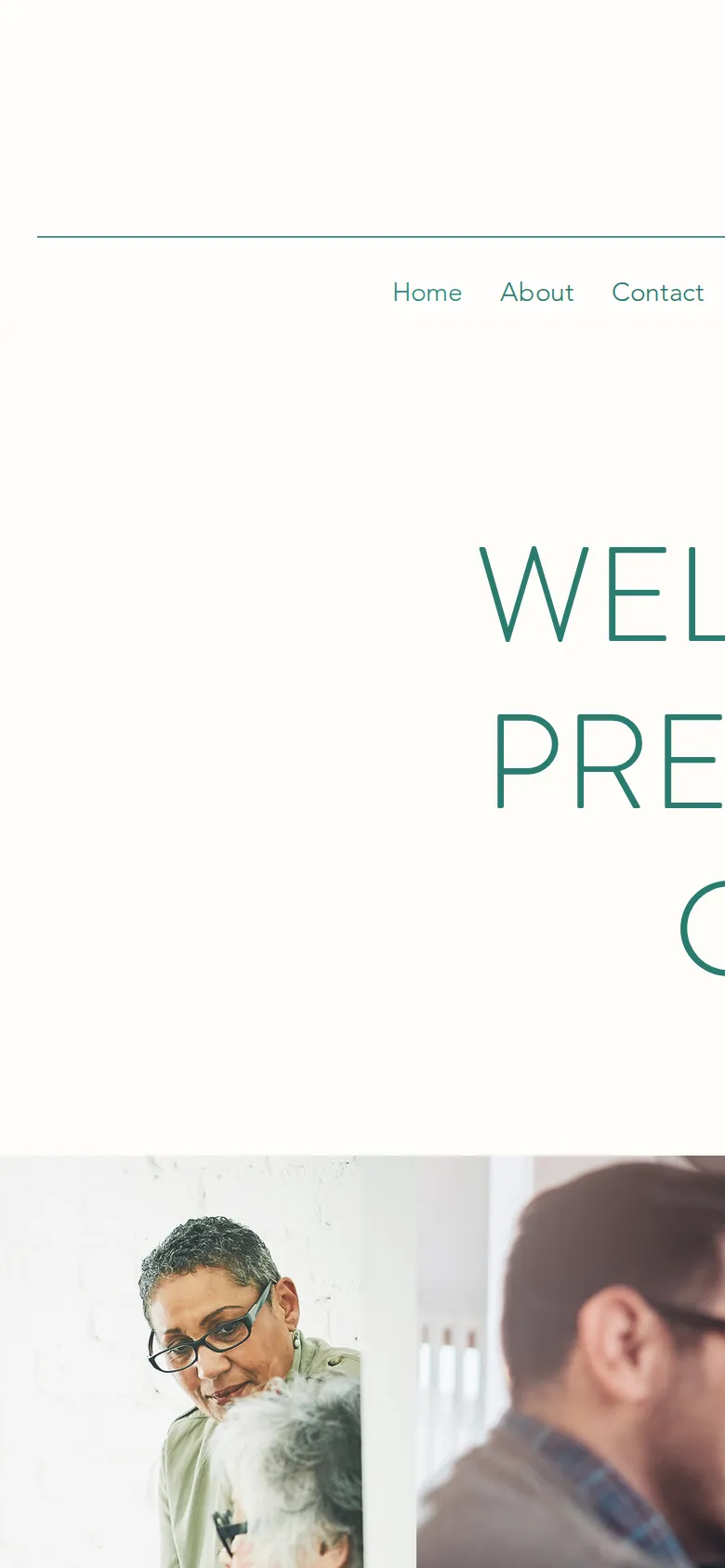
Homepage of prestigetaxgroup.net, captured by FlashCrafter on Nov 18, 2026. Los Angeles, CA
Prestige Tax Group
In the top three on Google Maps for “cpa firm” at 3 of 9 sampled points around Los Angeles’s center on Oct 11, 2026.
What it does well
- +First screen. A spacious desktop introduction uses large typography and a restrained teal palette to establish a clear visual hierarchy.
- +Navigation. The main menu gives visitors direct routes to service details, background information, resources and online booking.
- +Services. Service listings include appointment lengths and selected prices, helping visitors compare options before booking.
- +Call to action. Repeated booking prompts alongside individual services give visitors a clear next step after choosing their needs.
- +Trust. The introduction emphasizes personalized advice and attention to clients’ interests when making financial decisions.
To borrow: Pair a calm desktop introduction with service listings that show appointment lengths, selected prices and direct booking prompts.
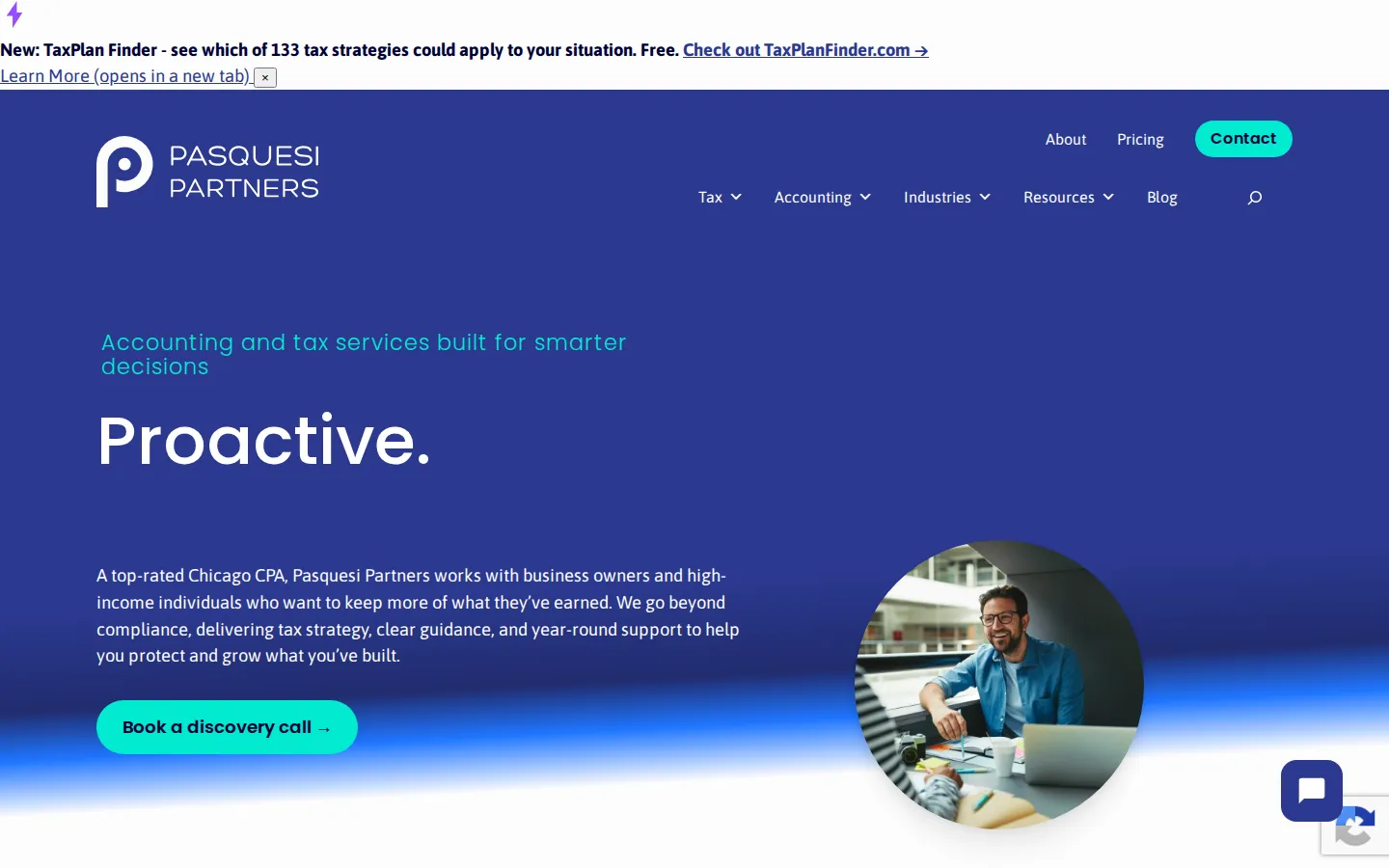
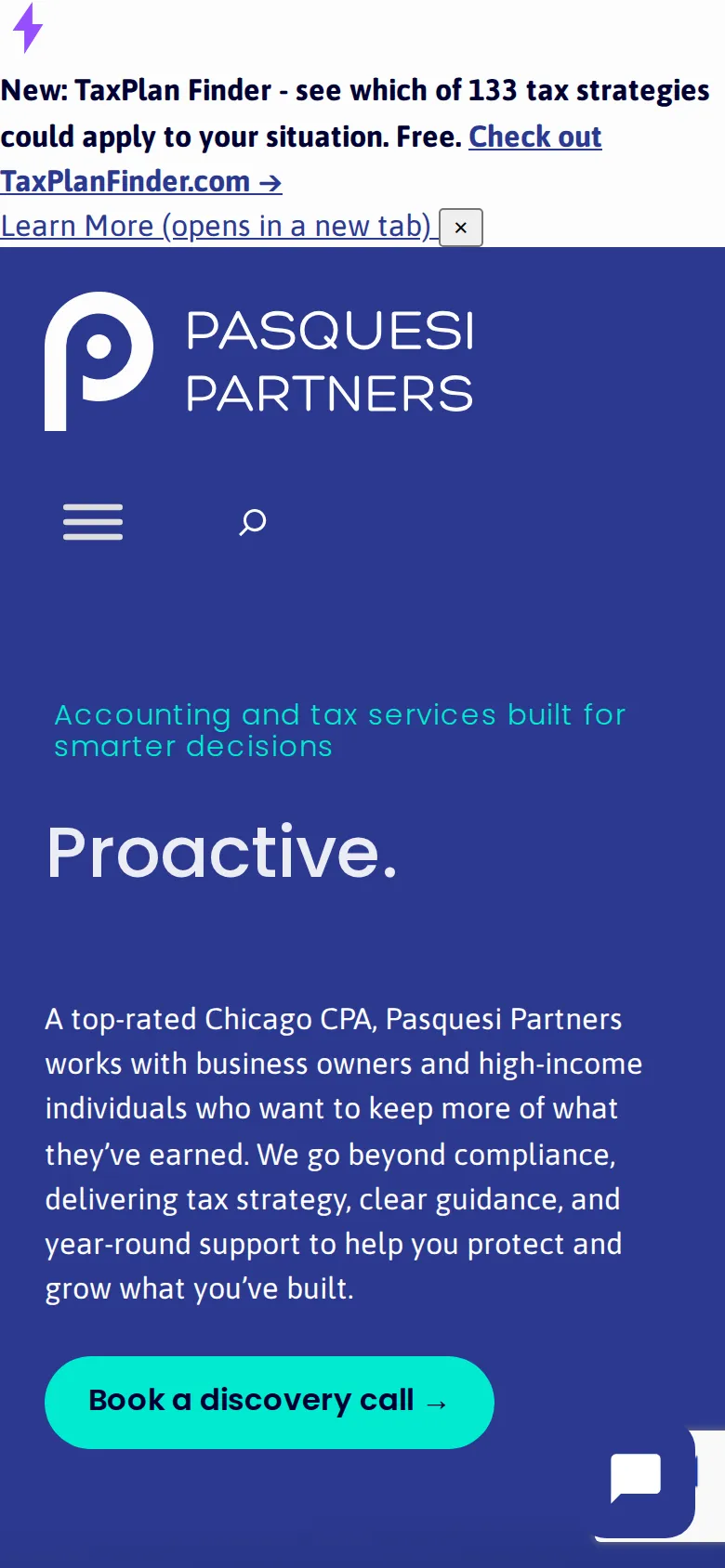
Homepage of pasquesipartners.com, captured by FlashCrafter on Nov 18, 2026. Chicago, IL
Pasquesi Partners
In the top three on Google Maps for “cpa firm” at 4 of 9 sampled points around Chicago’s center on Oct 11, 2026.
What it does well
- +First screen. The desktop hero uses a short headline, strong color contrast, and a prominent button to establish a clear visual hierarchy.
- +Call to action. A repeated invitation to schedule an introductory conversation gives visitors a consistent next step throughout the page.
- +Services. Services connect directly to business goals, helping visitors understand which support fits their needs.
- +Trust. The founder’s career history and founding year give prospective clients concrete background for evaluating the practice.
- +Trust. Client testimonials describe practical outcomes, including clearer records and greater confidence in the bookkeeping process.
- +On a phone. The mobile layout presents the introduction in a readable single column with a large, clearly labeled booking button.
To borrow: Pair a prominent introductory-call button with services tied to client goals, concrete founder experience, and testimonials describing useful outcomes.
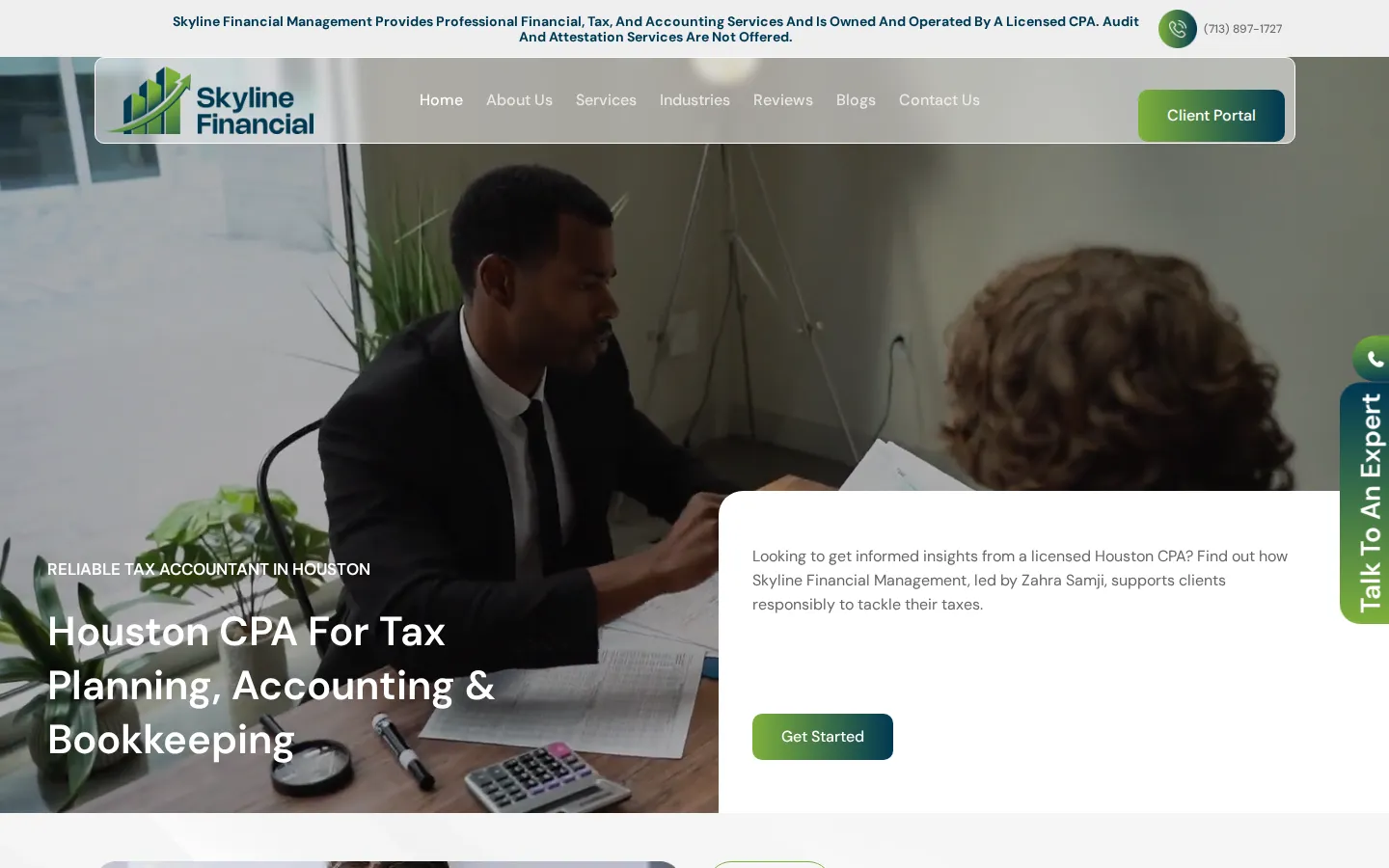
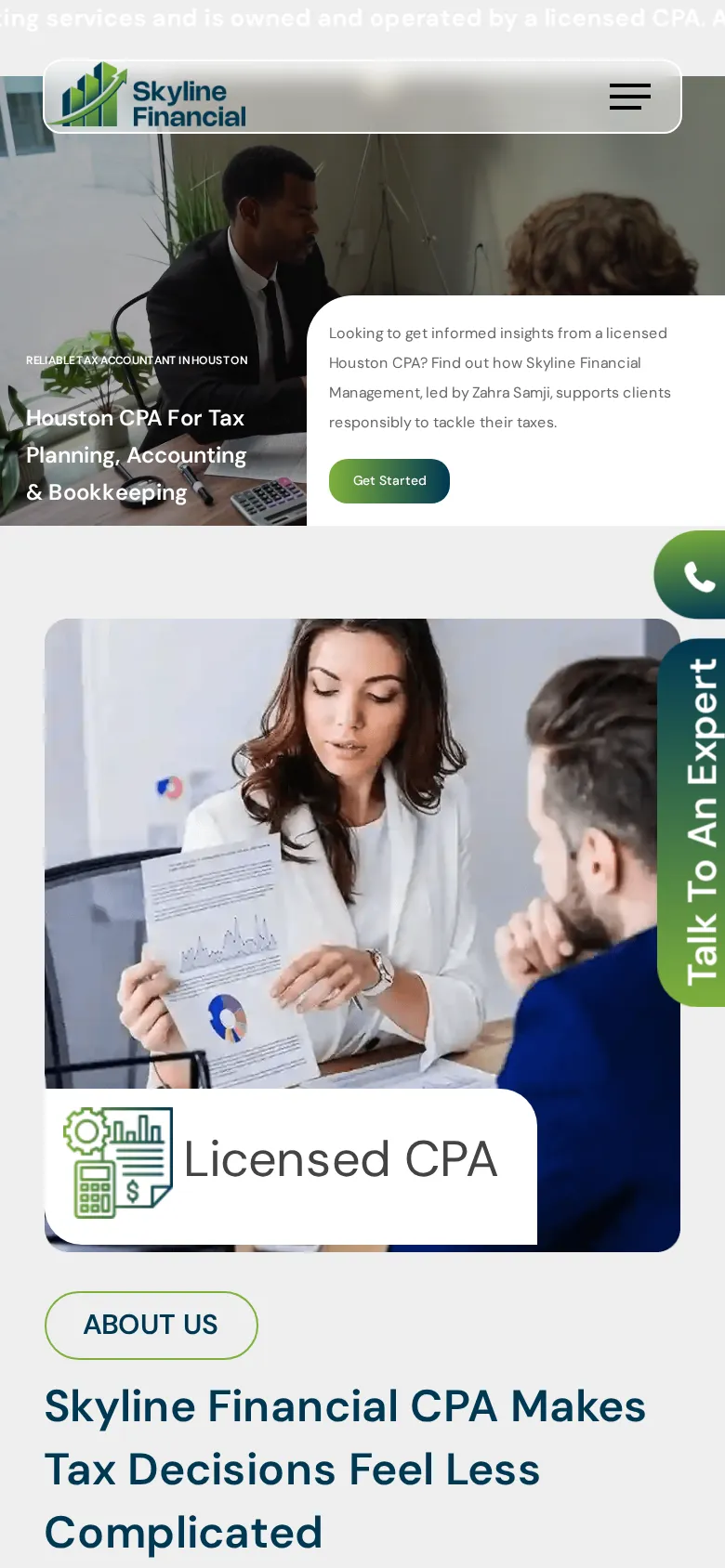
Homepage of skylinefinancialcpa.com, captured by FlashCrafter on Nov 18, 2026. Houston, TX
Houston Skyline Financial CPA
In the top three on Google Maps for “cpa firm” at 3 of 9 sampled points around Houston’s center on Oct 11, 2026.
What it does well
- +First screen. The opening headline immediately identifies the location and core areas of help, letting visitors quickly assess relevance.
- +Call to action. A visible introductory button gives prospective clients a clear next step alongside the opening explanation.
- +Trust. Client testimonials describe specific tax concerns and how clear explanations helped clients make decisions.
- +Services. Service descriptions explain practical tasks and benefits, helping business owners understand what support fits their needs.
- +On a phone. A phone link appears within the first mobile screen, making direct contact readily accessible.
- +Navigation. A prominent client portal offers returning clients a clear route to their dedicated workspace.
To borrow: Pair a location-specific service headline with a clear contact action, practical service explanations, and testimonials about recognizable client concerns.
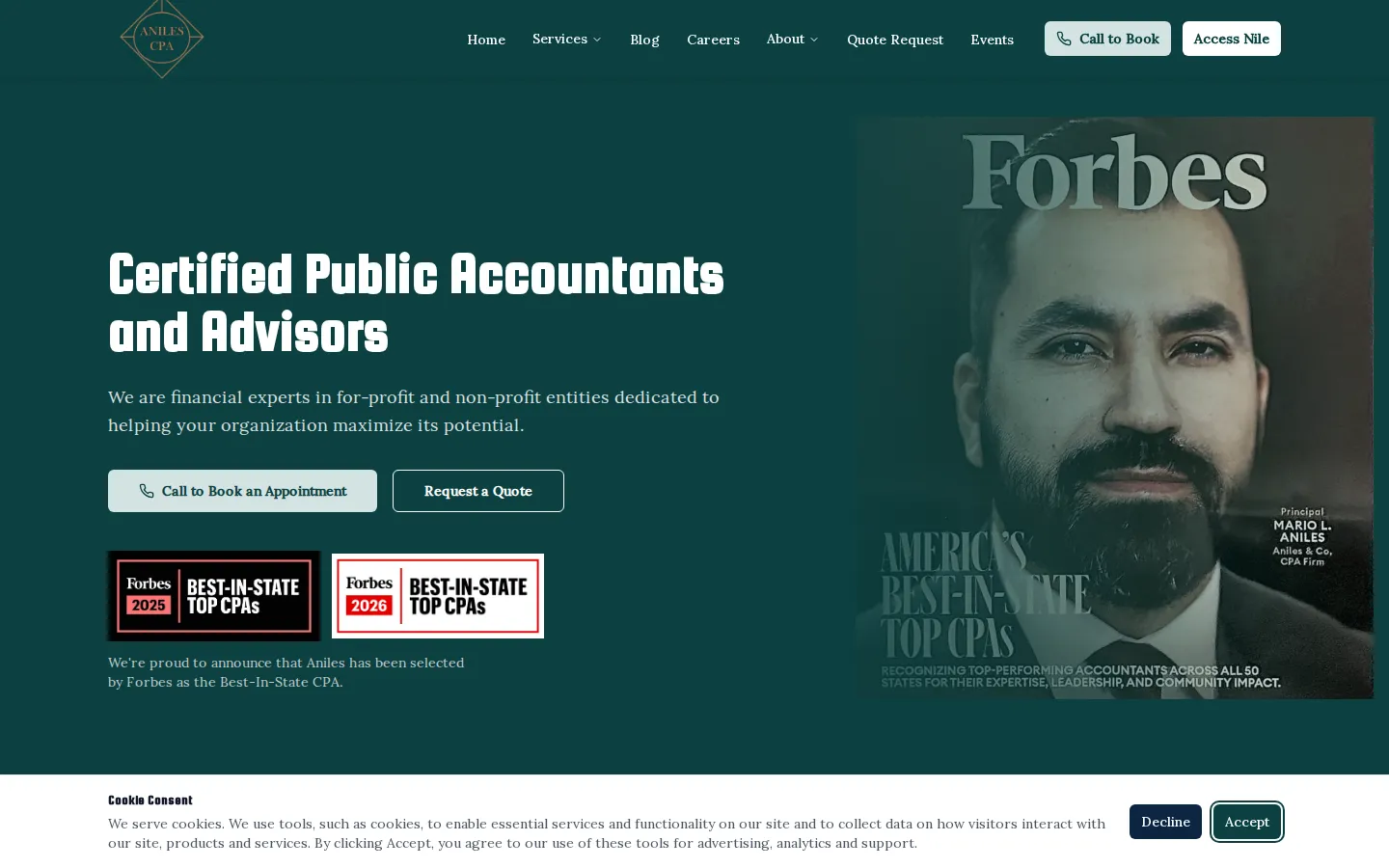
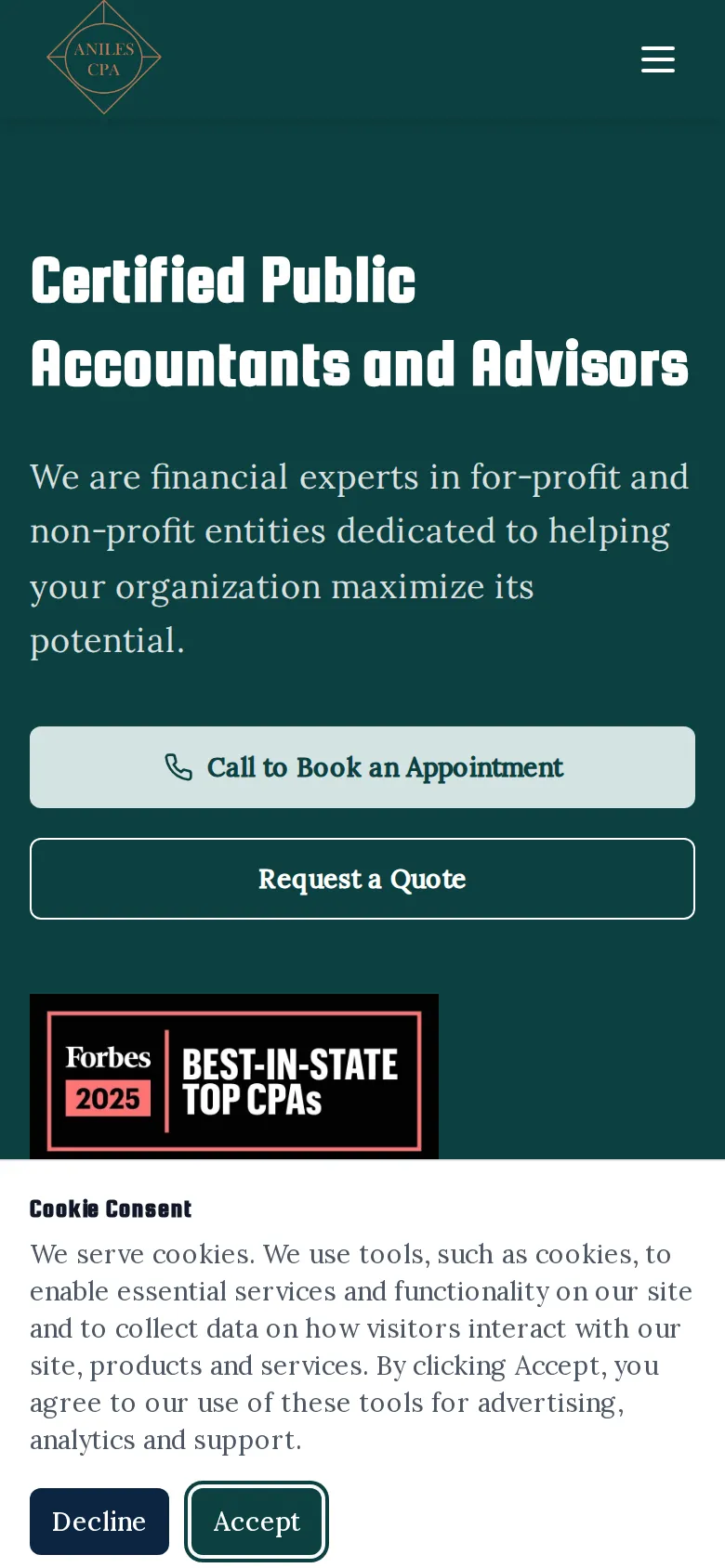
Homepage of anilescpa.com, captured by FlashCrafter on Nov 18, 2026. Phoenix, AZ
Aniles & Co CPA Firm
In the top three on Google Maps for “cpa firm” at 3 of 9 sampled points around Phoenix’s center on Oct 11, 2026.
What it does well
- +First screen. A prominent headline and short introduction quickly establish the firm's role and the organizations it serves.
- +Call to action. Visitors can choose between booking a conversation and requesting a quote directly from the opening section.
- +Trust. Dated third-party recognition gives visitors a concrete credibility signal.
- +Services. Industry-specific descriptions help prospective clients connect their needs with relevant financial support.
- +On a phone. Large, vertically stacked contact buttons make the two main next steps easy to identify on mobile.
- +Navigation. The desktop menu gives visitors direct routes to services, firm information, and a quote request.
To borrow: Pair a clear opening message with prominent contact choices, specific credibility evidence, and service descriptions tailored to client industries.
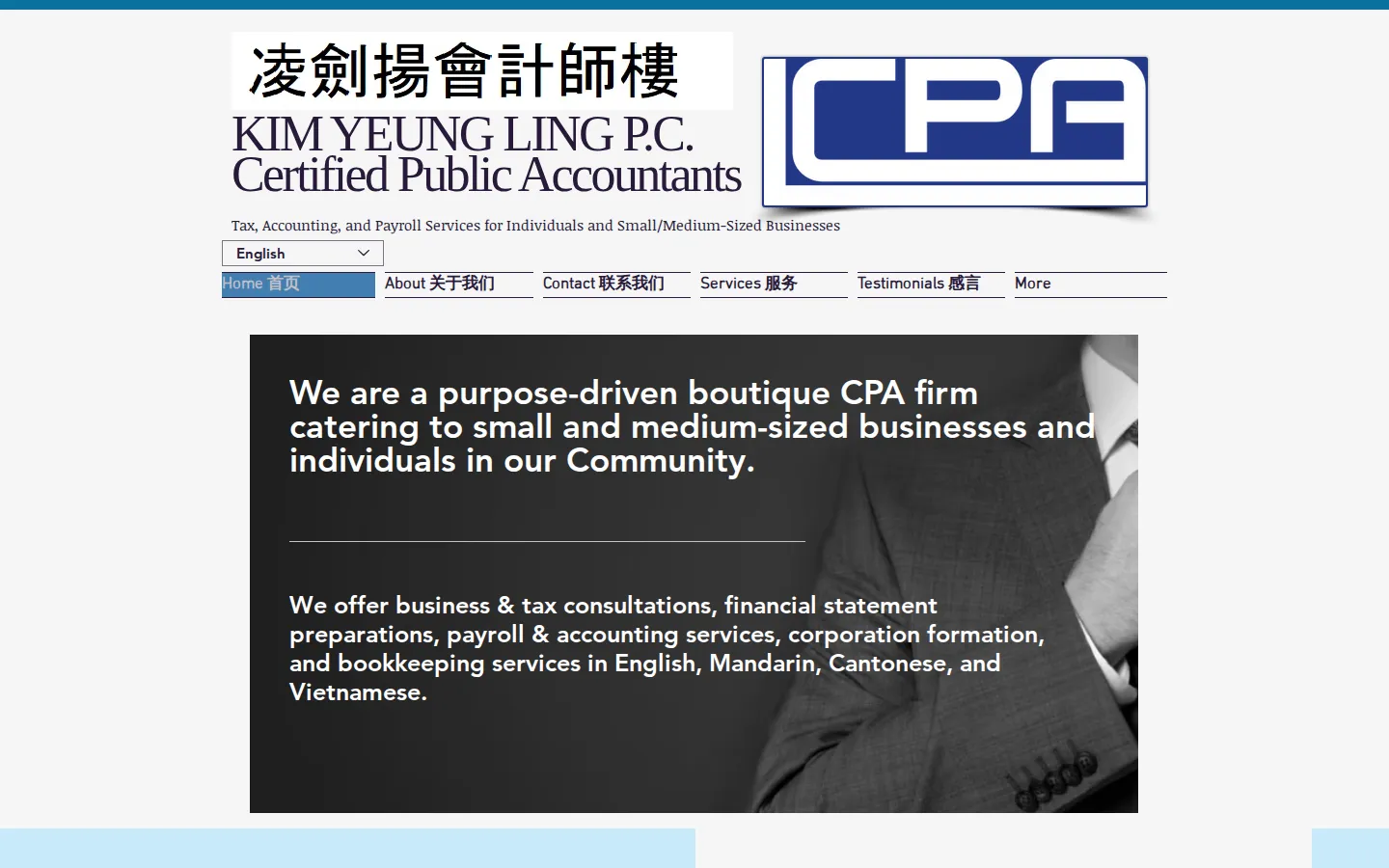
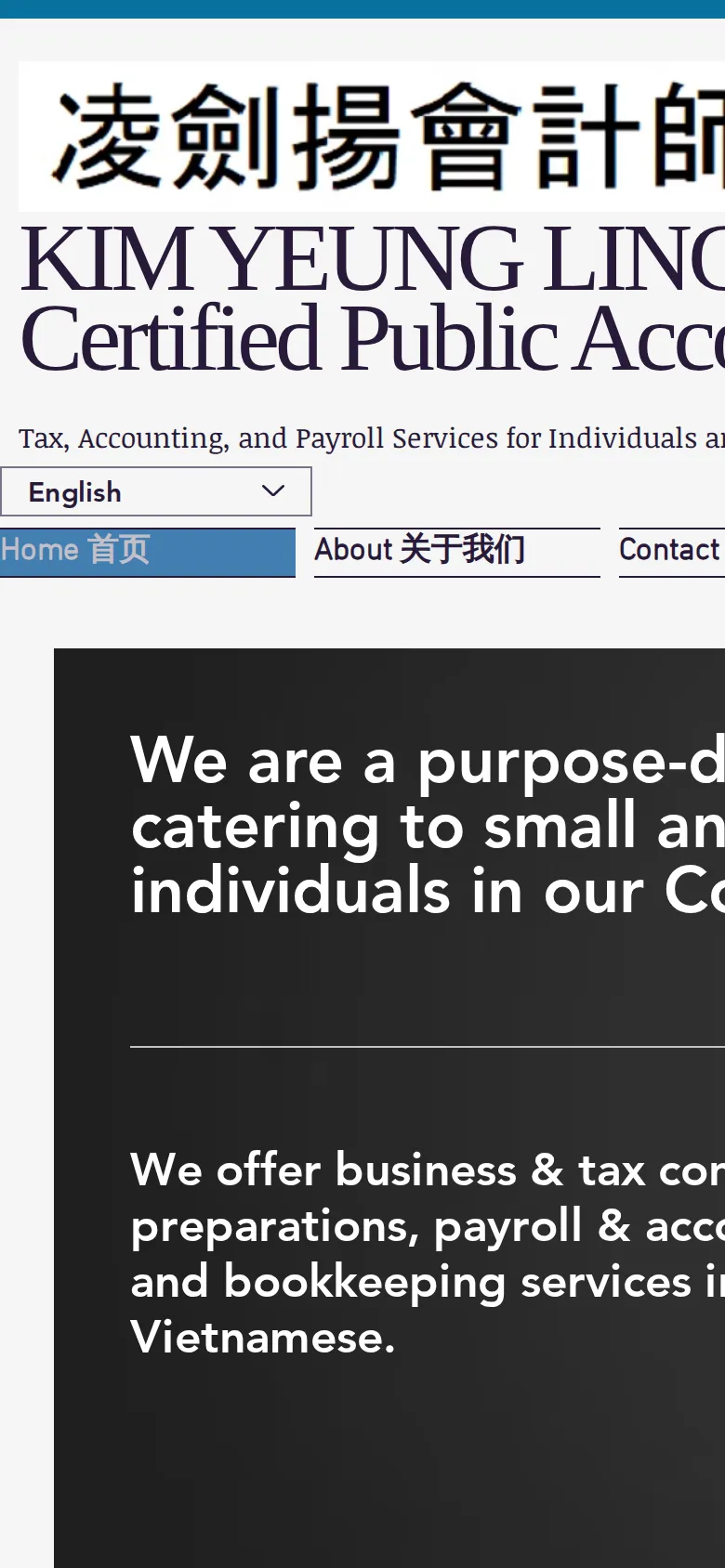
Homepage of kimlingcpa.net, captured by FlashCrafter on Nov 18, 2026. Philadelphia, PA
Kim Yeung Ling P.C.
In the top three on Google Maps for “cpa firm” at 5 of 9 sampled points around Philadelphia’s center on Oct 11, 2026.
What it does well
- +First screen. The opening message quickly identifies the practice’s focus on individuals and smaller businesses.
- +Services. Specific service descriptions help visitors connect their financial needs with the right offering.
- +Services. Listing four service languages helps visitors assess whether the team can communicate comfortably with them.
- +Trust. Concrete team size, annual filing volume, and geographic reach give visitors useful indicators of the practice’s scale.
- +Call to action. A free consultation invitation explains the next step and lowers the commitment needed to start a conversation.
- +Navigation. The desktop menu pairs English and Chinese labels, making key sections recognizable to both audiences.
To borrow: Combine a clear audience statement, specific services, language options, and a free consultation invitation to help visitors assess fit and take the next step.
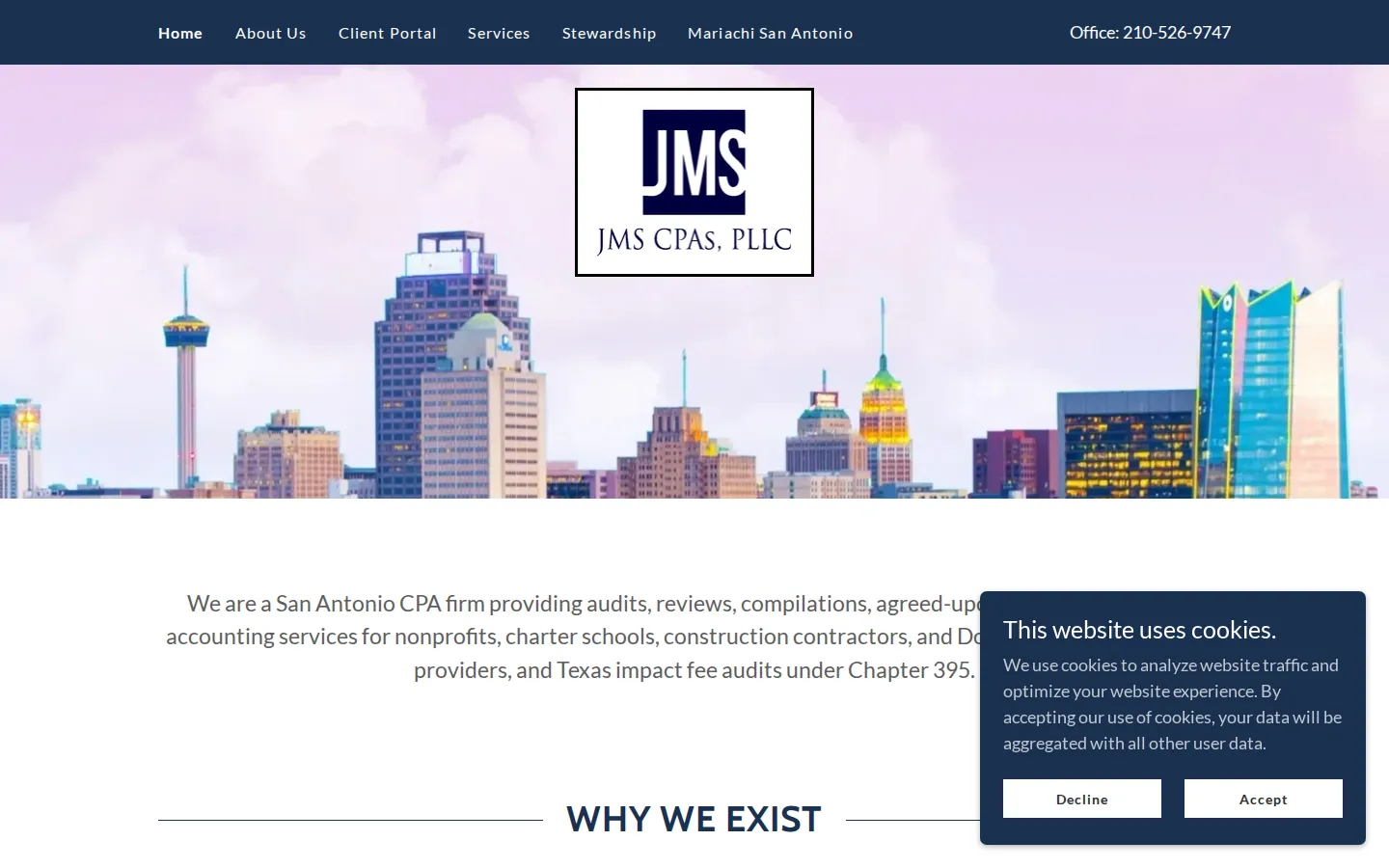
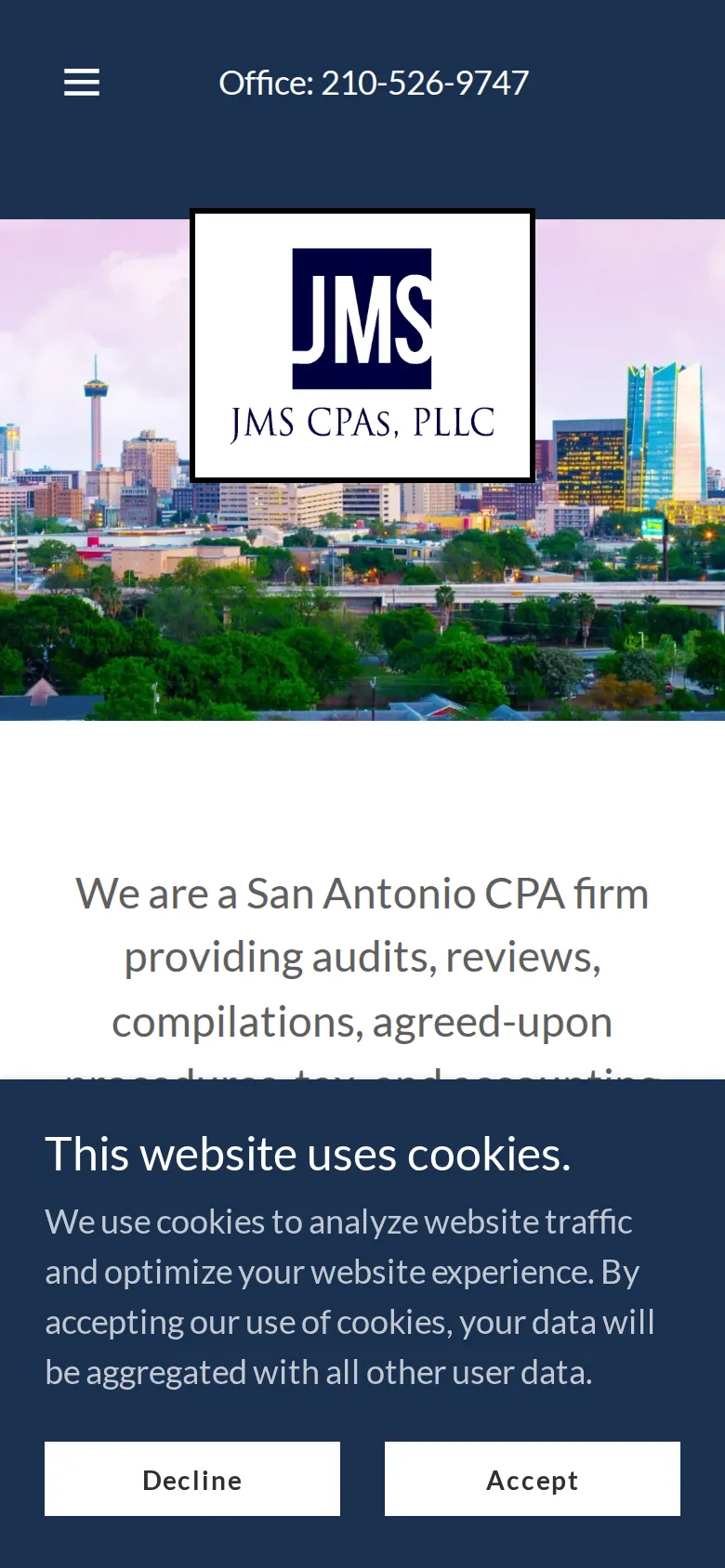
Homepage of jms-cpas.com, captured by FlashCrafter on Nov 18, 2026. San Antonio, TX
JMS CPAs, PLLC
In the top three on Google Maps for “cpa firm” at 2 of 9 sampled points around San Antonio’s center on Oct 11, 2026.
What it does well
- +First screen. A prominent logo and city skyline give the opening screen a clear visual identity and local connection.
- +On a phone. The office number is available immediately on mobile, making phone contact easy to find.
- +Call to action. A direct consultation invitation gives prospective clients a clear next step.
- +Services. Specific engagement types and client sectors help visitors recognize whether the practice fits their needs.
- +Navigation. The desktop menu provides visible routes to firm information, services, and the client portal.
- +Trust. A full street address gives visitors a concrete local office location.
To borrow: Pair a recognizable local identity with specific service descriptions, an accessible phone number, and a clear consultation invitation.
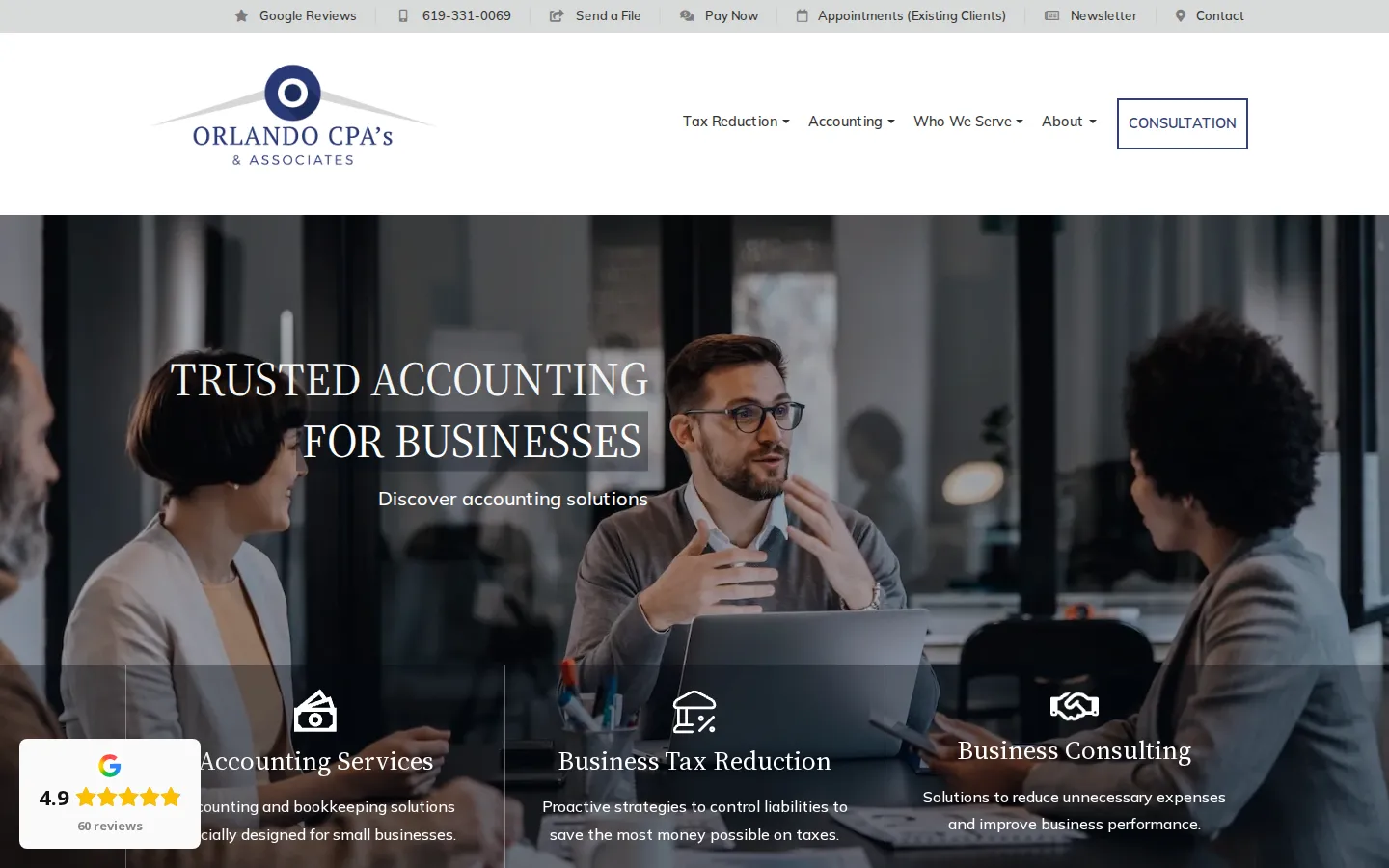
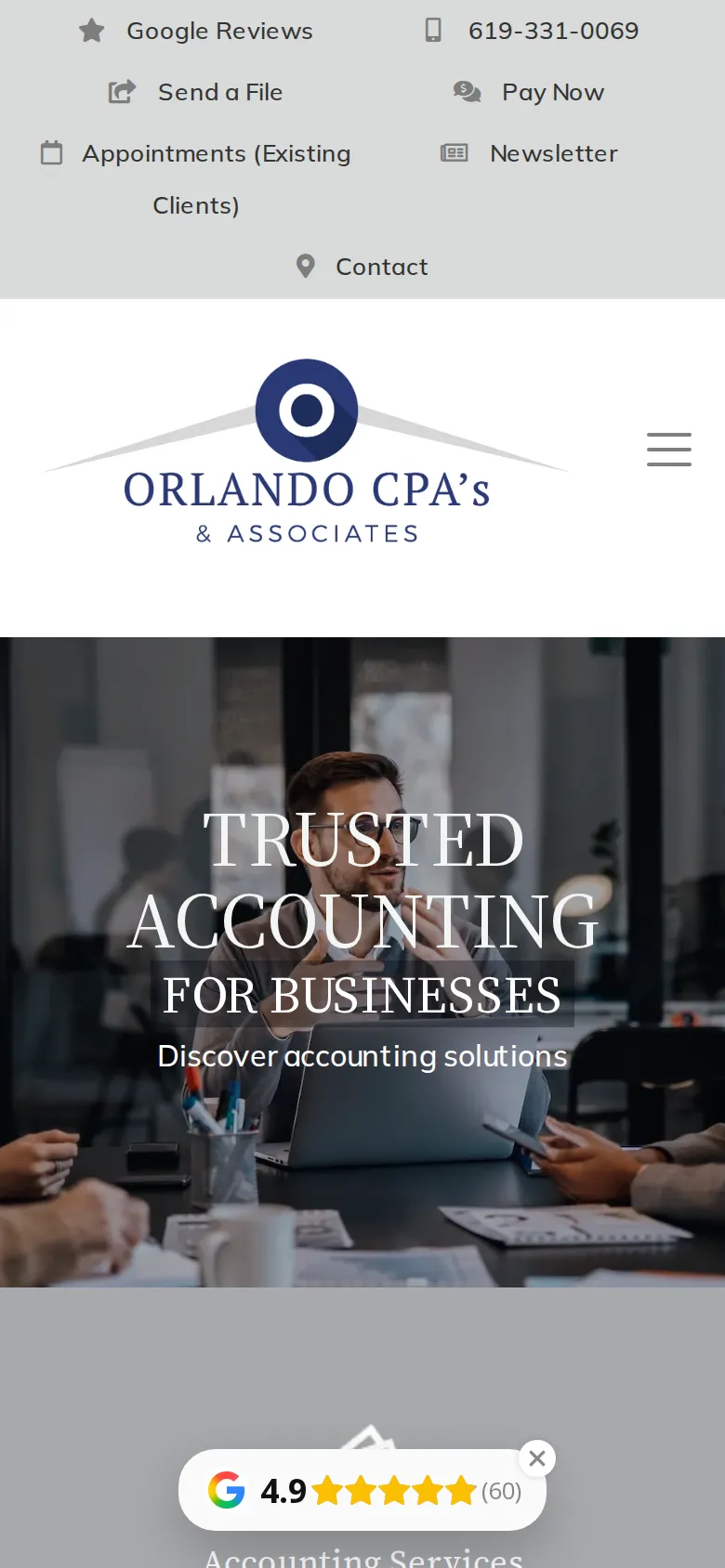
Homepage of mworlandocpa.com, captured by FlashCrafter on Nov 18, 2026. San Diego, CA
M.W. Orlando CPA, Inc.
In the top three on Google Maps for “cpa firm” at 3 of 9 sampled points around San Diego’s center on Oct 11, 2026.
What it does well
- +First screen. The desktop opening pairs a prominent business-focused headline with a meeting image and a clearly outlined consultation button.
- +Call to action. A free consultation paired with a downloadable tax guide gives visitors a concrete reason to inquire.
- +Services. The accounting offer accommodates both full outsourcing and businesses that want to retain some work internally.
- +Navigation. The menu organizes information around services, client industries, and firm background, helping visitors choose a relevant path.
- +On a phone. The phone contact appears in the first mobile screen, making it readily available to visitors arriving on a phone.
- +Trust. A full office address gives prospective clients a concrete local point of contact.
To borrow: Pair a clear business-focused opening with a useful consultation offer, flexible service explanations, and readily accessible contact details.
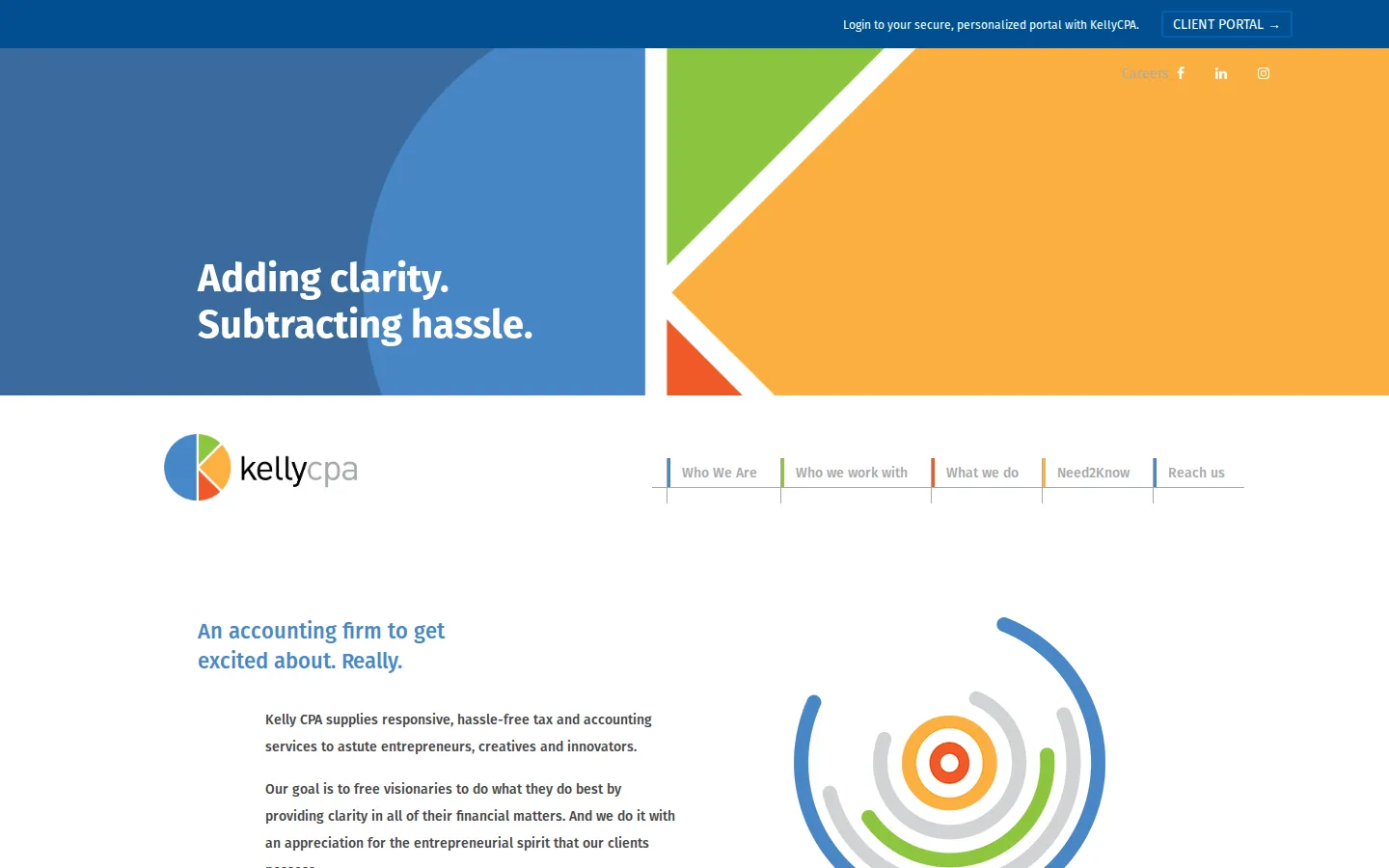
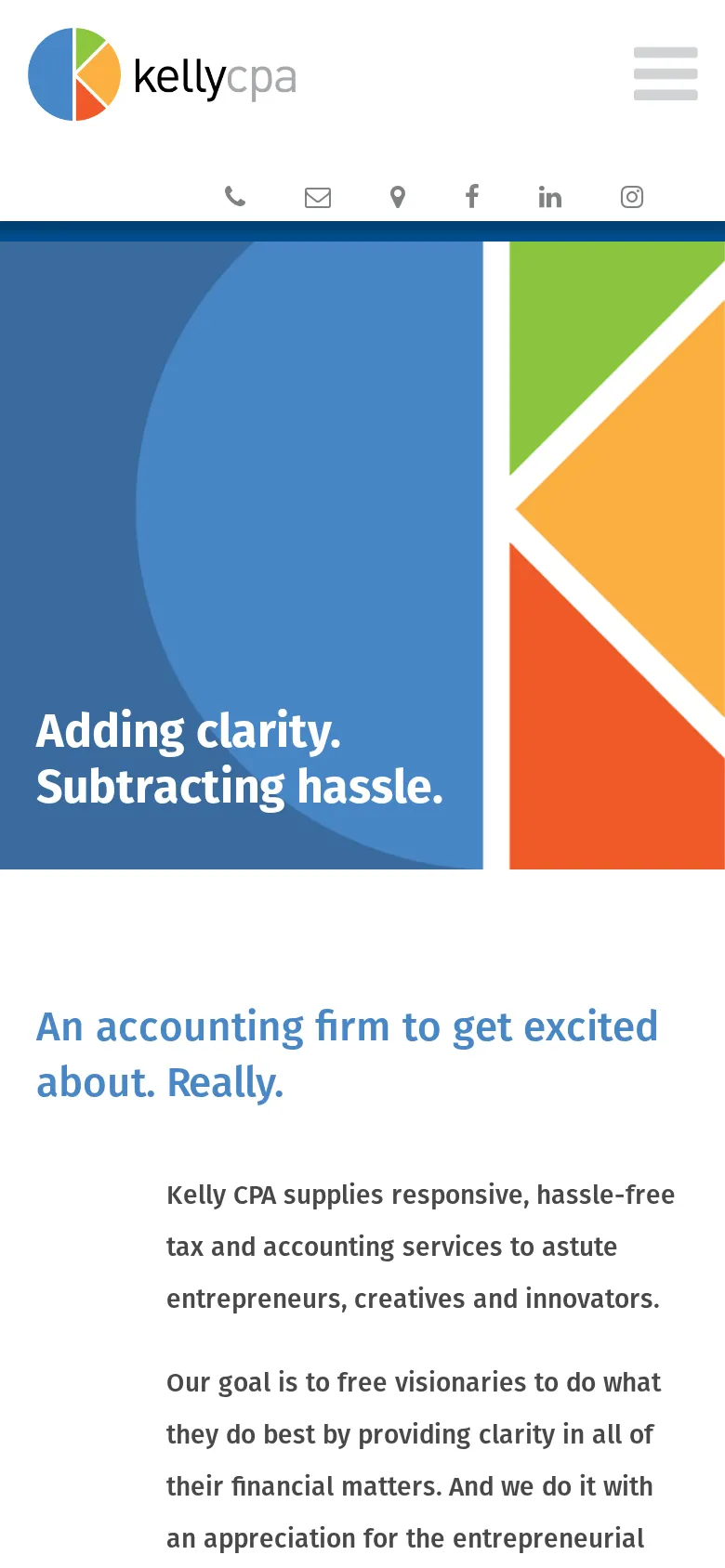
Homepage of kelly.cpa, captured by FlashCrafter on Nov 18, 2026. Dallas, TX
Kelly CPA
In the top three on Google Maps for “cpa firm” at 3 of 9 sampled points around Dallas’s center on Oct 11, 2026.
What it does well
- +First screen. Bold geometric artwork, consistent colors and a short headline create a distinctive, recognizable first impression.
- +Services. The introduction clearly identifies the core services and the entrepreneurial audiences they serve.
- +Call to action. A phone link in the first mobile screen gives visitors an immediate way to make contact.
- +Navigation. A prominently positioned client portal gives existing clients a clear route to their account.
- +On a phone. The mobile header combines a prominent logo, familiar menu icon and accessible contact icons.
To borrow: Combine distinctive branding with a clear service introduction, immediate mobile contact options and a prominent client portal.
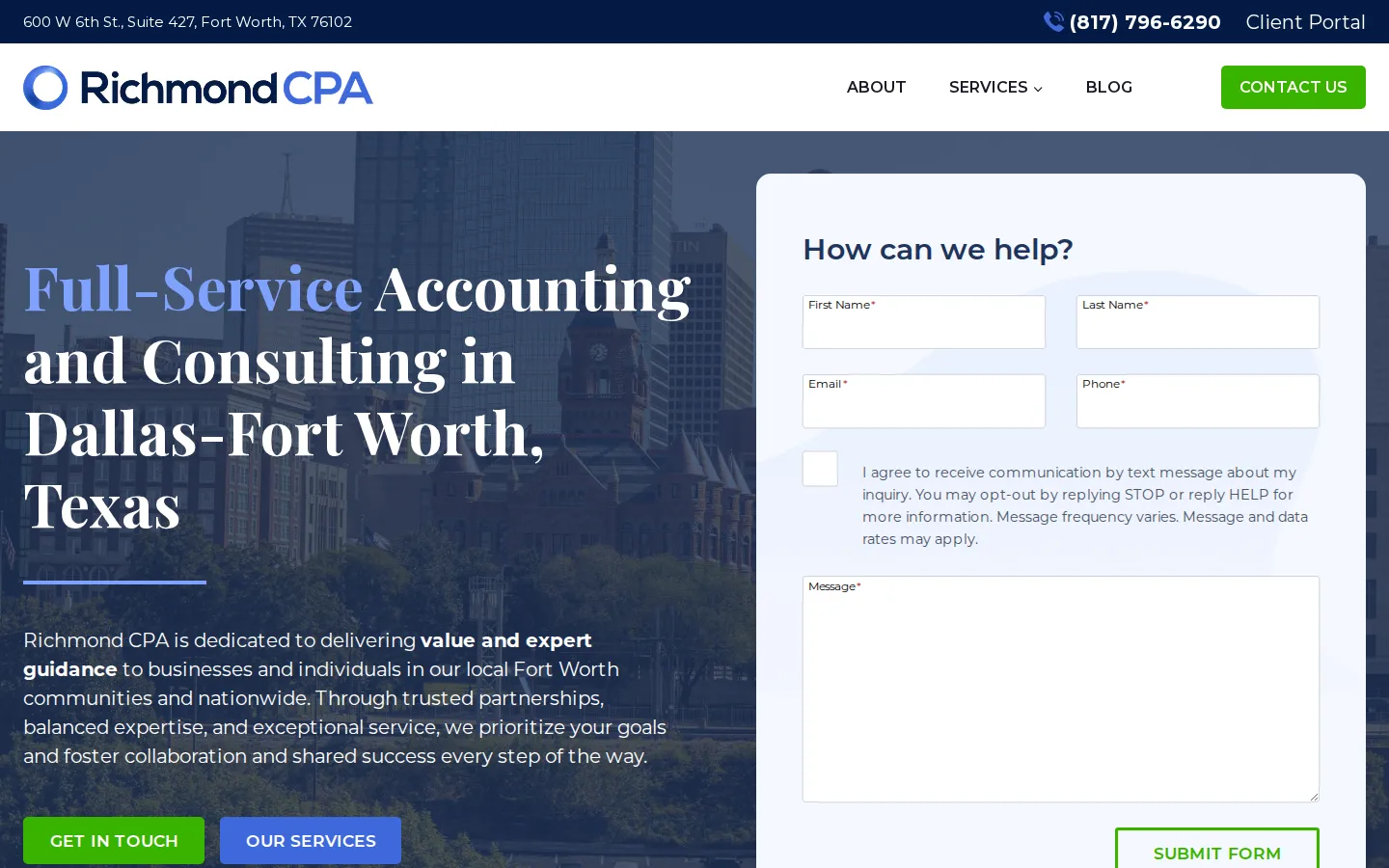

Homepage of richmond-connect.com, captured by FlashCrafter on Nov 18, 2026. Fort Worth, TX
Richmond CPA
In the top three on Google Maps for “cpa firm” at 3 of 9 sampled points around Fort Worth’s center on Oct 11, 2026.
What it does well
- +First screen. The opening headline immediately establishes the firm's work and geographic focus.
- +Call to action. A prominent desktop inquiry form beside the introduction gives prospective clients a direct way to start a conversation.
- +Services. Specific service lists help individuals and business owners recognize relevant support, from routine bookkeeping to financial leadership.
- +Trust. Client reviews provide concrete reassurance about responsiveness and the experience of getting questions answered.
- +Navigation. The desktop header separates main navigation, client access, and a contrasting contact button for easy scanning.
- +On a phone. The mobile layout keeps the branding clear and presents the introduction in a readable single column with a compact menu.
To borrow: Pair a clear service-and-location headline with an accessible inquiry form, specific service lists, and client feedback.
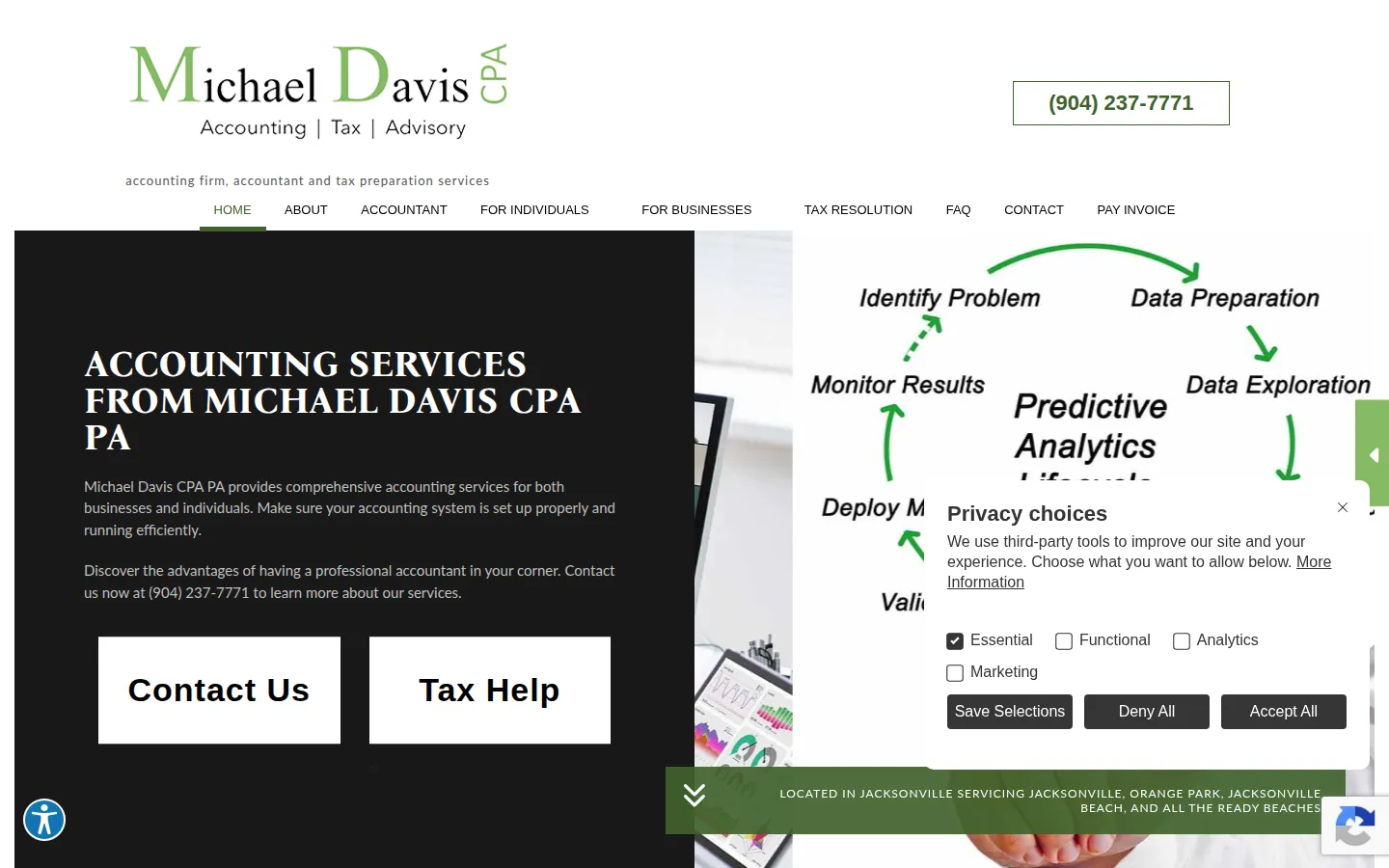
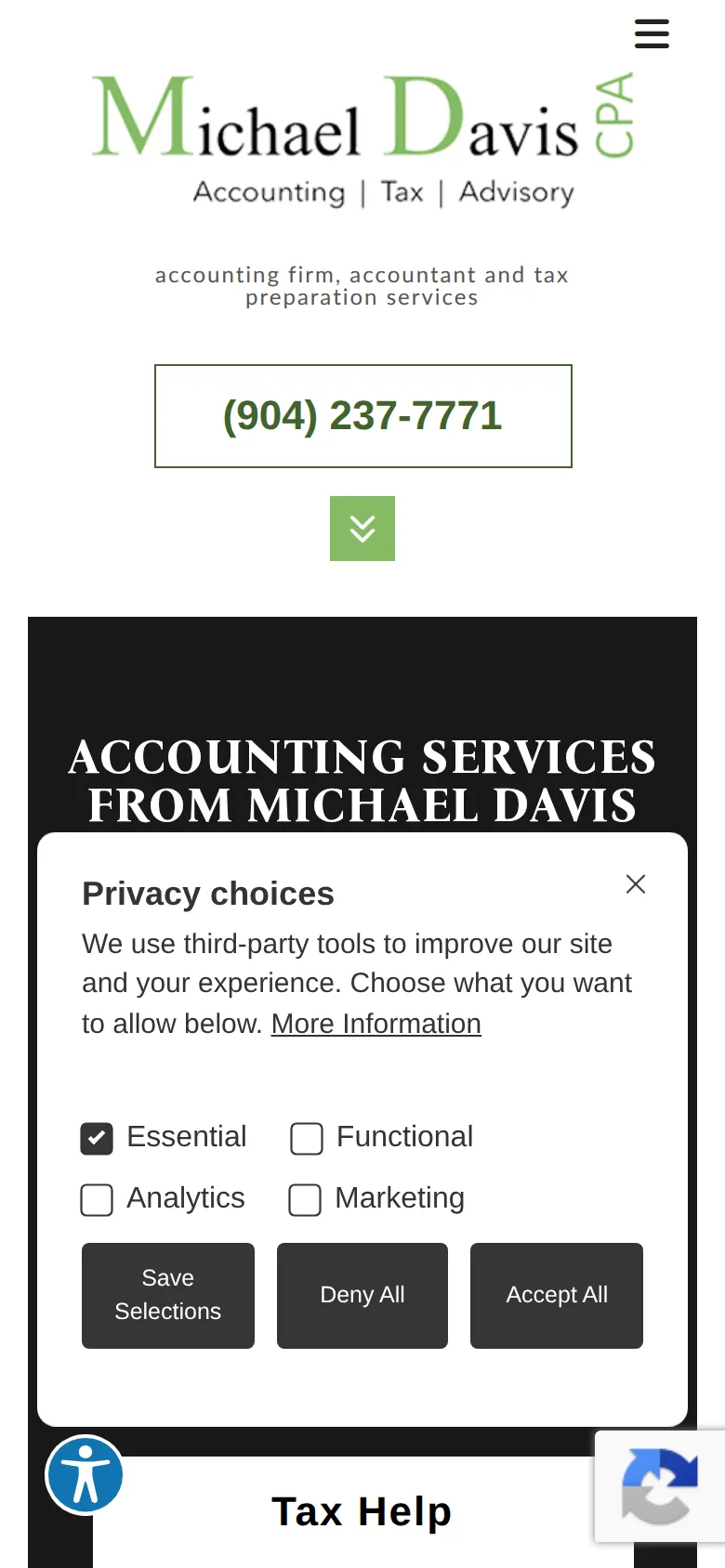
Homepage of michaeldaviscpa.com, captured by FlashCrafter on Nov 18, 2026. Jacksonville, FL
Michael Davis CPA PA
In the top three on Google Maps for “cpa firm” at 6 of 9 sampled points around Jacksonville’s center on Oct 11, 2026.
What it does well
- +First screen. The desktop introduction pairs a prominent accounting headline with large contact and tax-help buttons, making the next steps easy to spot.
- +Call to action. A tap-to-call phone number appears in the first mobile screen, giving visitors a direct way to get in touch.
- +Services. A compact service list helps visitors quickly identify support for taxes, bookkeeping, payroll, and transactions.
- +Trust. Displaying a license number gives prospective clients a concrete professional credential to check.
- +Call to action. Explaining that the initial meeting is confidential and obligation-free helps visitors understand what to expect when they call.
- +Navigation. Separate navigation choices for individuals and businesses help visitors find information suited to their needs.
To borrow: Pair a prominent mobile phone link with audience-specific navigation, a concise service list, and clear expectations for the first consultation.
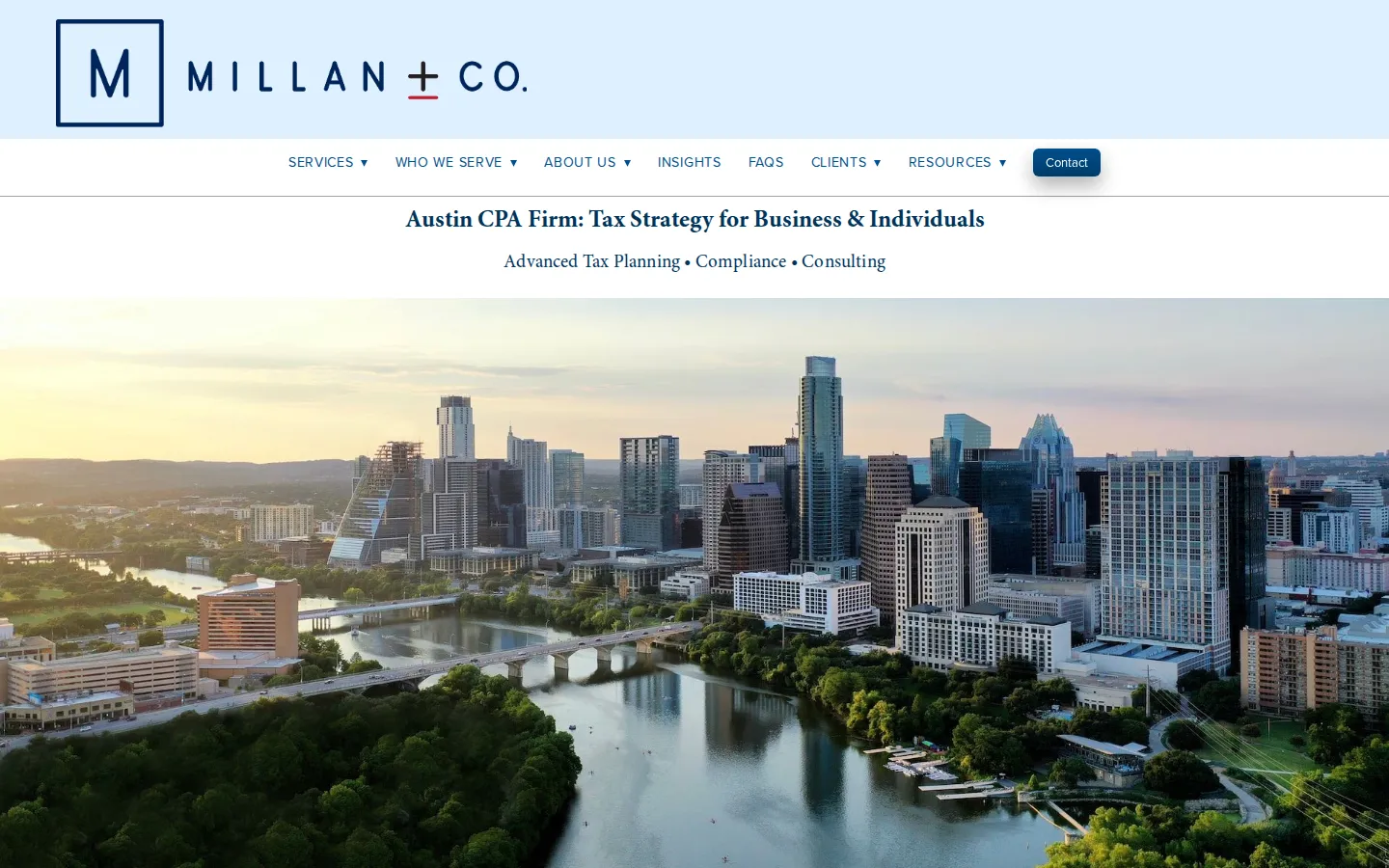

Homepage of millancpa.com, captured by FlashCrafter on Nov 18, 2026. Austin, TX
Millan & Co., CPAs
In the top three on Google Maps for “cpa firm” at 6 of 9 sampled points around Austin’s center on Oct 11, 2026.
What it does well
- +First screen. The opening headline immediately identifies the location, profession, and intended clients.
- +Call to action. A contrasting Contact button stands out in the desktop navigation.
- +Services. The service list helps visitors find support for both routine accounting and complex financial needs.
- +Trust. A prominently stated peer review provides a concrete professional credibility signal.
- +Navigation. Dedicated document and payment portal links give existing clients clear routes to common tasks.
- +On a phone. The mobile layout keeps the headline readable and presents navigation through a large menu control.
To borrow: Pair a clear local positioning headline with an easy-to-scan service list, professional credibility evidence, and direct client portal links.

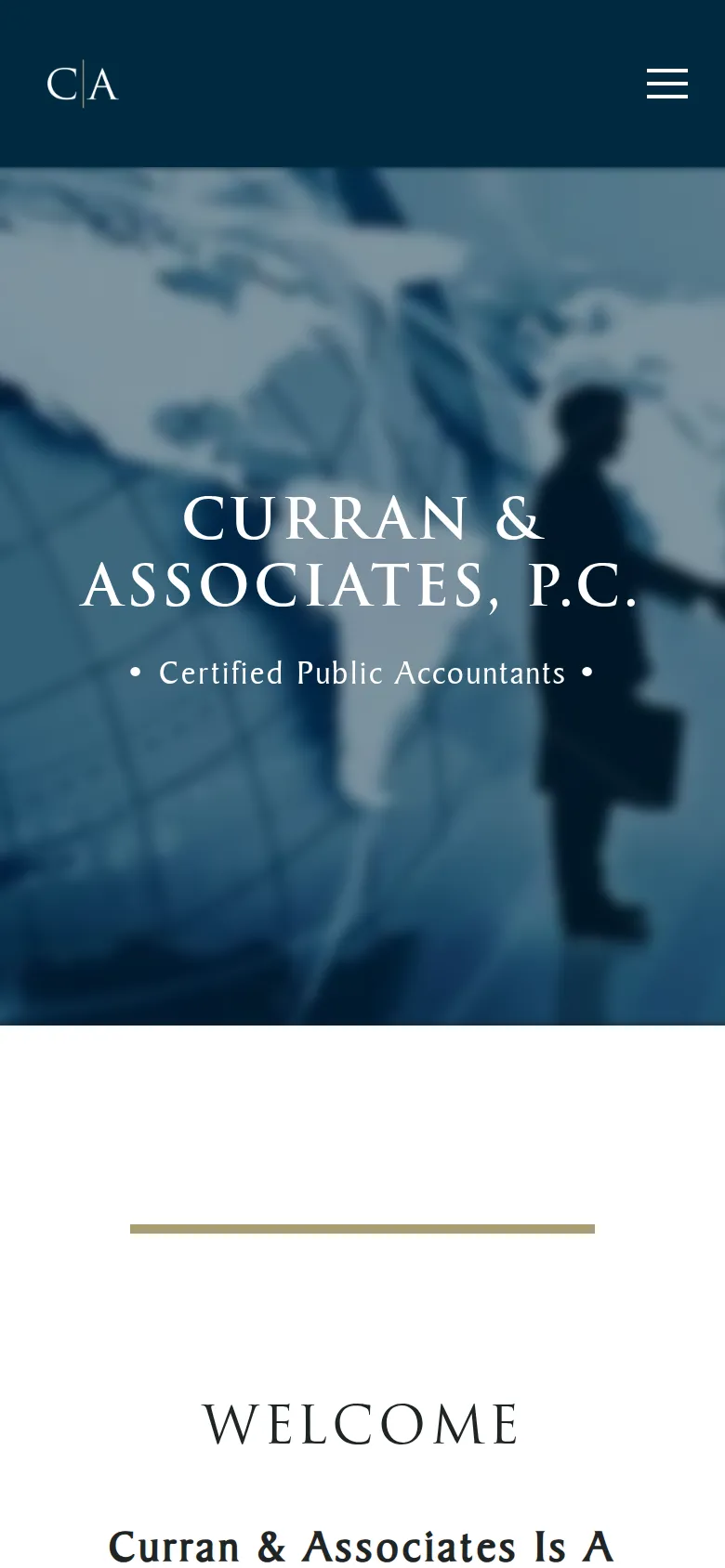
Homepage of curranassociatescpa.com, captured by FlashCrafter on Nov 18, 2026. San Jose, CA
Curran & Associates CPA's, P.C.
In the top three on Google Maps for “cpa firm” at 2 of 9 sampled points around San Jose’s center on Oct 11, 2026.
What it does well
- +First screen. A prominent professional designation immediately tells visitors what kind of practice they have reached.
- +Call to action. A contrasting header button gives prospective clients an obvious starting point.
- +Services. The service summary connects tax, accounting, and business strategy into a clear, integrated offering.
- +Services. Explicit audience descriptions help small business owners quickly recognize whether the practice suits their needs.
- +Trust. Detailed client feedback illustrates practical benefits, including tax planning, education, and responsiveness.
- +On a phone. The mobile layout preserves the prominent identity and readable headline while consolidating navigation into a recognizable menu icon.
To borrow: Pair a clear professional identity and visible new-client entry point with focused service descriptions and specific client stories.
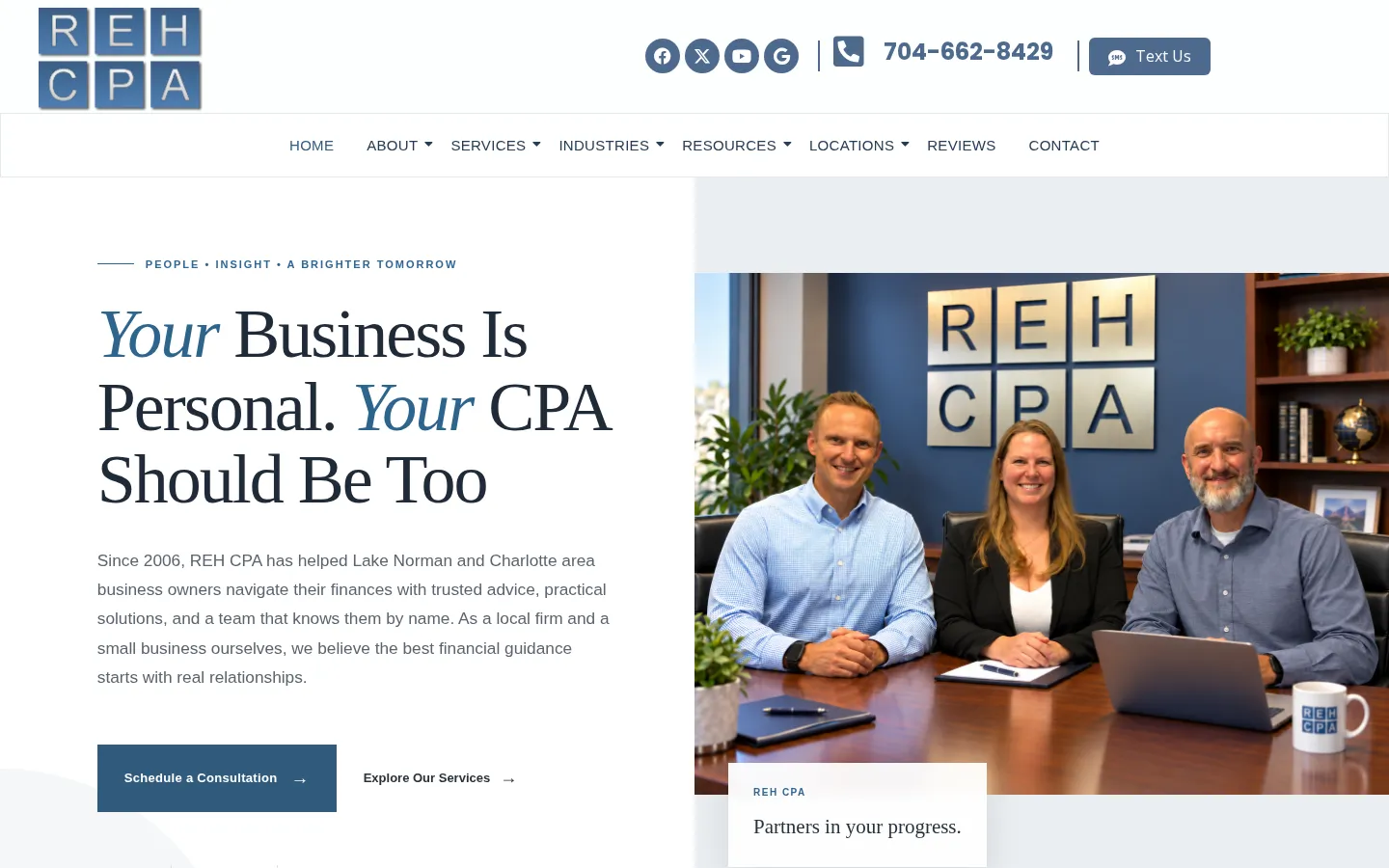
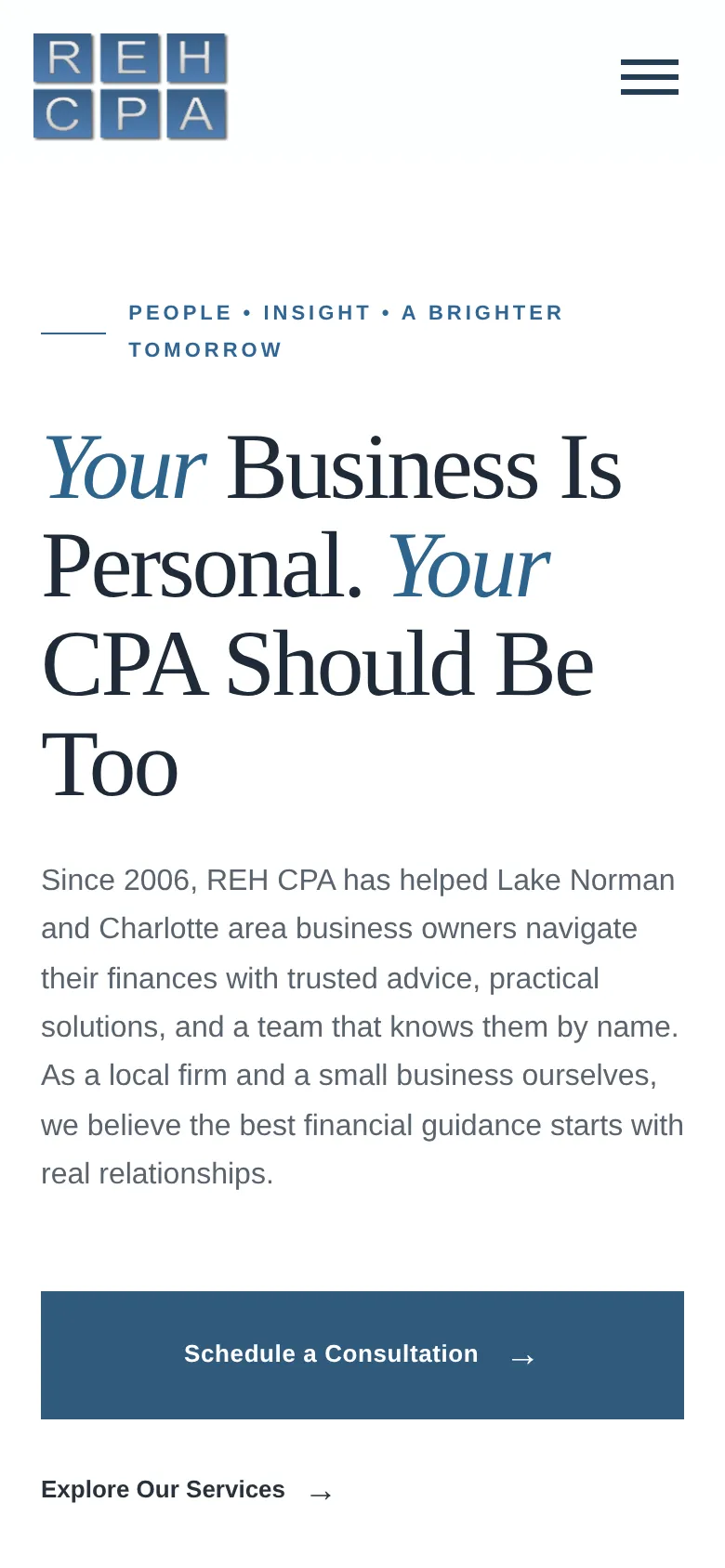
Homepage of rehcpas.com, captured by FlashCrafter on Nov 18, 2026. Charlotte, NC
REH CPA, Charlotte
In the top three on Google Maps for “cpa firm” at 4 of 9 sampled points around Charlotte’s center on Oct 11, 2026.
What it does well
- +First screen. The desktop introduction pairs a prominent relationship-focused headline with a welcoming office photograph and clear next steps.
- +Call to action. A direct consultation invitation gives prospective clients a clear way to begin.
- +Services. Short service descriptions help visitors distinguish routine accounting support from strategic business guidance.
- +Trust. A stated team size gives prospective clients a concrete sense of the firm's capacity to support growing businesses.
- +Navigation. The desktop menu organizes browsing around services, industries, resources and locations, with direct routes to reviews and contact information.
- +On a phone. The mobile layout makes the consultation button wide and visually prominent, with a separate service exploration link beneath it.
To borrow: Pair a personal introduction with a prominent consultation button, concise service explanations and concrete evidence of team capacity.
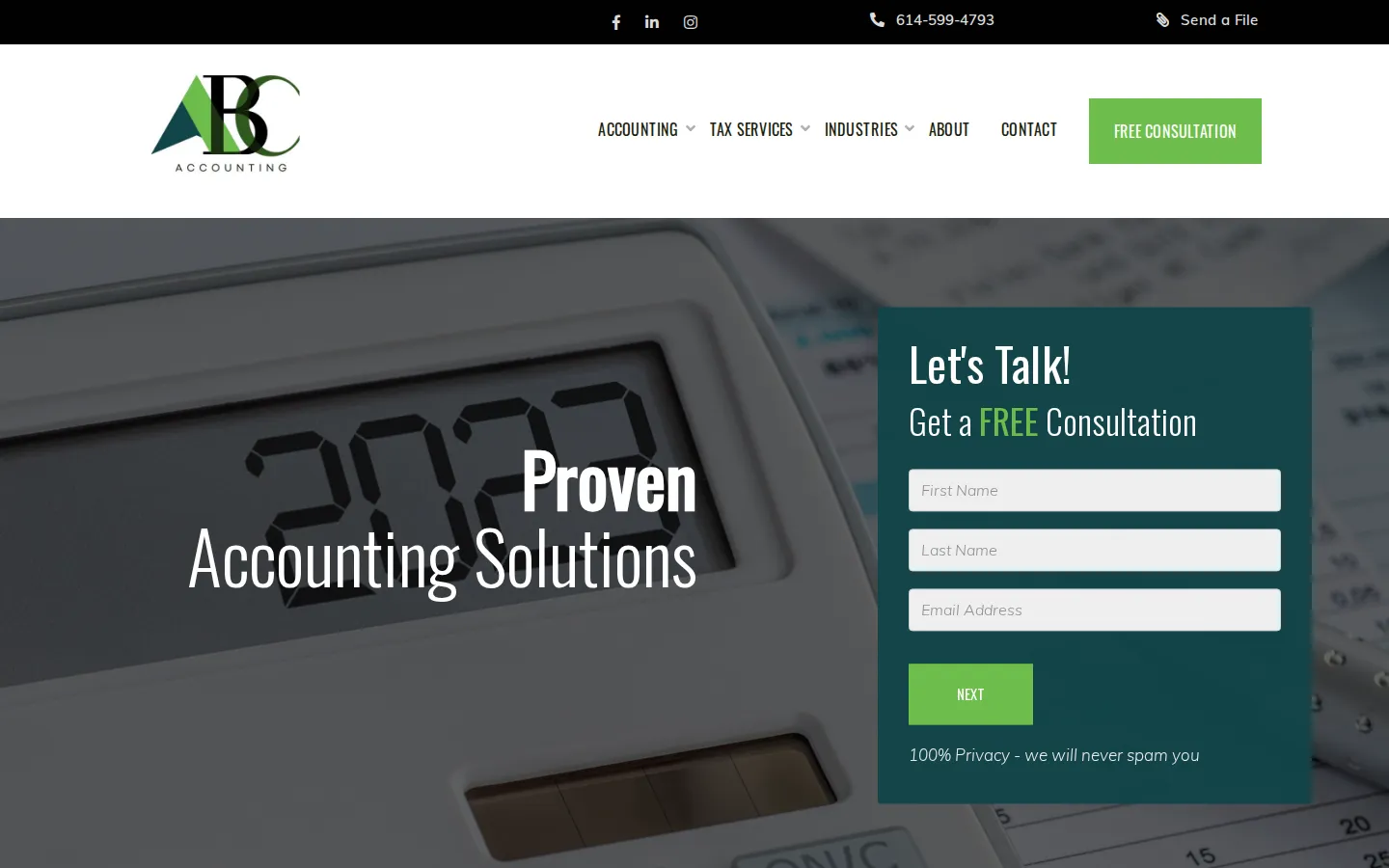
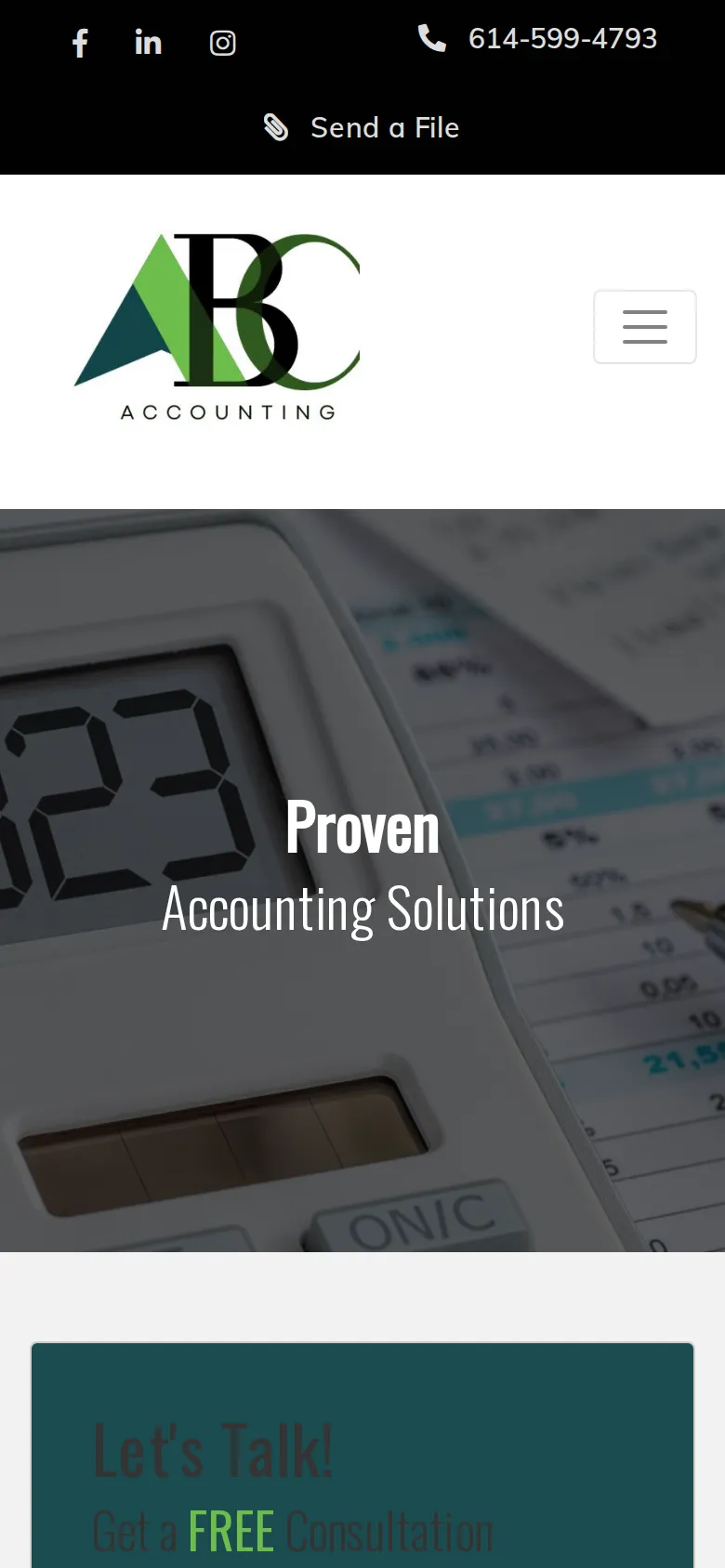
Homepage of abcaccountingcpa.com, captured by FlashCrafter on Nov 18, 2026. Columbus, OH
ABC Accounting LLC
In the top three on Google Maps for “cpa firm” at 2 of 9 sampled points around Columbus’s center on Oct 11, 2026.
What it does well
- +First screen. The desktop hero pairs a prominent accounting headline with a contrasting consultation panel, making the offer easy to spot.
- +Call to action. A free consultation gives prospective clients a clear starting point for discussing their needs.
- +On a phone. A tap-to-call phone number appears in the first mobile screen, giving visitors an immediate contact option.
- +Services. The service description connects tax work to practical outcomes and clearly identifies both business and individual clients.
- +Navigation. The desktop navigation groups offerings into accounting, tax and industry categories, with a distinct consultation button alongside them.
- +Trust. A full street address gives prospective clients a concrete local location for the practice.
To borrow: Pair a clear accounting headline with a prominent consultation form, accessible phone contact and service descriptions tied to client outcomes.
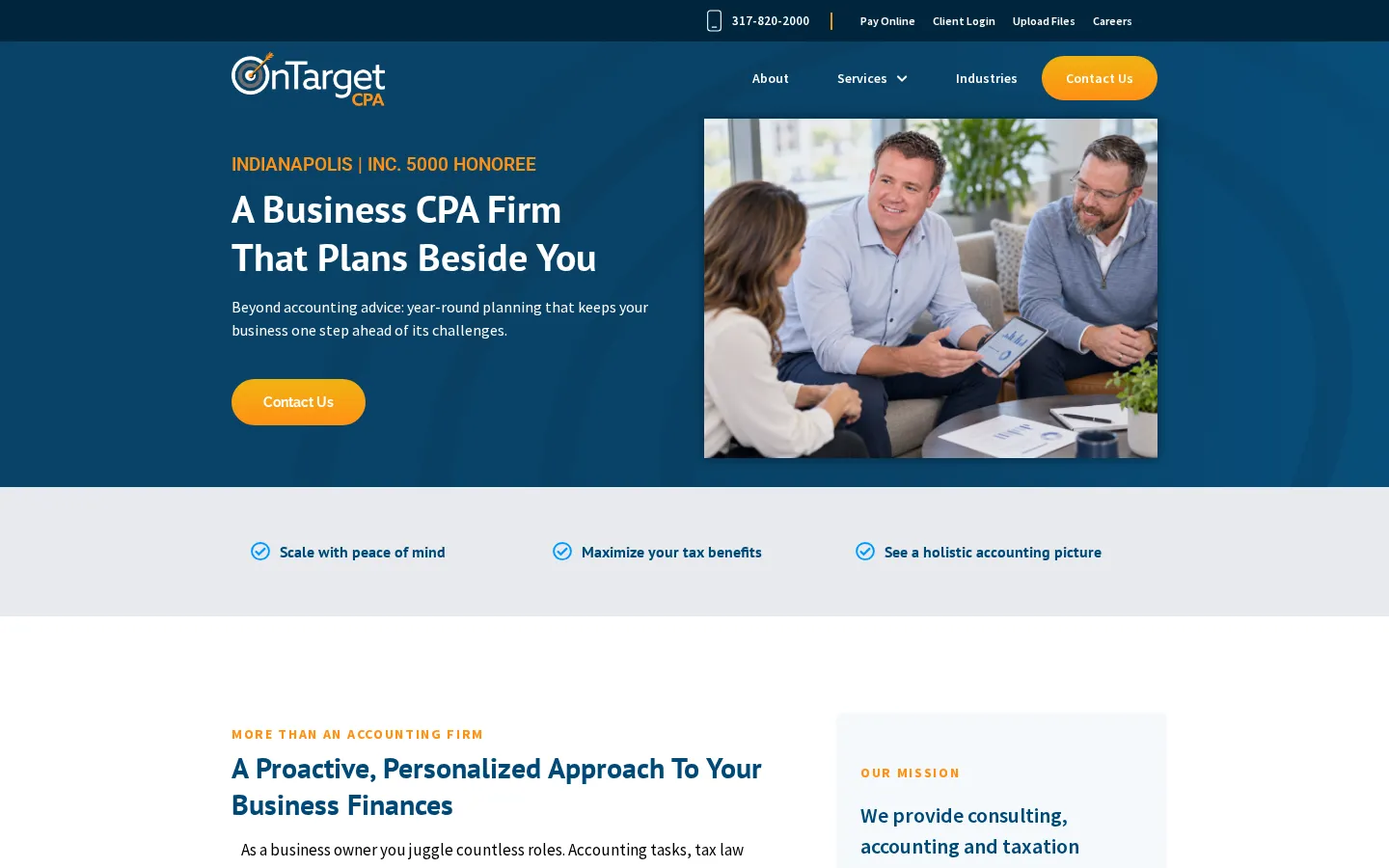

Homepage of ontargetcpa.com, captured by FlashCrafter on Nov 18, 2026. Indianapolis, IN
OnTarget CPA
In the top three on Google Maps for “cpa firm” at 4 of 9 sampled points around Indianapolis’s center on Oct 11, 2026.
What it does well
- +First screen. The opening screen pairs a clear business-focused message with a consultation photo and a prominent contact button.
- +Call to action. A tap-to-call phone number appears in the first mobile screen, making direct contact convenient.
- +Trust. An award recognition appears near the opening message, giving visitors an early credibility signal.
- +Services. Service descriptions explain concrete business needs the firm can support, including setup, budgeting and strategic planning.
- +Call to action. The getting-started section explains the initial meeting, helping prospective clients understand what the first step involves.
- +On a phone. The mobile layout uses large text, a broad contact button and vertically stacked content that is easy to scan.
To borrow: Pair a clear business-focused promise with prominent contact options, concrete service examples and a simple explanation of how to begin.
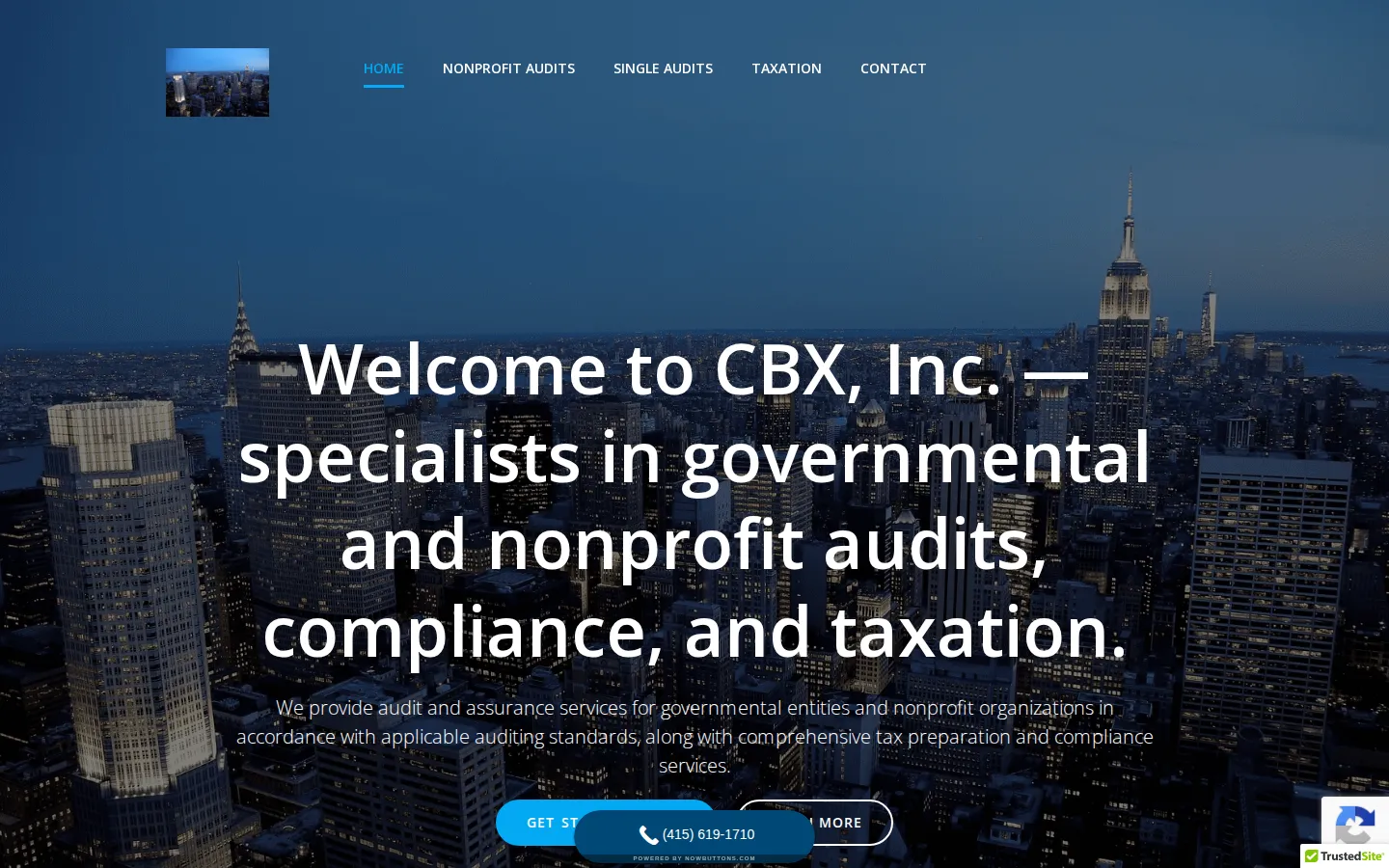
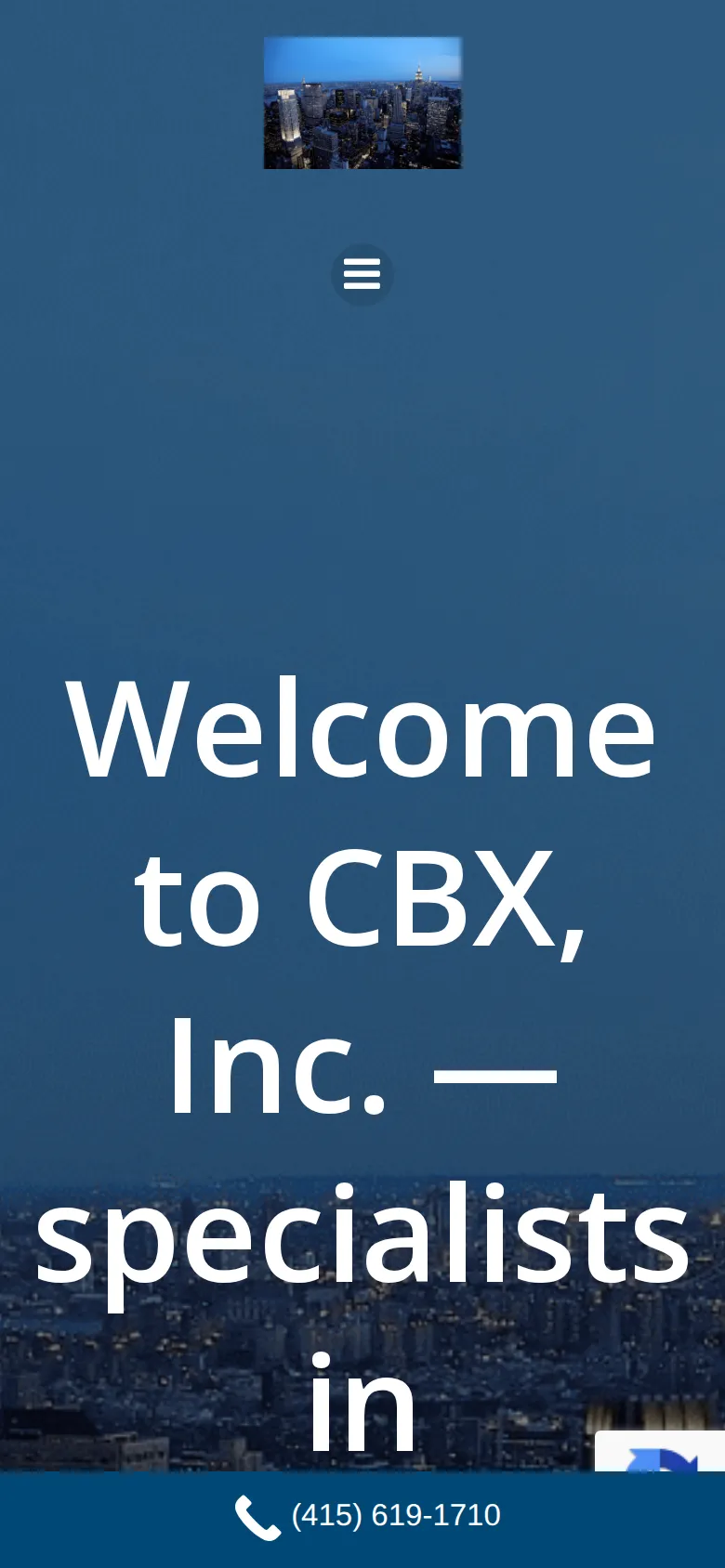
Homepage of cbxcpa.com, captured by FlashCrafter on Nov 18, 2026. San Francisco, CA
Cristian Borcan, CPA PC
In the top three on Google Maps for “cpa firm” at 3 of 9 sampled points around San Francisco’s center on Oct 11, 2026.
What it does well
- +First screen. The opening headline immediately identifies the firm’s focus and the types of organizations it serves.
- +Services. The service description connects audit work with tax preparation, helping visitors understand the scope of support available.
- +Navigation. The desktop menu provides clearly labeled routes to core service areas and contact information.
- +Call to action. A tap-to-call option is available within the first mobile screen, giving visitors a direct way to make contact.
To borrow: Pair a clear statement of your specialty with straightforward service navigation and an immediately accessible phone option.
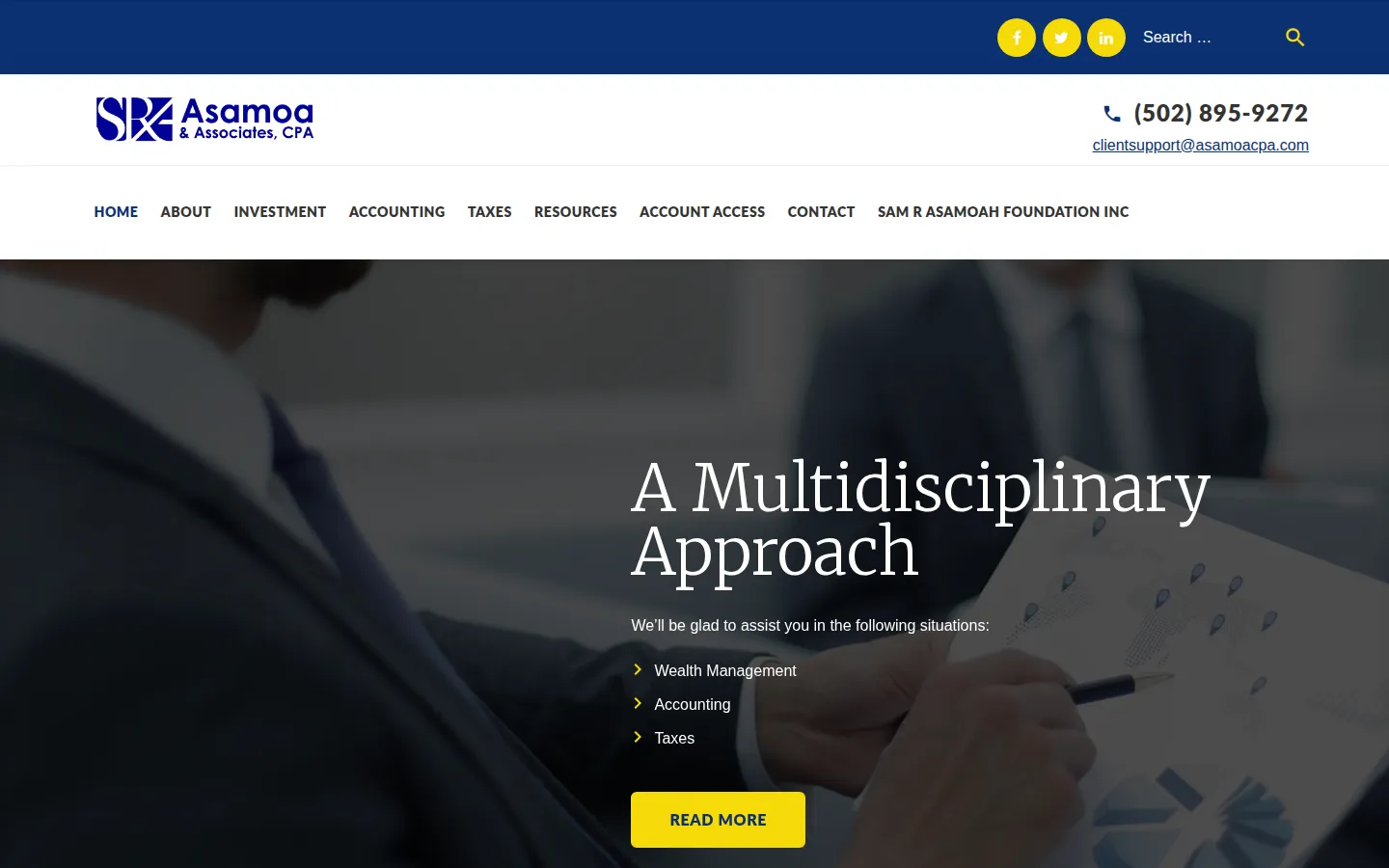
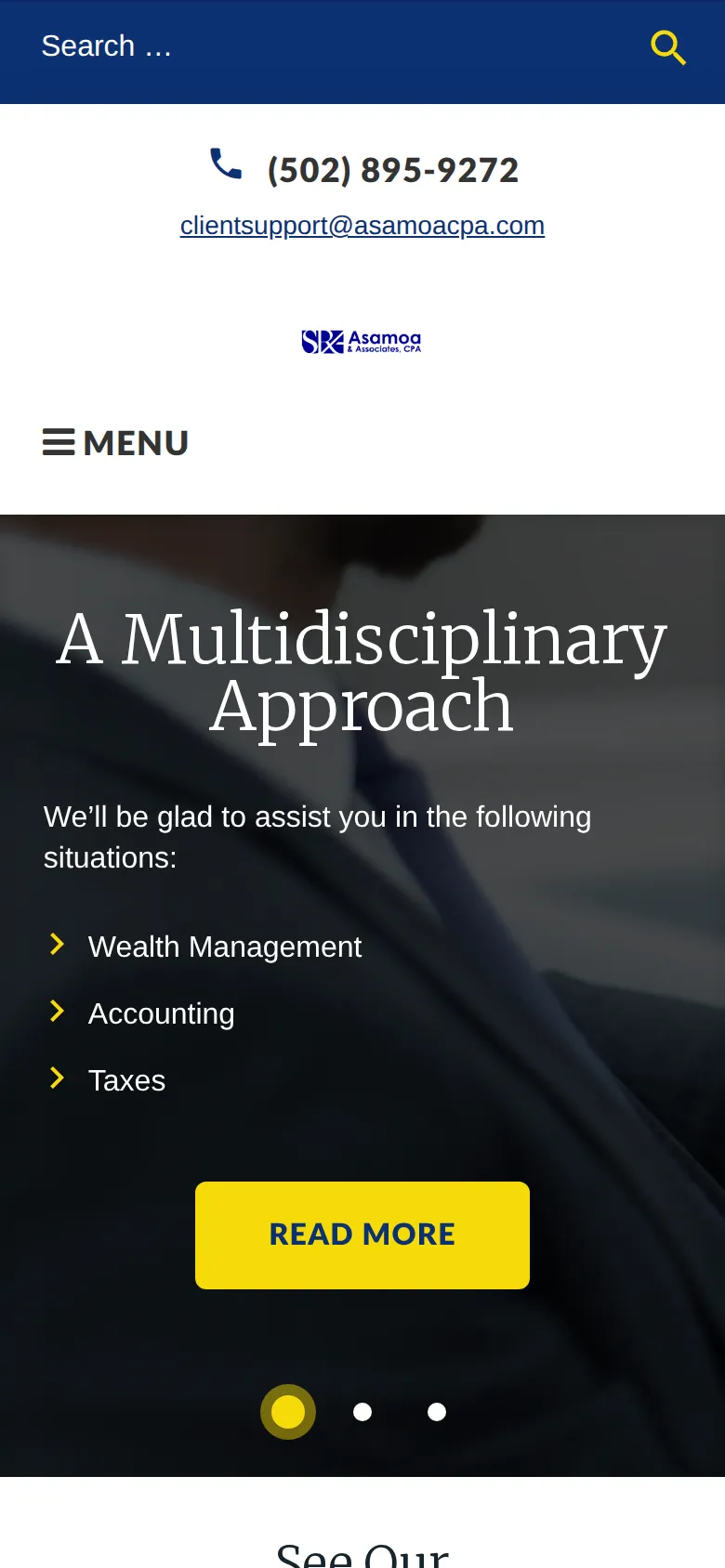
Homepage of asamoacpa.com, captured by FlashCrafter on Nov 18, 2026. Louisville, KY
Asamoa & Associates, CPA
In the top three on Google Maps for “cpa firm” at 2 of 9 sampled points around Louisville’s center on Oct 11, 2026.
What it does well
- +First screen. A darkened hero image, large white headline and bright yellow button create a clear visual hierarchy.
- +Call to action. A tappable phone number appears in the first mobile screen, giving visitors a direct way to contact the office.
- +Services. The accounting description connects the service to practical needs such as keeping records, reporting and handling financial questions.
- +Trust. A client testimonial describes a long working relationship and highlights responsiveness and professionalism.
- +Navigation. The desktop navigation places service categories, resources, account access and contact options together in a visible horizontal menu.
- +Call to action. A free consultation invitation gives prospective clients a clear reason to start a conversation.
To borrow: Pair a visually clear introduction with prominent phone access, practical service descriptions and client testimonials.
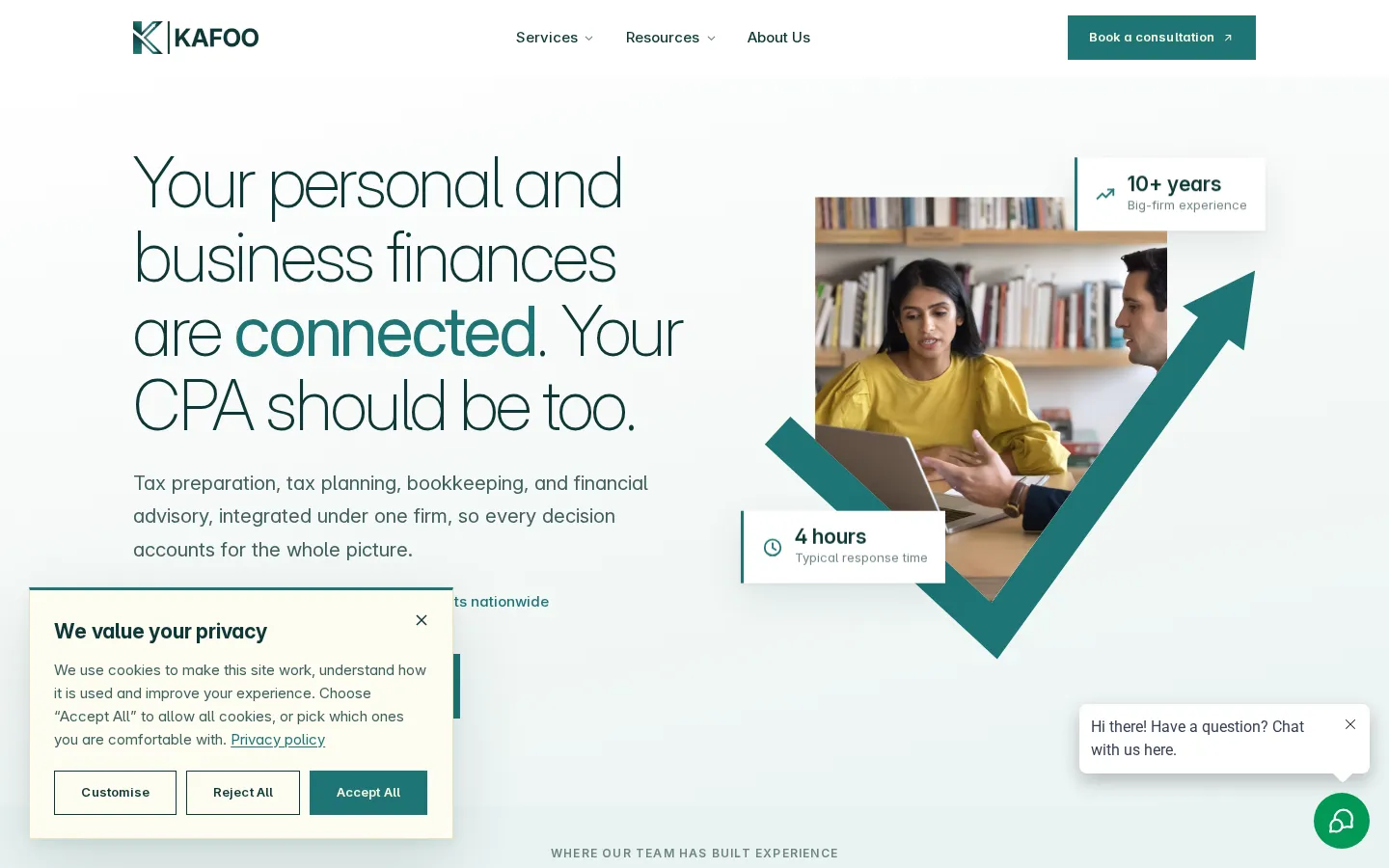
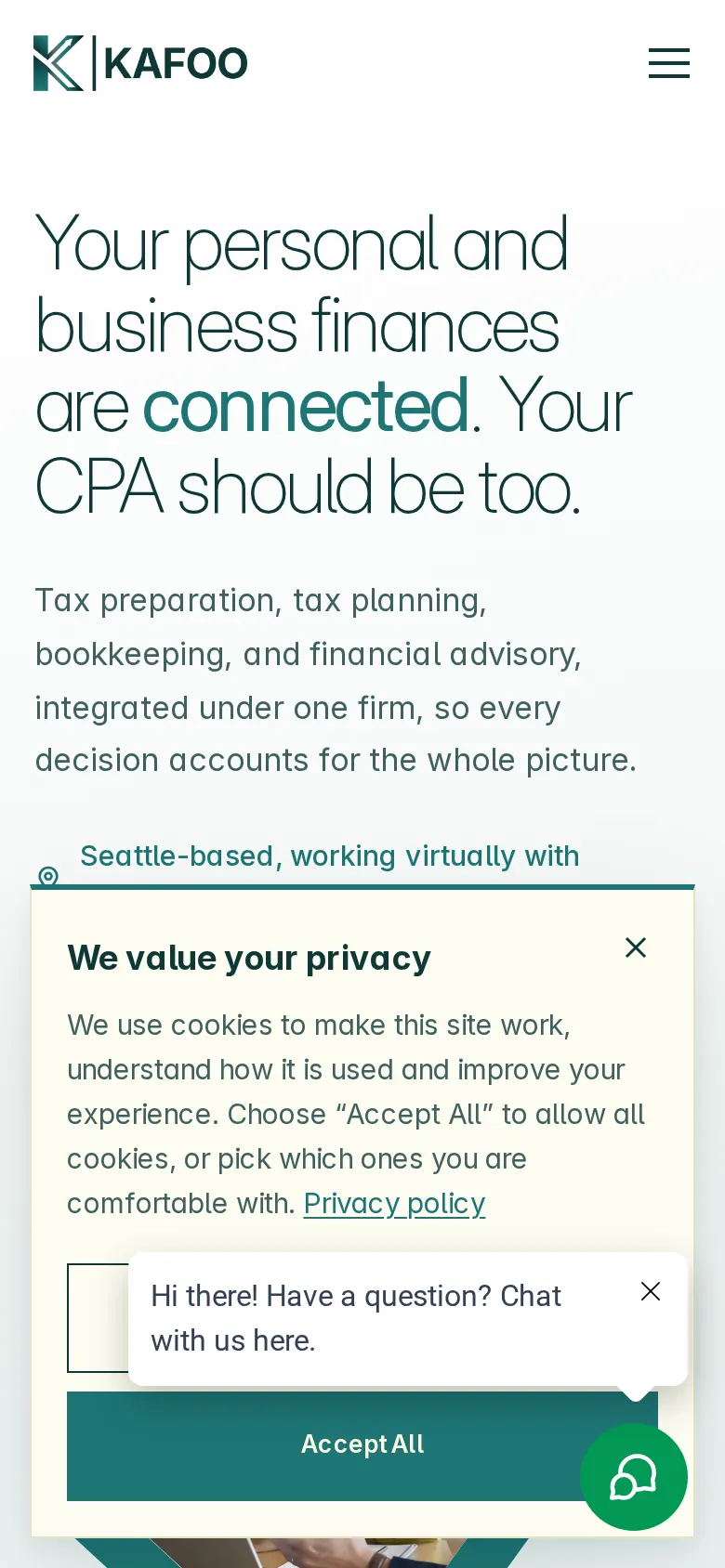
Homepage of kafoocpa.com, captured by FlashCrafter on Nov 18, 2026. Seattle, WA
Kafoo CPA
In the top three on Google Maps for “cpa firm” at 1 of 9 sampled points around Seattle’s center on Oct 11, 2026.
What it does well
- +First screen. The prominent headline immediately explains the benefit of coordinating an owner's personal and business finances.
- +Call to action. A clearly worded free consultation invitation gives prospective clients an approachable next step.
- +Services. Three service stages help owners understand where to begin and how support can expand as their business develops.
- +Trust. Explaining who leads the relationship and reviews the work makes accountability tangible.
- +Navigation. The desktop header groups exploration into a few clear choices while keeping consultation booking visually prominent.
- +Trust. The pricing explanation reduces uncertainty by describing fixed ongoing fees and confirming that clients receive a quote before work begins.
To borrow: Pair a clear owner-focused promise with staged services, visible consultation booking, and concrete explanations of accountability and pricing.
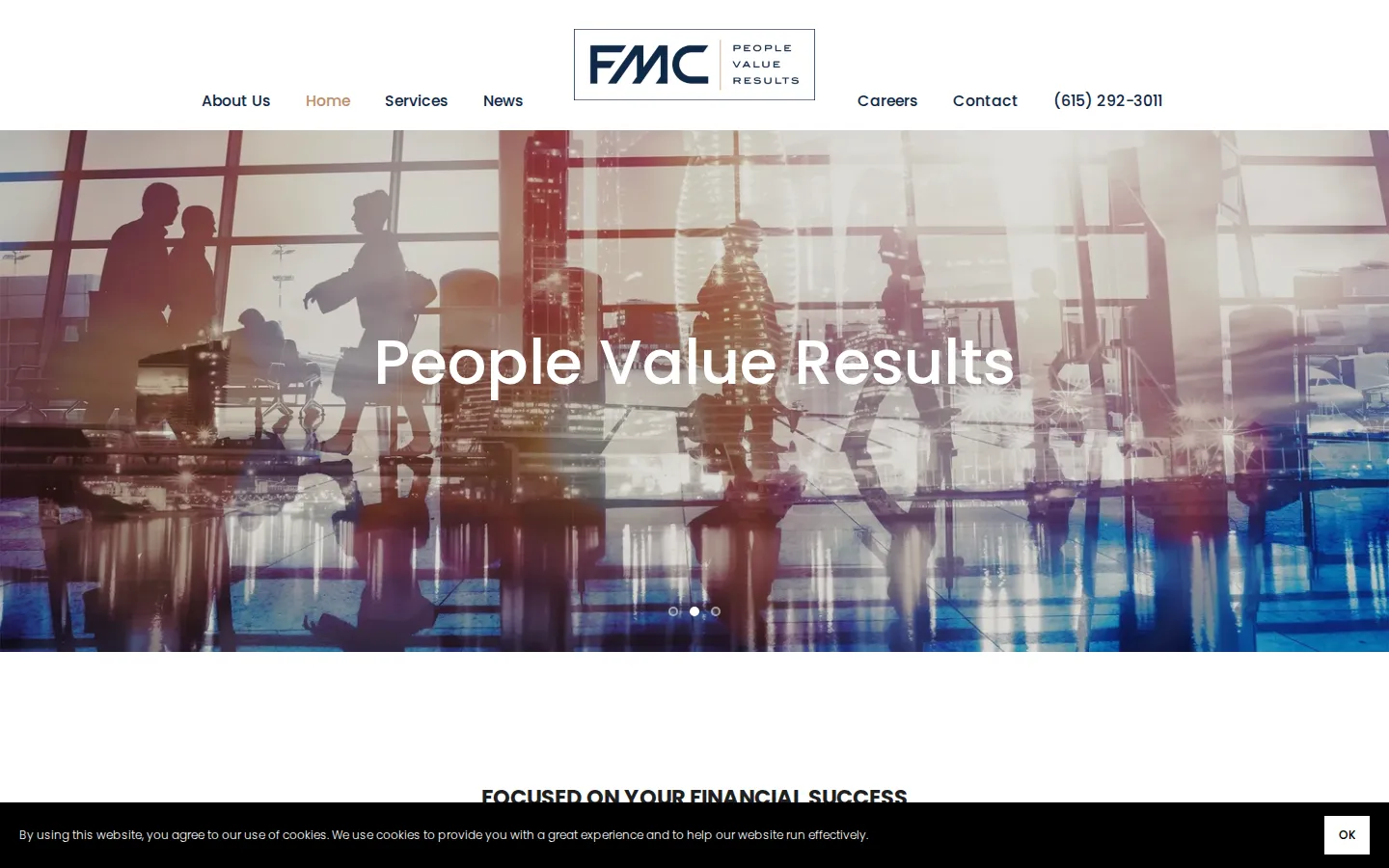
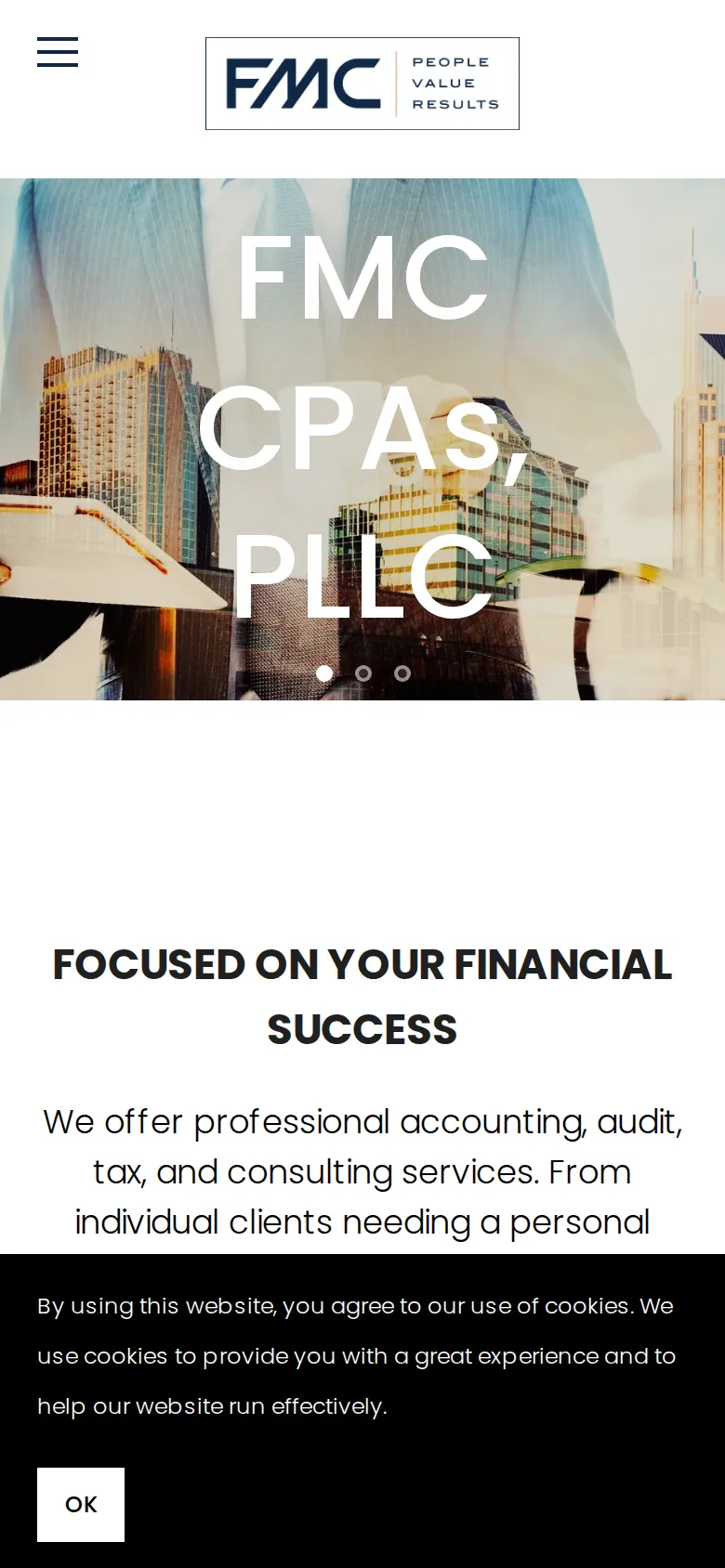
Homepage of fmccpa.com, captured by FlashCrafter on Nov 18, 2026. Nashville, TN
FMC CPAs, PLLC
In the top three on Google Maps for “cpa firm” at 2 of 9 sampled points around Nashville’s center on Oct 11, 2026.
What it does well
- +Navigation. The desktop header groups key pages around a centered logo, keeping contact information easy to spot.
- +Services. A concise introduction explains the core services and makes clear that both individuals and companies are welcome.
- +Call to action. A linked phone number gives visitors a direct way to start a conversation.
- +Trust. A full office address provides a concrete local presence visitors can verify or use when planning a visit.
- +Navigation. A dedicated client portal link gives existing clients a clear route to their online workspace.
To borrow: Pair a concise service introduction with visible phone contact, a full office address, and a dedicated client portal link.
Patterns
What these firms share
- Phone link in the first mobile screen
- Have it11 of 20Without it9 of 20
- Online scheduling embed or link
- Have it1 of 20Without it19 of 20
- Client portal link
- Have it10 of 20Without it10 of 20
- Contact form (message box or three or more fields)
- Have it10 of 20Without it10 of 20
- Structured data (JSON-LD)
- Have it17 of 20Without it3 of 20
- No sideways scrolling on a phone
- Have it15 of 20Without it5 of 20
| Pattern | Have it | Without it |
|---|---|---|
| Phone link in the first mobile screen | 11 of 20 | 9 of 20 |
| Online scheduling embed or link | 1 of 20 | 19 of 20 |
| Client portal link | 10 of 20 | 10 of 20 |
| Contact form (message box or three or more fields) | 10 of 20 | 10 of 20 |
| Structured data (JSON-LD) | 17 of 20 | 3 of 20 |
| No sideways scrolling on a phone | 15 of 20 | 5 of 20 |
Phone links appeared in the first mobile screen for 11 of 20 firms, while online scheduling embeds or links appeared for 1 of 20 firms, showing different approaches to making contact. Client portal links appeared for 10 of 20 firms, and contact forms appeared for 10 of 20 firms. Structured data (JSON-LD) appeared for 17 of 20 firms; 15 of 20 firms had no sideways scrolling on a phone.
Your site
See how your firm’s site and local standing compare
Checklist
Check your own homepage
- 01
Read your opening headline and introduction together: check whether they identify your services, intended clients, specialty or local connection clearly enough to help visitors assess fit.
- 02
Open your homepage on a phone and check whether a visitor can find and tap your phone number in the first screen, before scrolling further.
- 03
Review your service descriptions for concrete examples, recognizable client concerns and useful outcomes; check whether navigation helps the audiences you serve find relevant information.
- 04
Follow your consultation or inquiry invitation yourself: check whether the next step is clear and whether the homepage explains what to expect when starting.
- 05
If you offer online scheduling, check that the booking link or embed is visible; where appointment lengths or selected prices appear, keep those details clear.
- 06
Check whether returning clients can readily find your client portal link, alongside a visible entry point for visitors who want to become new clients.
- 07
Review the evidence supporting your introduction: include relevant professional experience, concrete team details or client accounts that describe useful outcomes where you can substantiate them.
- 08
View your homepage at a phone width and check for sideways scrolling; also check whether it includes structured data in JSON-LD, a common pattern here.
Questions
Frequently asked
How were firms selected for these CPA website examples?
Does appearing in Google Maps’ top three mean a firm has a better website?
Which homepage patterns can I compare with my own?
What do the screenshots and pattern counts describe?
Method and limits
How this was measured
FlashCrafter searched Google Maps for “cpa firm” at 9 points around the center of each of 30 large US cities (cities-us-v2, version 2; US Census Bureau, Vintage 2025 population estimates for incorporated places (July 1, 2025 estimates; file released 2026-05-14)), a 3 by 3 grid 3.2 km apart, on Oct 11, 2026. In each city the CPA firm that appeared most often in the top three was chosen; ties go to the better average position. 7 of the 20 firms shown were in the top three at two or fewer of the 9 points: the top three is visibility, never first place. If that firm’s site could not be captured or did not qualify, the next firm in the same city by that measure took its place. A probe samples 9 points, not the whole city, and visibility is not quality.
20 of the 30 cities are represented. Cities were worked through in list order and one firm per city is shown, up to 20: 2 cities had a firm that qualified but was left out at the limit of 20 firms; 8 cities were not reached before that limit.
Before any website was opened, code removed 454 listings that never appeared in the top three; 273 listings in other categories; 267 listings with no website; 94 listings for chains or multi-location businesses (their websites are listed under more than one location or business listing); 11 listings of national franchise or chain brands; 7 listings set aside (directory or social-media pages, or sites that could not be verified as the business’s own). Of 1422 listings considered, 36 sites were tried and 22 qualified; those that did not were 7 sites whose robots.txt asks automated visitors to stay out; 4 sites that blocked the capture; 2 sites that rendered blank; 1 site that is not a business of this trade (a referral site, directory or another trade). 20 are shown, at most one per city, in city order.
Everything on a card comes from that firm’s own website, read on Nov 18, 2026: the page text, a first-screen screenshot at desktop and phone width, and the page structure measured by code. Screenshots are reduced, credited and linked to the firm’s site. The notes are FlashCrafter’s own words, each tied to something on the page. Firm names are the names on their Google Maps listings. The city on each card is where the Google Maps search was run, which is where the firm’s listing appeared; a firm may serve clients or be based elsewhere.
These firms are not FlashCrafter clients unless a card says so, did not endorse FlashCrafter, and FlashCrafter does not endorse their services. Nothing here rates or ranks them.
Is this your firm? Ask us to remove it or correct something. We act within two business days.
Keep reading
Related
- Accountants marketing
- Best CRM For Accountants
- Best Website Builders For Accountants
- Accountants Marketing Software
21 sources, captured 2026-11-18 · show· hide
- Inder Singh CPA, NYC (homepage, captured 2026-11-18)
- Prestige Tax Group (homepage, captured 2026-11-18)
- Pasquesi Partners (homepage, captured 2026-11-18)
- Houston Skyline Financial CPA (homepage, captured 2026-11-18)
- Aniles & Co CPA Firm (homepage, captured 2026-11-18)
- Kim Yeung Ling P.C. (homepage, captured 2026-11-18)
- JMS CPAs, PLLC (homepage, captured 2026-11-18)
- M.W. Orlando CPA, Inc. (homepage, captured 2026-11-18)
- Kelly CPA (homepage, captured 2026-11-18)
- Richmond CPA (homepage, captured 2026-11-18)
- Michael Davis CPA PA (homepage, captured 2026-11-18)
- Millan & Co., CPAs (homepage, captured 2026-11-18)
- Curran & Associates CPA's, P.C. (homepage, captured 2026-11-18)
- REH CPA, Charlotte (homepage, captured 2026-11-18)
- ABC Accounting LLC (homepage, captured 2026-11-18)
- OnTarget CPA (homepage, captured 2026-11-18)
- Cristian Borcan, CPA PC (homepage, captured 2026-11-18)
- Asamoa & Associates, CPA (homepage, captured 2026-11-18)
- Kafoo CPA (homepage, captured 2026-11-18)
- FMC CPAs, PLLC (homepage, captured 2026-11-18)
- FlashCrafter Briefs: Google Maps probe grid (contract v1)
Vendor pages change. Figures are as published on the capture date; confirm before deciding.