
electrician website examples
20 Real Electrician Websites From Companies in Google Maps' Top Three (October 2026)
20 real websites of electricians from 20 US cities, captured October 2026: what they put first, how they ask for the call.
- Real websites
- 20
- Cities represented
- 20
- Measured
- Oct 2026
These electrician website examples pair homepage captures from October 12, 2026, with Google Maps visibility measured on October 11, 2026. Selection used searches for “electrician” at a grid of points around city centers, choosing eligible local firms that appeared most often in positions one through three. Appearing in the top three on Google Maps measures visibility, not the quality of a firm or its website.
Use the gallery to compare how homepages introduce their service area, explain electrical work, show credentials, and make contact options visible. Look for patterns you can apply to your own homepage: a specific local opening, practical service descriptions, accessible calling or booking options, and concrete customer evidence.
The gallery
Websites, captured Oct 12, 2026
Ordered by city, not ranked. Inclusion reflects how often Google Maps showed the company in the top three around the city center; it says nothing about the quality of the company or its website.
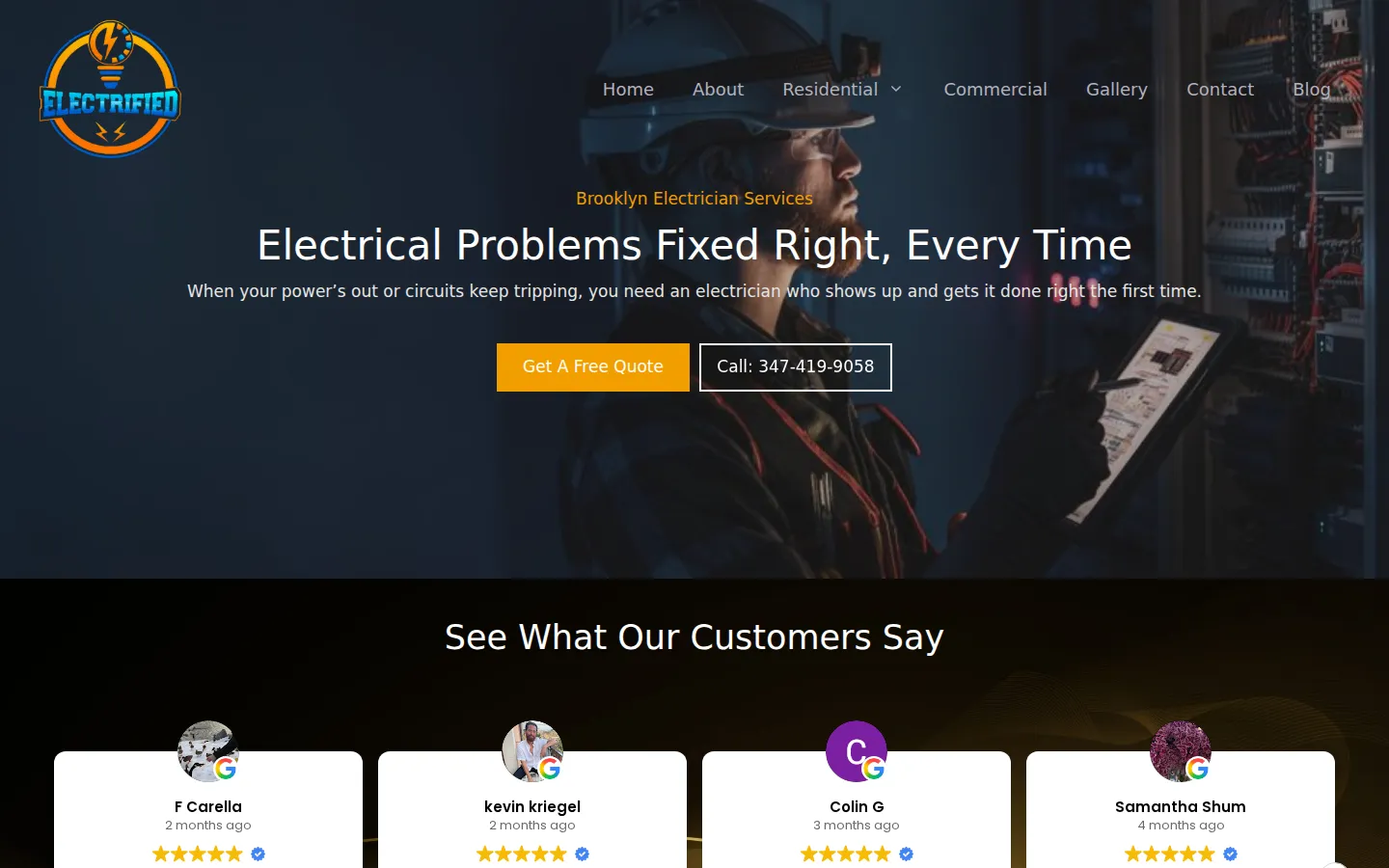
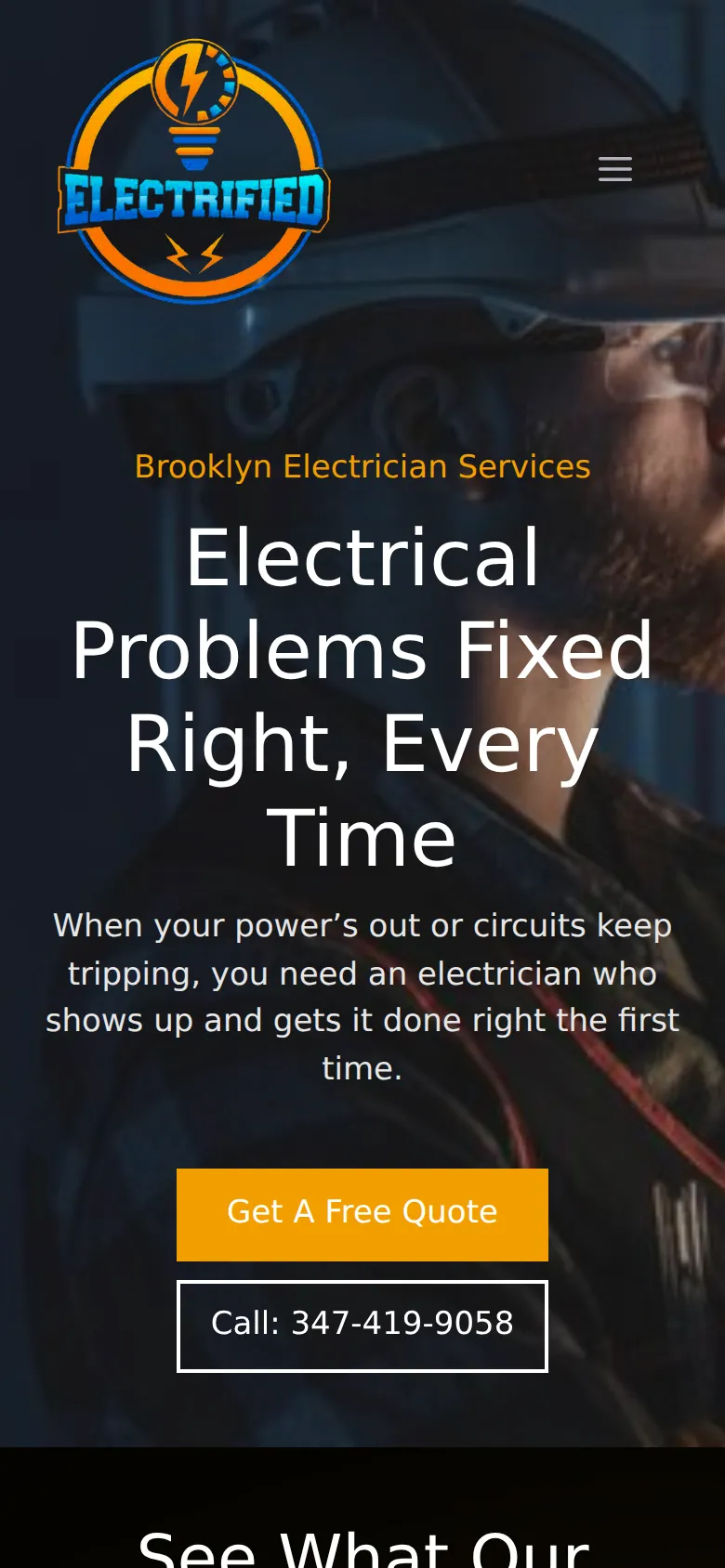
Homepage of electrifiedny.com, captured by FlashCrafter on Oct 12, 2026. New York, NY
Electrified
In the top three on Google Maps for “electrician” at 3 of 9 sampled points around New York’s center on Oct 11, 2026.
What it does well
- +First screen. The opening pairs a clear Brooklyn service area with familiar electrical problems, helping visitors quickly recognize relevant help.
- +Call to action. A prominent quote button and adjacent phone option give visitors two clear ways to start a conversation.
- +Trust. Customer reviews describe specific experiences, making responsiveness and troubleshooting support tangible.
- +Services. The service description connects local building challenges with modern upgrades, addressing both repair needs and planned improvements.
- +Trust. Explaining labor and materials warranties gives prospective customers a concrete reason to feel confident about ongoing protection.
- +On a phone. Large, vertically stacked contact buttons make the quote and phone options easy to distinguish on a narrow screen.
To borrow: Pair a locally specific opening with clear contact options, detailed customer experiences, and concrete explanations of service protection.
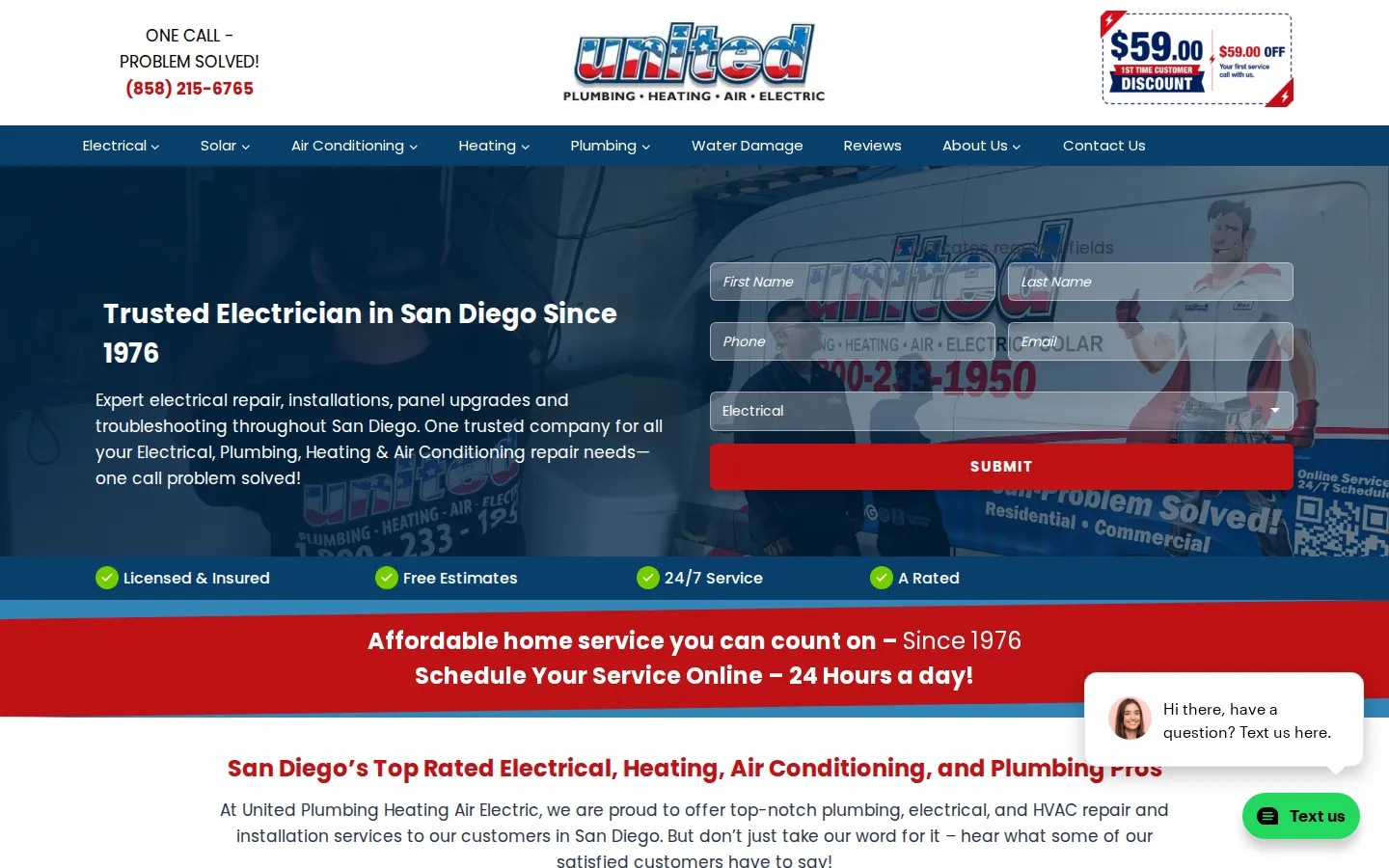
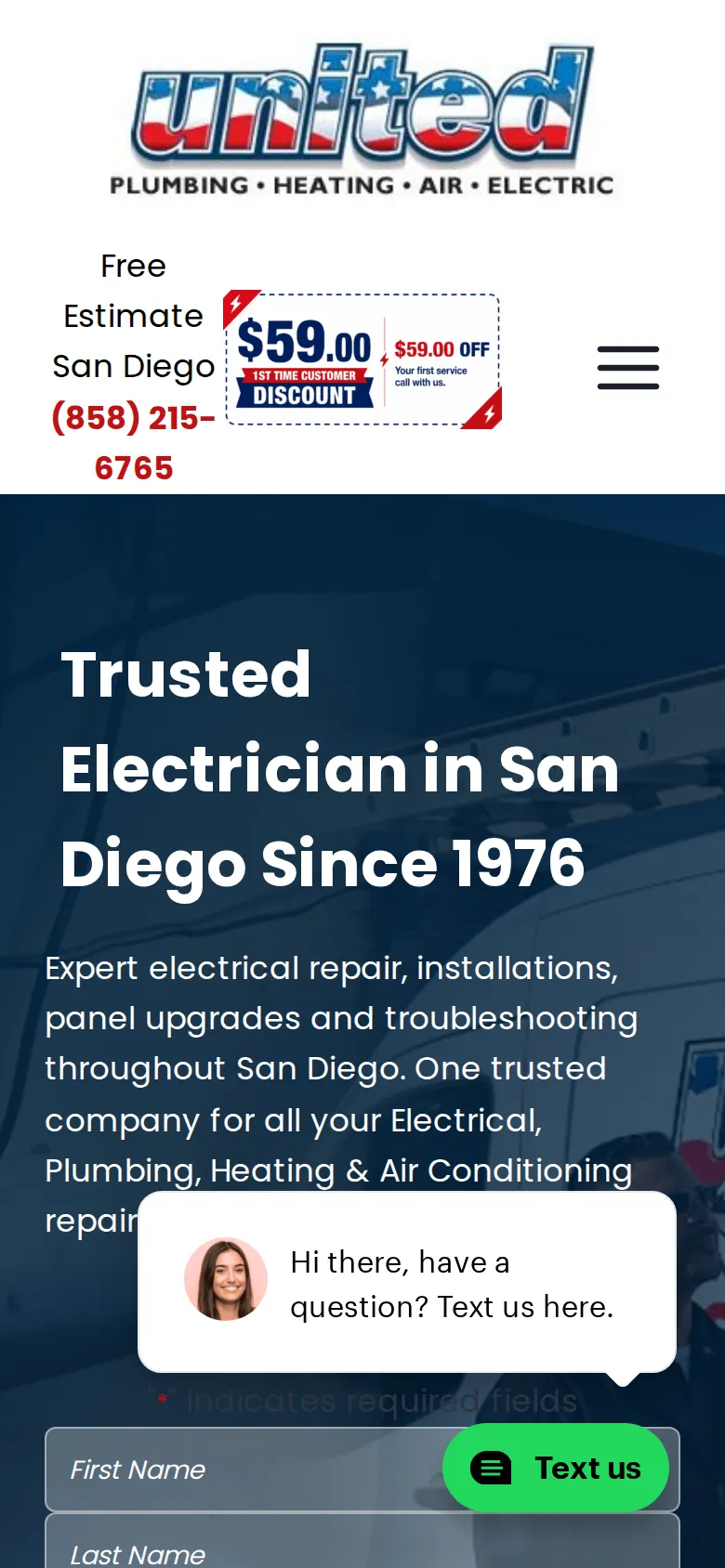
Homepage of localunitedservices.com, captured by FlashCrafter on Oct 12, 2026. Los Angeles, CA
United Plumbing Heating Air & Electric
In the top three on Google Maps for “electrician” at 1 of 9 sampled points around Los Angeles’s center on Oct 11, 2026.
What it does well
- +First screen. The opening headline immediately establishes the trade, service area, and longevity.
- +Call to action. The desktop opening places a service request form beside the introduction, giving visitors a direct way to enquire.
- +On a phone. A telephone link appears in the first mobile screen, making calling readily accessible.
- +Trust. A displayed review score and substantial review count provide concrete social proof.
- +Services. Specific project examples help homeowners recognise whether their electrical needs fit the services offered.
- +Navigation. The desktop navigation presents clear service categories alongside reviews and contact options.
To borrow: Pair a clear local trade headline with an accessible enquiry form, a prominent mobile phone link, and visible customer review evidence.
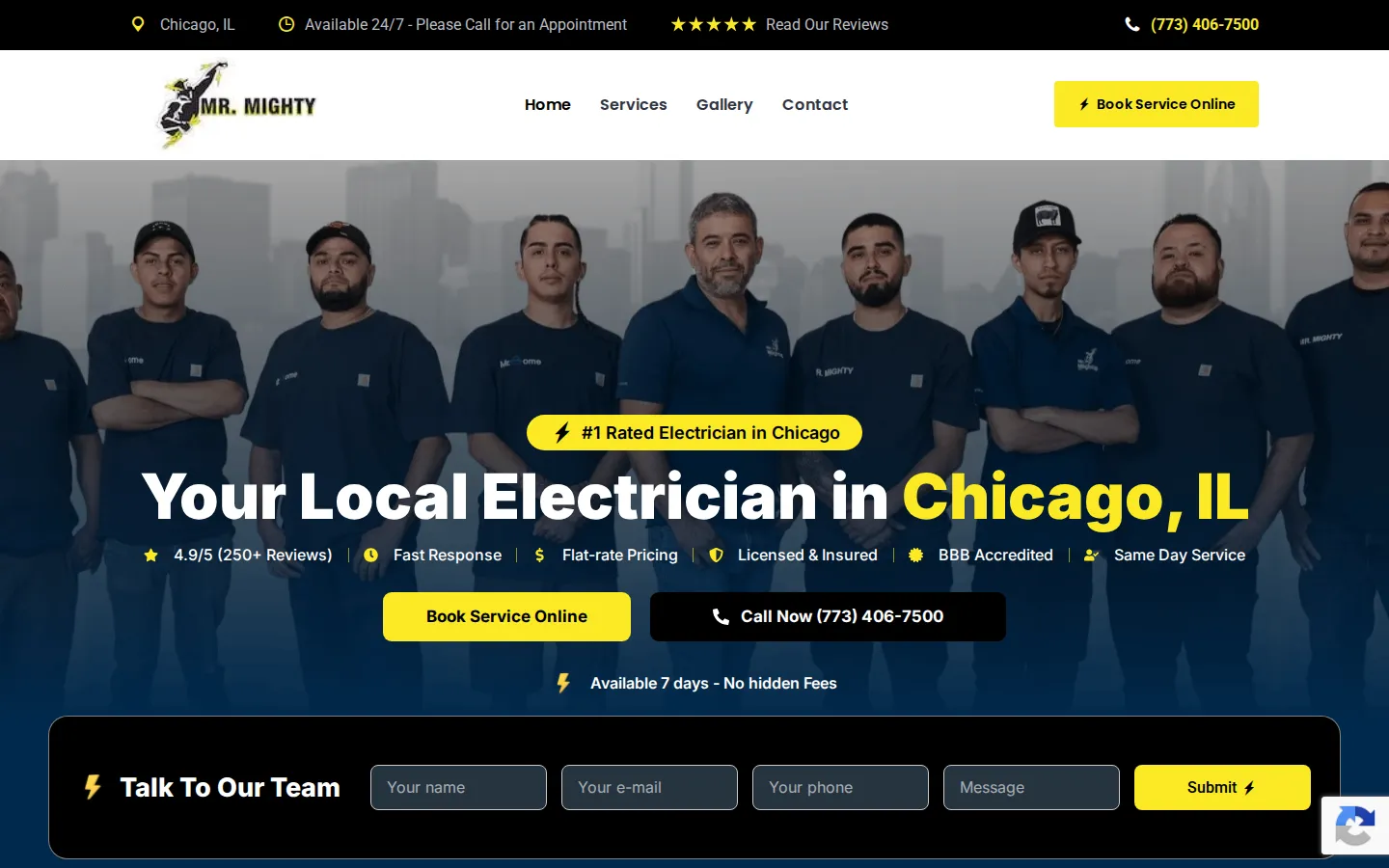
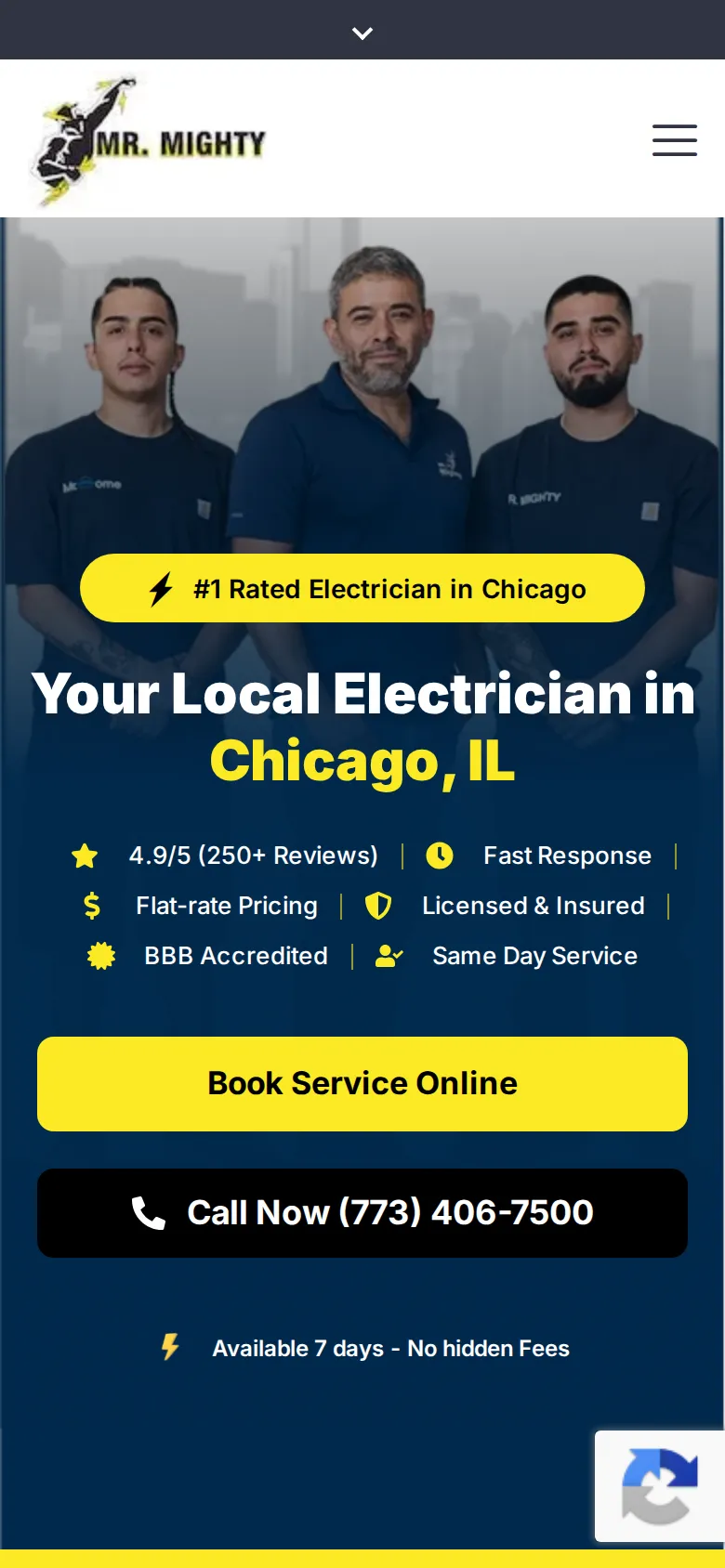
Homepage of mrmightyelectric.com, captured by FlashCrafter on Oct 12, 2026. Chicago, IL
Mr. Mighty Electric
In the top three on Google Maps for “electrician” at 1 of 9 sampled points around Chicago’s center on Oct 11, 2026.
What it does well
- +First screen. A prominent headline immediately connects the electrical trade with the local service area, while the team photograph gives the page a personal feel.
- +Call to action. Clickable phone access gives visitors a direct route to contacting the business.
- +On a phone. Large, vertically stacked booking and calling buttons make the two main contact options easy to spot on a phone.
- +Trust. Clear warranty lengths give prospective customers a concrete reassurance about support after the work.
- +Services. Specific installation and repair options help homeowners quickly recognize whether their project is covered.
- +Navigation. The service menu separates residential, commercial, emergency, and low-voltage work, helping visitors choose a relevant path.
To borrow: Pair a clear local-service headline and team photograph with prominent call and booking options, then support them with specific services and concrete warranties.
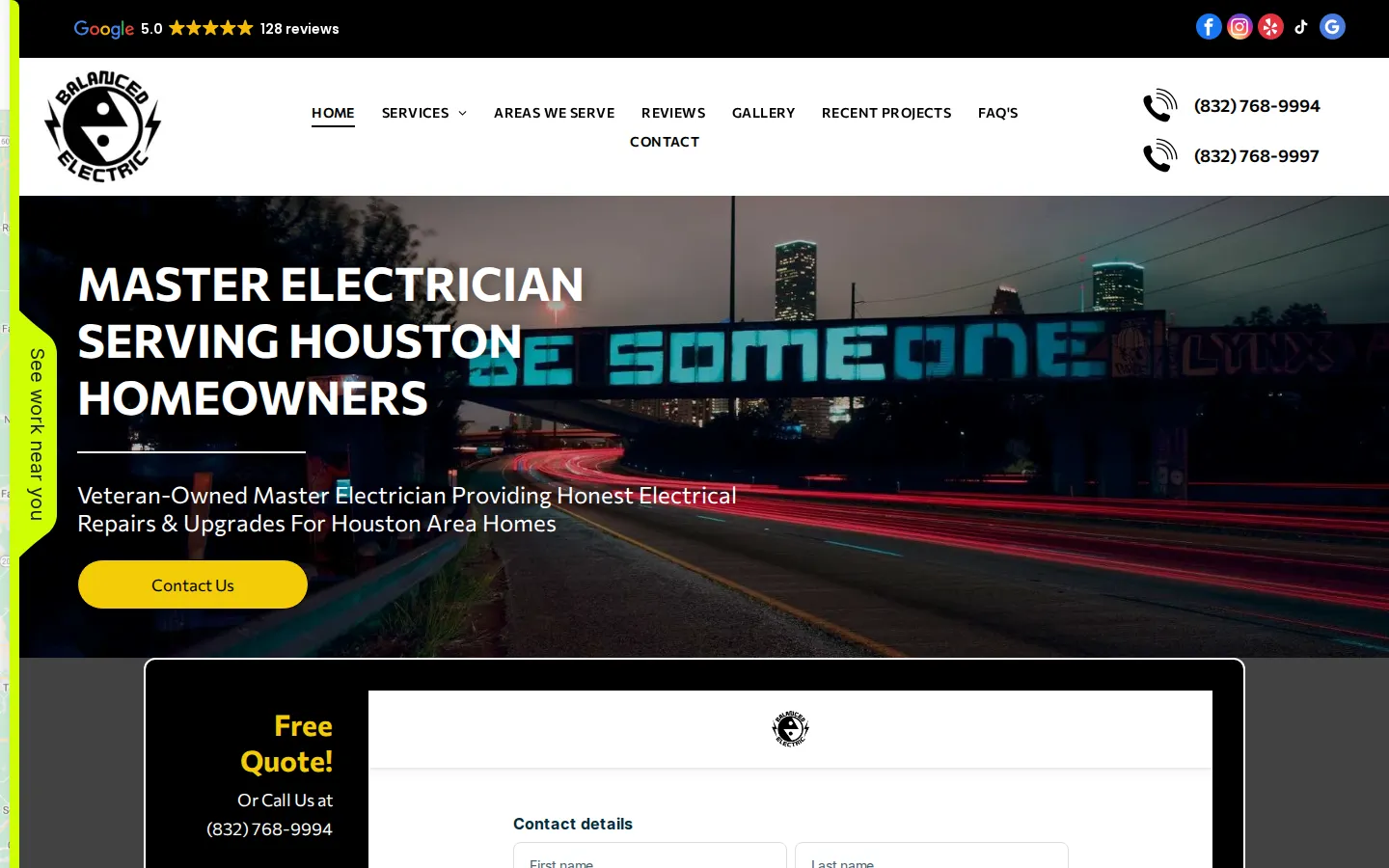
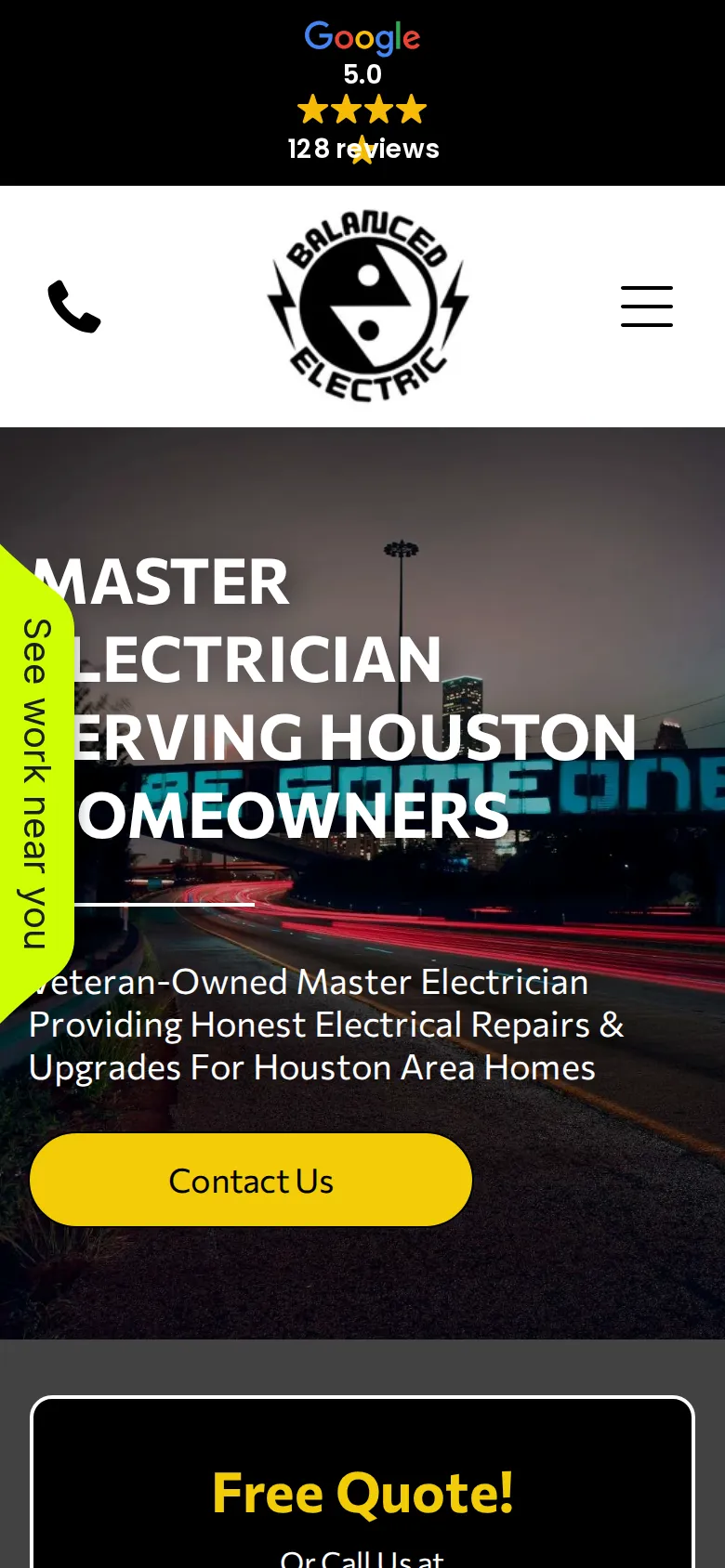
Homepage of balancedelectrictx.com, captured by FlashCrafter on Oct 12, 2026. Houston, TX
Balanced Electric
In the top three on Google Maps for “electrician” at 2 of 9 sampled points around Houston’s center on Oct 11, 2026.
What it does well
- +First screen. The opening headline immediately identifies the specialty, service area, and homeowner audience.
- +Call to action. Clickable phone links give visitors a direct way to start a conversation.
- +Trust. Displaying a specific master electrician license number gives visitors a concrete credential to verify.
- +Services. Service descriptions connect electrical work to practical homeowner benefits, including capacity for additional appliances and circuits.
- +On a phone. A phone link appears in the first mobile screen, making contact accessible immediately.
- +Navigation. The desktop header provides clear routes to service information, coverage, reviews, project examples, common questions, and contact.
To borrow: Pair a clear local homeowner headline with immediate phone access, verifiable credentials, and service explanations tied to everyday household needs.
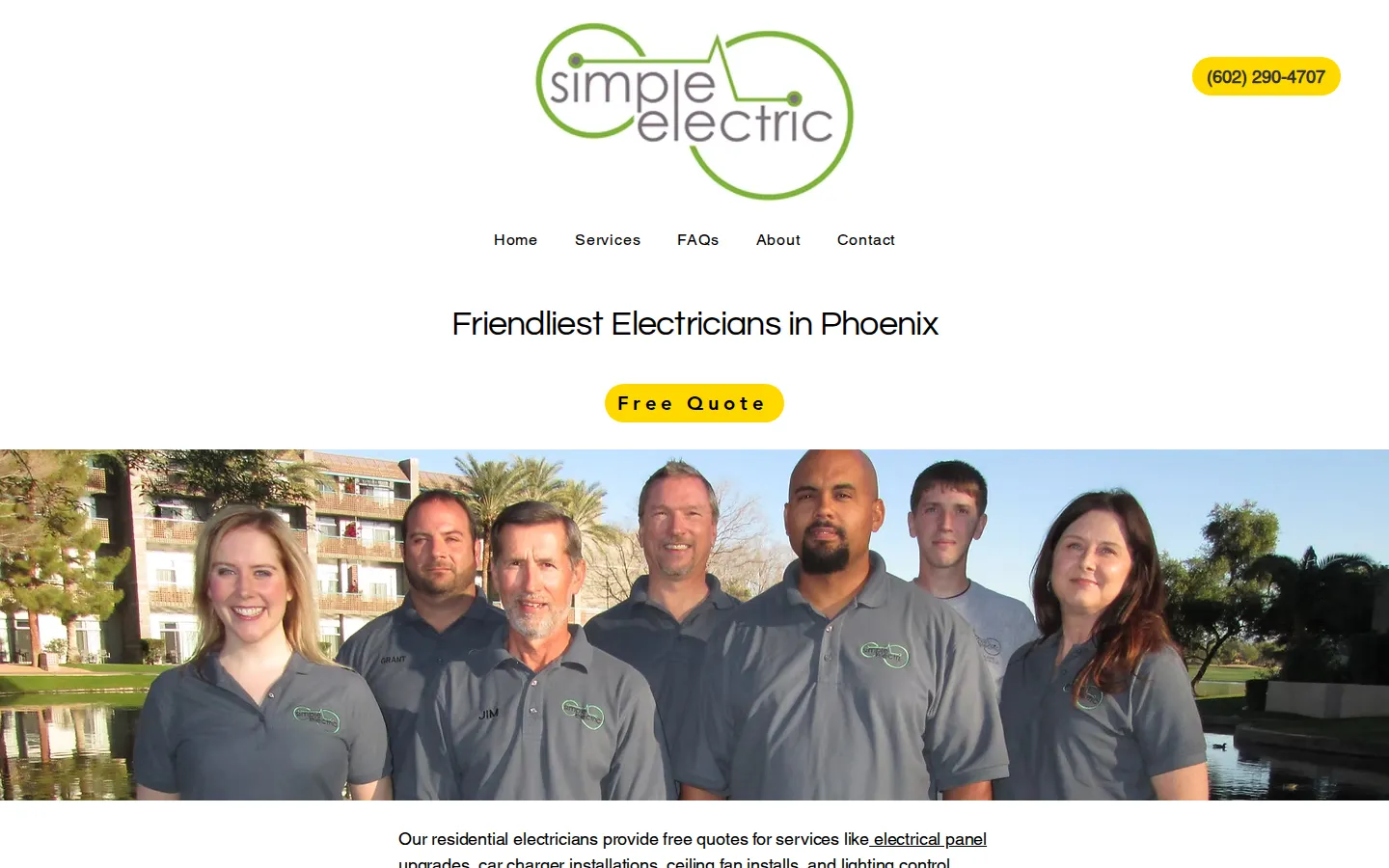
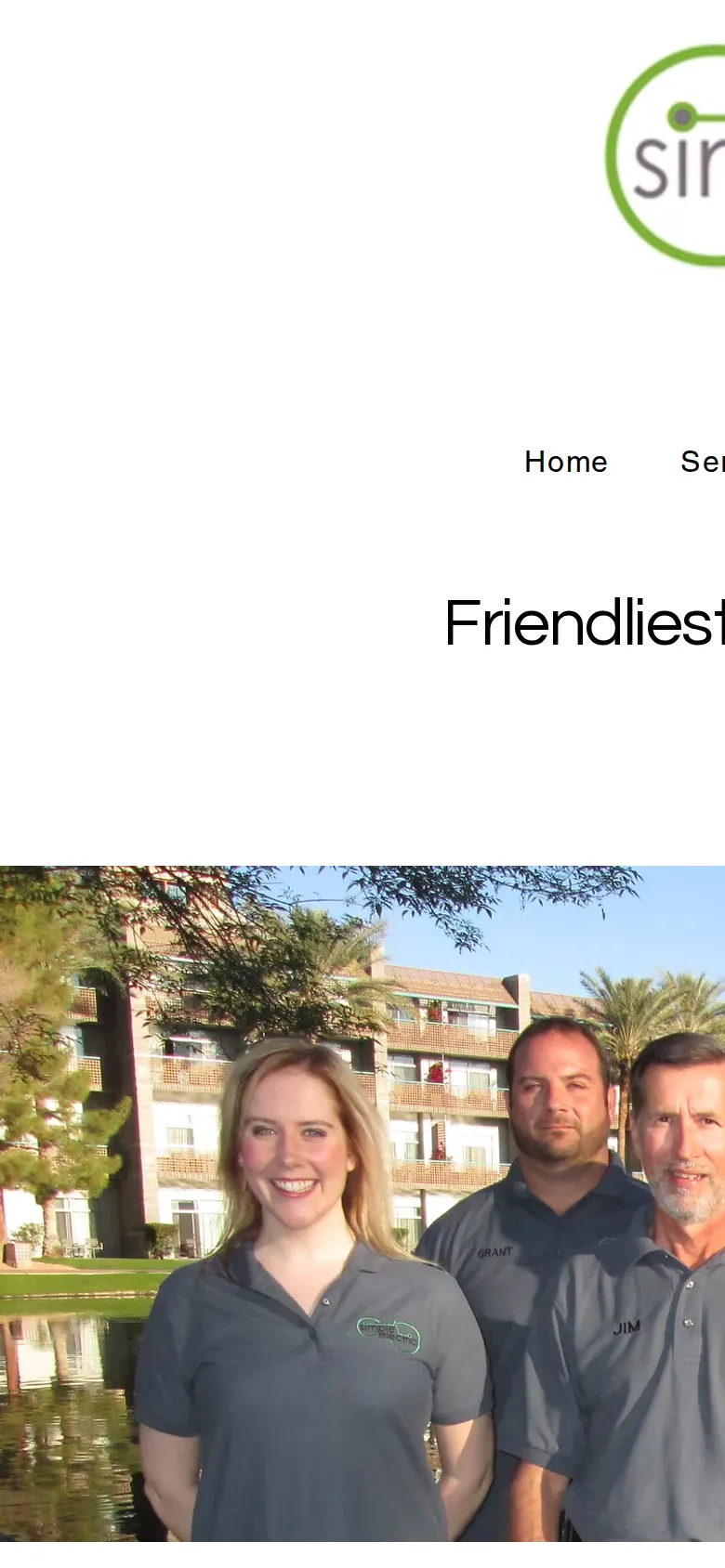
Homepage of simpleelectricaz.com, captured by FlashCrafter on Oct 12, 2026. Phoenix, AZ
Simple Electric
In the top three on Google Maps for “electrician” at 3 of 9 sampled points around Phoenix’s center on Oct 11, 2026.
What it does well
- +First screen. The desktop opening pairs a clear trade-and-location headline with a prominent quote button, helping visitors quickly understand the offer.
- +Call to action. A clickable phone number gives visitors a direct way to start a conversation.
- +Navigation. The desktop menu uses familiar labels that make services, common questions, company information, and contact details easy to locate.
- +Services. Concrete examples help homeowners recognize whether their electrical project fits the firm's services.
- +Trust. Publishing two contractor license numbers gives prospective customers specific credentials they can verify.
To borrow: Pair a clear local service headline with an obvious quote button, direct phone access, concrete service examples, and verifiable license numbers.
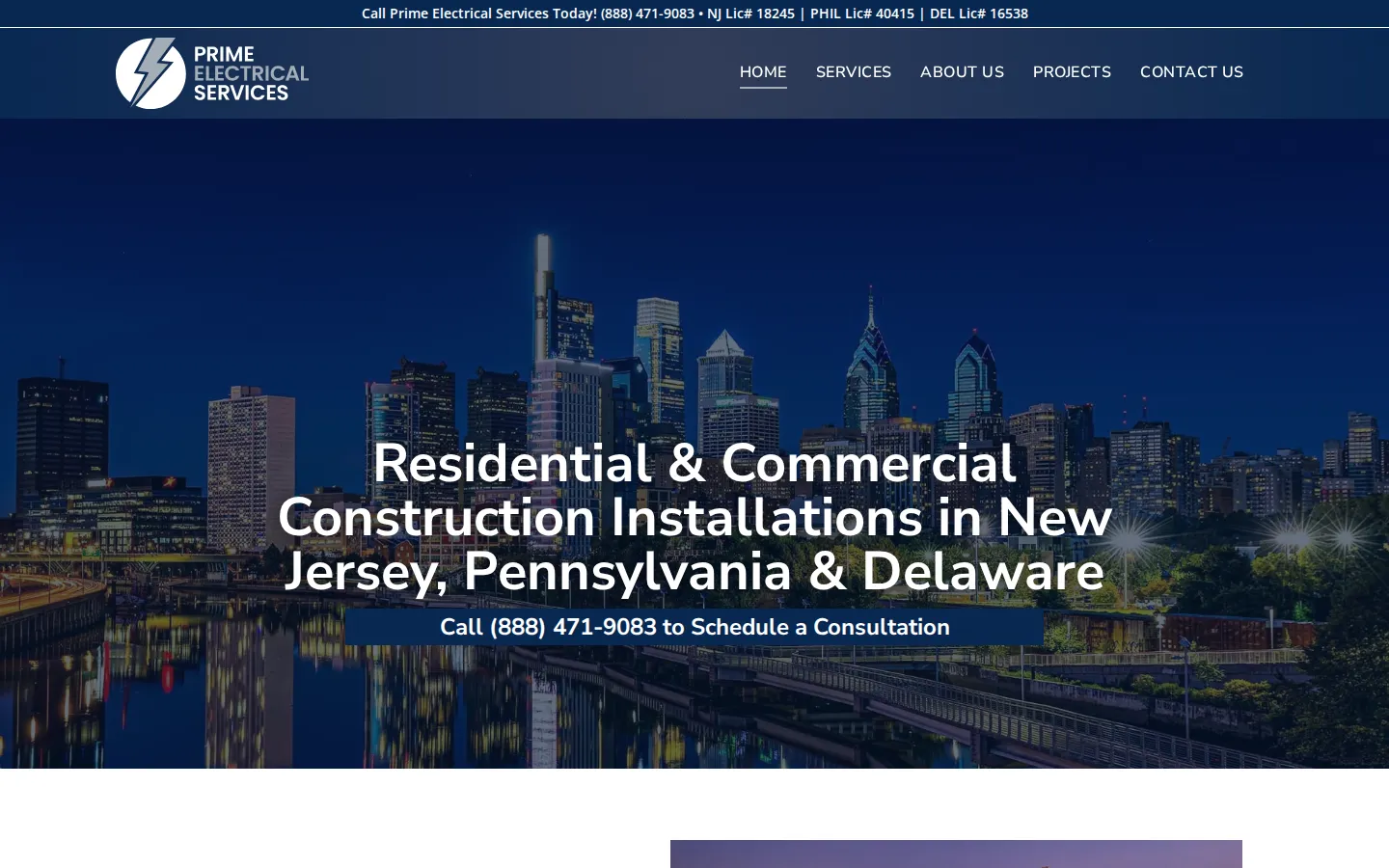
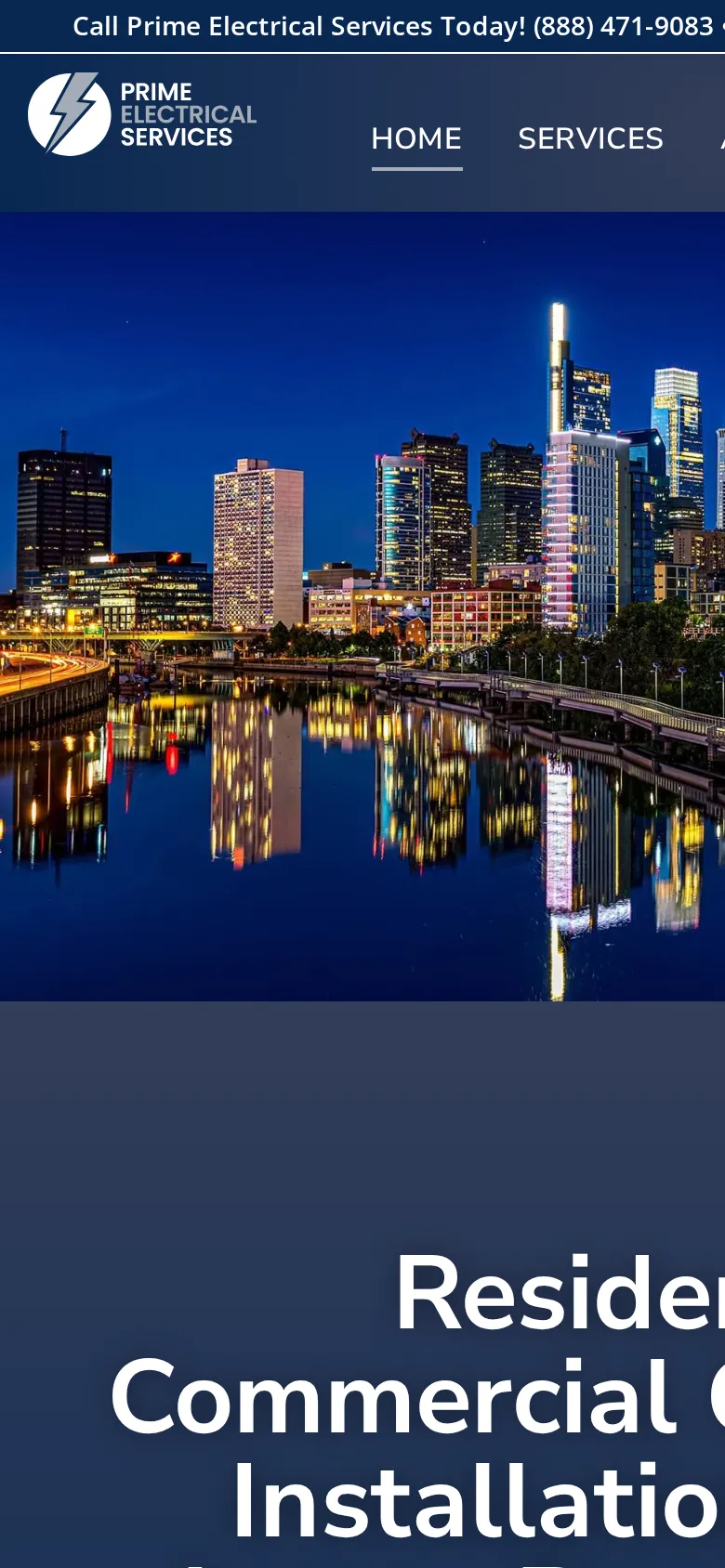
Homepage of primebsf.com, captured by FlashCrafter on Oct 12, 2026. Philadelphia, PA
Prime Electrical Services
In the top three on Google Maps for “electrician” at 2 of 9 sampled points around Philadelphia’s center on Oct 11, 2026.
What it does well
- +First screen. The headline immediately identifies the customer types, project focus and three-state service area.
- +Call to action. The consultation invitation gives visitors a clear next step and the phone number needed to take it.
- +Trust. Published license numbers provide concrete credentials for visitors to check.
- +Services. Specific specialties help visitors assess whether their commercial electrical needs fit the business.
- +Navigation. The desktop header makes services, company information, projects and contact options easy to locate.
- +Call to action. A contact form offers another way to start an inquiry alongside calling.
To borrow: Pair a clear service-area headline with a direct consultation invitation, visible license numbers and specific service specialties.
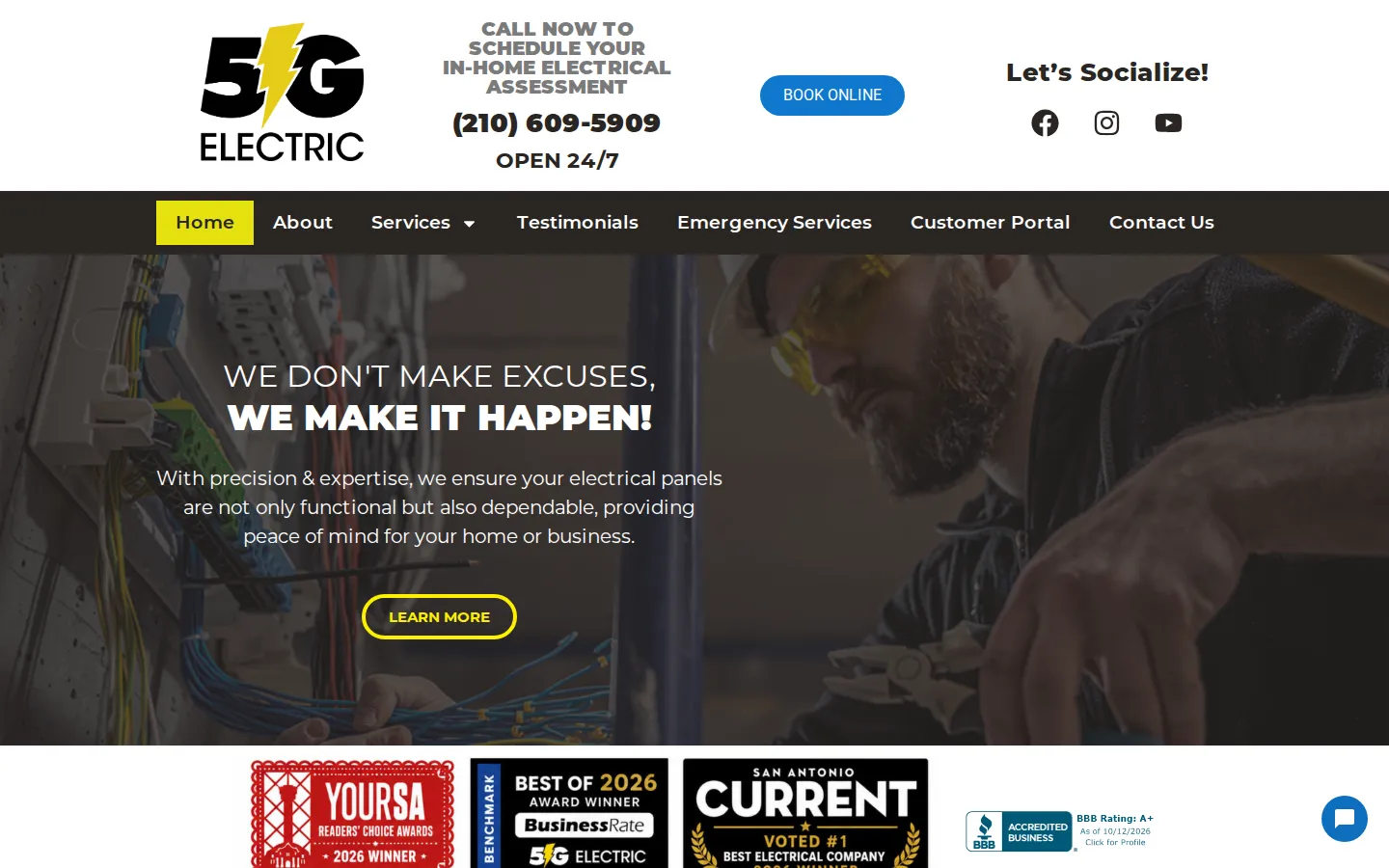
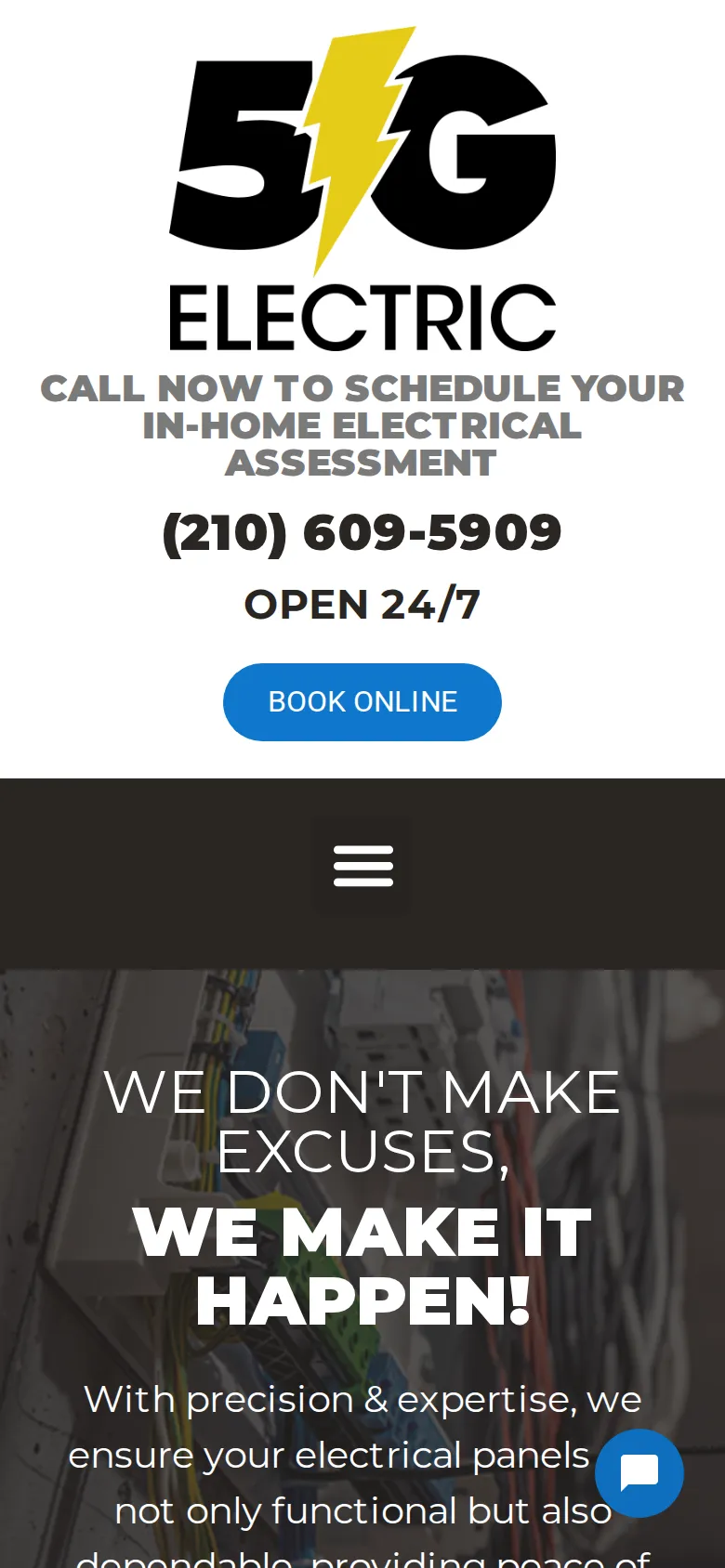
Homepage of 5gelectric.com, captured by FlashCrafter on Oct 12, 2026. San Antonio, TX
5G Electric LLC
In the top three on Google Maps for “electrician” at 4 of 9 sampled points around San Antonio’s center on Oct 11, 2026.
What it does well
- +First screen. The desktop header makes the phone number, round-the-clock availability and online booking button easy to spot.
- +Call to action. A clickable phone number gives visitors a direct route to requesting help.
- +On a phone. The mobile header presents a large phone number and prominent booking button in a clear, stacked layout.
- +Services. Specific service choices help visitors quickly recognize whether their electrical project is covered.
- +Trust. A stated small-business certification and family ownership give visitors concrete background about the business.
- +Navigation. The desktop navigation gives visitors clear routes to services, testimonials, emergency help and the customer portal.
To borrow: Pair prominent phone and booking options with clear service choices and concrete business credentials.
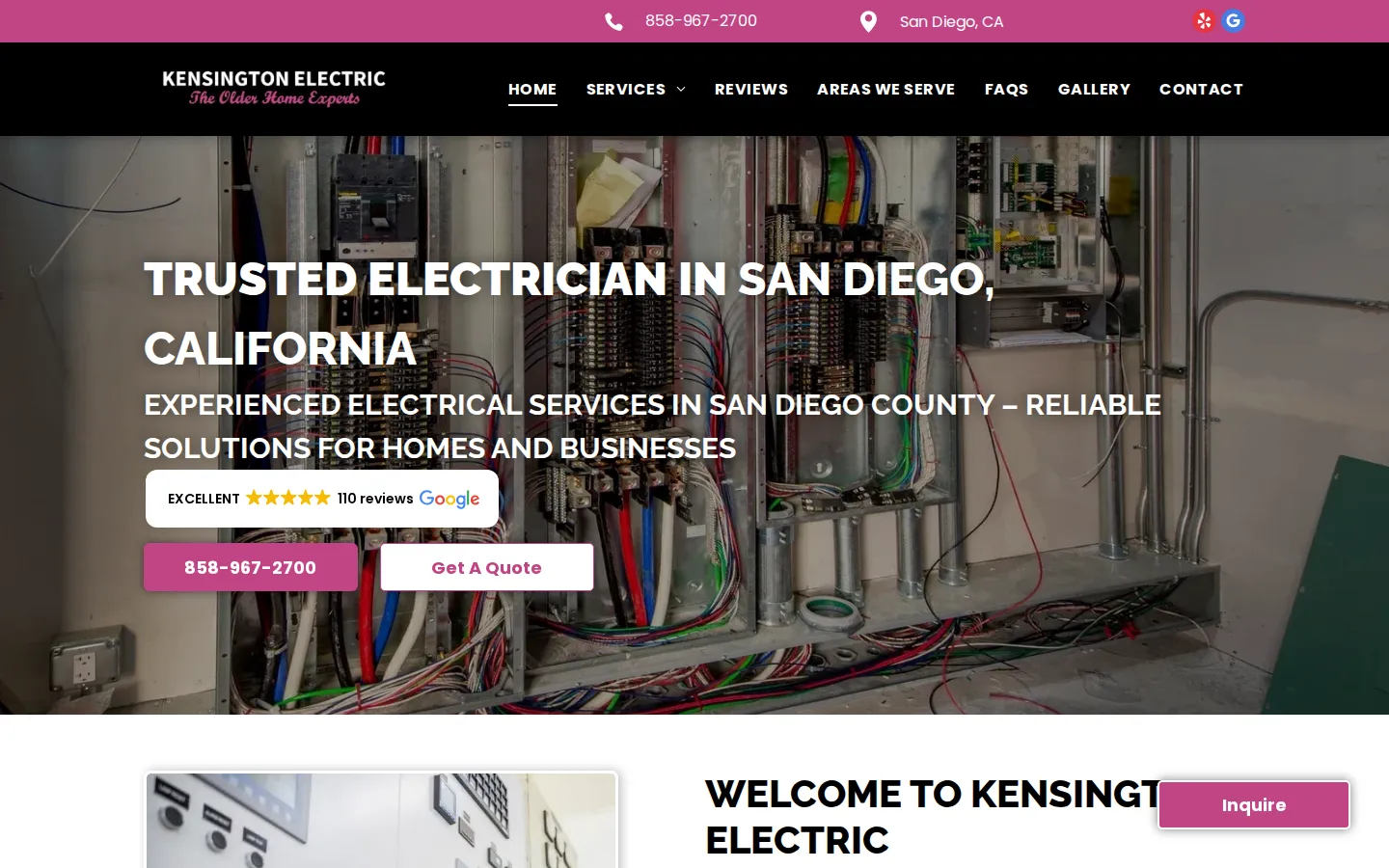
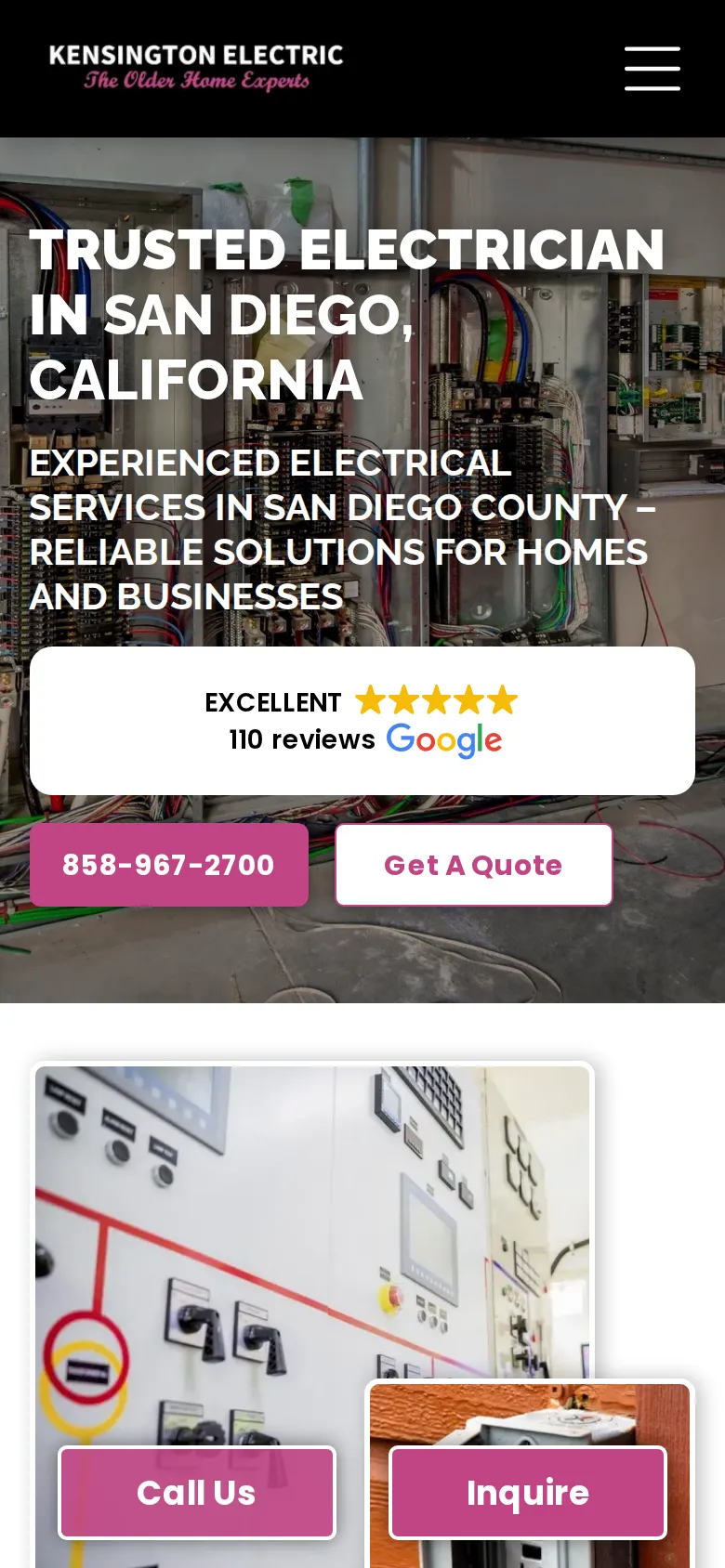
Homepage of kensingtonelectricinc.com, captured by FlashCrafter on Oct 12, 2026. San Diego, CA
Kensington Electric
In the top three on Google Maps for “electrician” at 2 of 9 sampled points around San Diego’s center on Oct 11, 2026.
What it does well
- +First screen. The opening screen clearly identifies the trade and service location, with prominent phone and quote buttons over relevant electrical imagery.
- +Call to action. A tap-to-call phone link gives visitors a direct way to request service.
- +Trust. Publishing a specific contractor license number gives visitors a concrete credential to verify.
- +Services. Service descriptions connect electrical work to practical homeowner needs, such as charging an electric vehicle at home.
- +On a phone. Large phone and quote buttons remain prominent beneath the introductory message on mobile.
- +Navigation. The desktop menu provides clear routes to services, reviews, coverage areas, common questions, project photos, and contact information.
To borrow: Pair a clear trade-and-location headline with prominent contact buttons, practical service descriptions, and a verifiable license number.
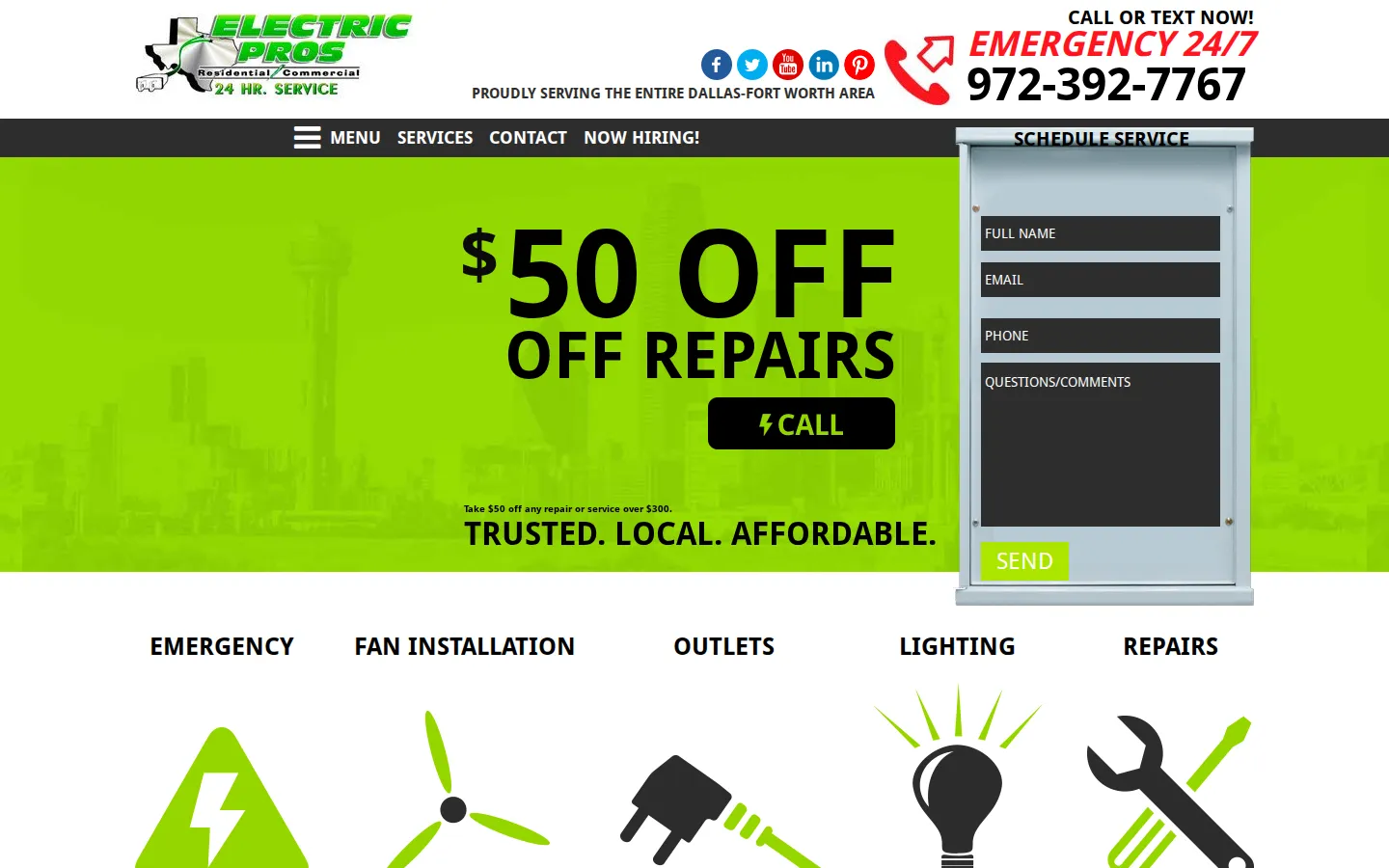
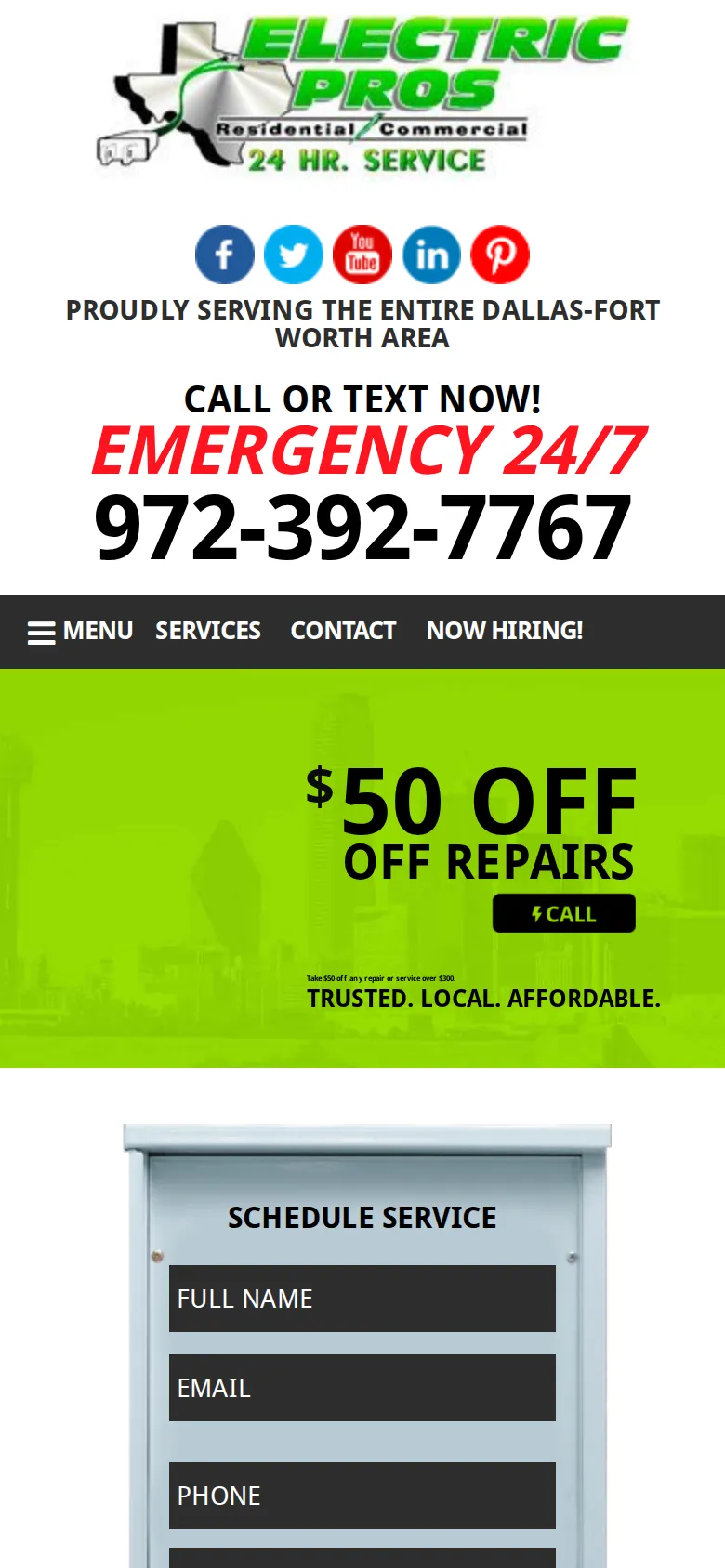
Homepage of electric-pros.com, captured by FlashCrafter on Oct 12, 2026. Dallas, TX
Electric Pros
In the top three on Google Maps for “electrician” at 1 of 9 sampled points around Dallas’s center on Oct 11, 2026.
What it does well
- +First screen. The opening offer gives visitors a concrete saving and clearly states the minimum spend.
- +Call to action. Visitors can request service directly through an on-page form.
- +On a phone. A telephone link appears in the first mobile screen, making calling convenient for visitors who need immediate help.
- +Trust. Displaying a specific electrical contractor license number alongside insurance information gives visitors a concrete credential to check.
- +Services. Specific project examples help homeowners recognize whether their electrical needs are covered.
- +Navigation. The desktop navigation makes services and contact options easy to spot with bold labels and strong contrast.
To borrow: Pair a prominent phone option and service request form with a clearly qualified offer, specific service examples, and a visible license number.

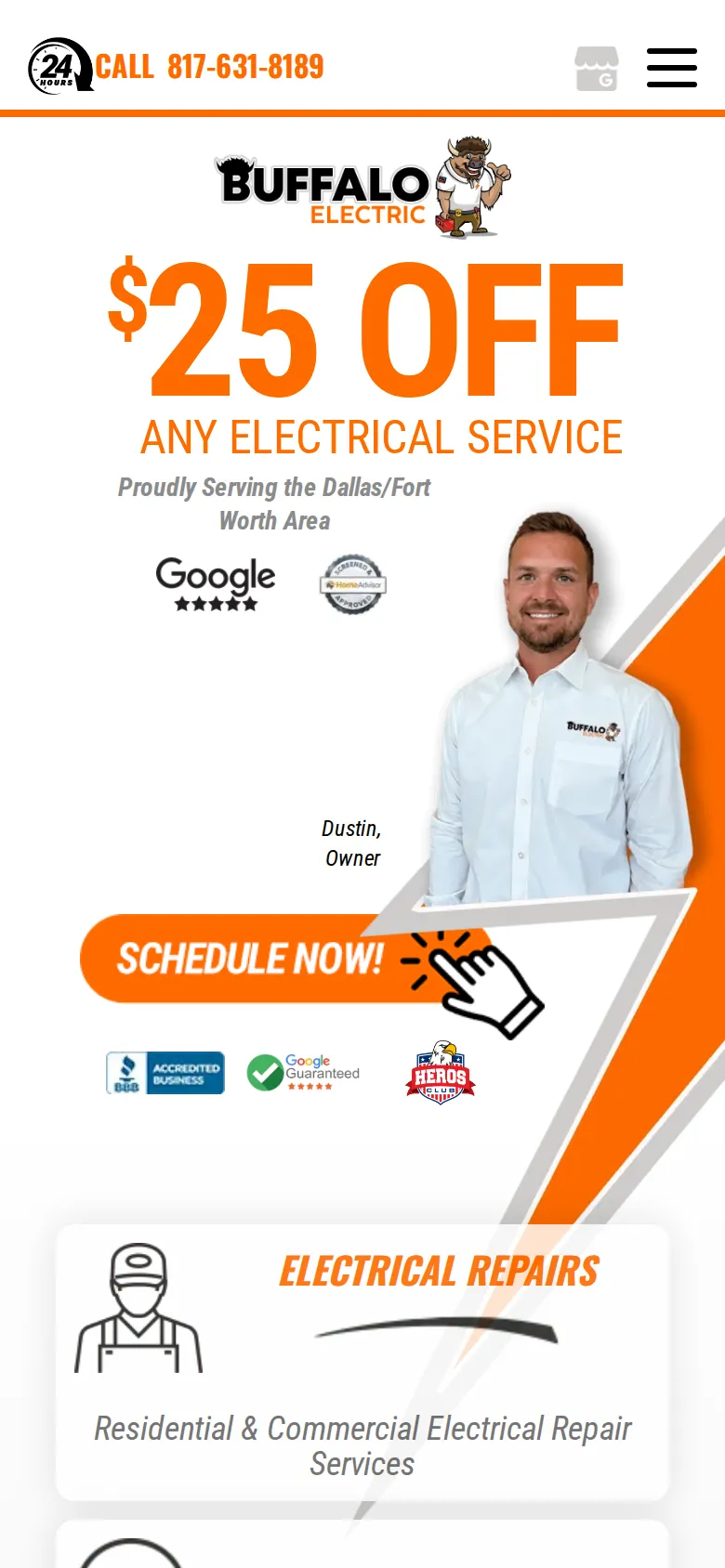
Homepage of buffaloelectricdfw.com, captured by FlashCrafter on Oct 12, 2026. Fort Worth, TX
Buffalo Electric
In the top three on Google Maps for “electrician” at 2 of 9 sampled points around Fort Worth’s center on Oct 11, 2026.
What it does well
- +First screen. A large discount offer, clear service area and bright scheduling button give visitors an immediate reason to act.
- +Call to action. Clickable phone links let visitors start a call directly from the page.
- +On a phone. The phone contact appears in the first mobile screen, keeping a direct contact option immediately accessible.
- +Trust. Publishing a license number provides a concrete credential visitors can check.
- +Services. Specific service labels help visitors quickly recognize whether their electrical project is covered.
- +Call to action. An inquiry form gives visitors another way to explain their needs and request contact.
To borrow: Pair a prominent offer and local service area with immediate phone access, a scheduling option and a verifiable license number.
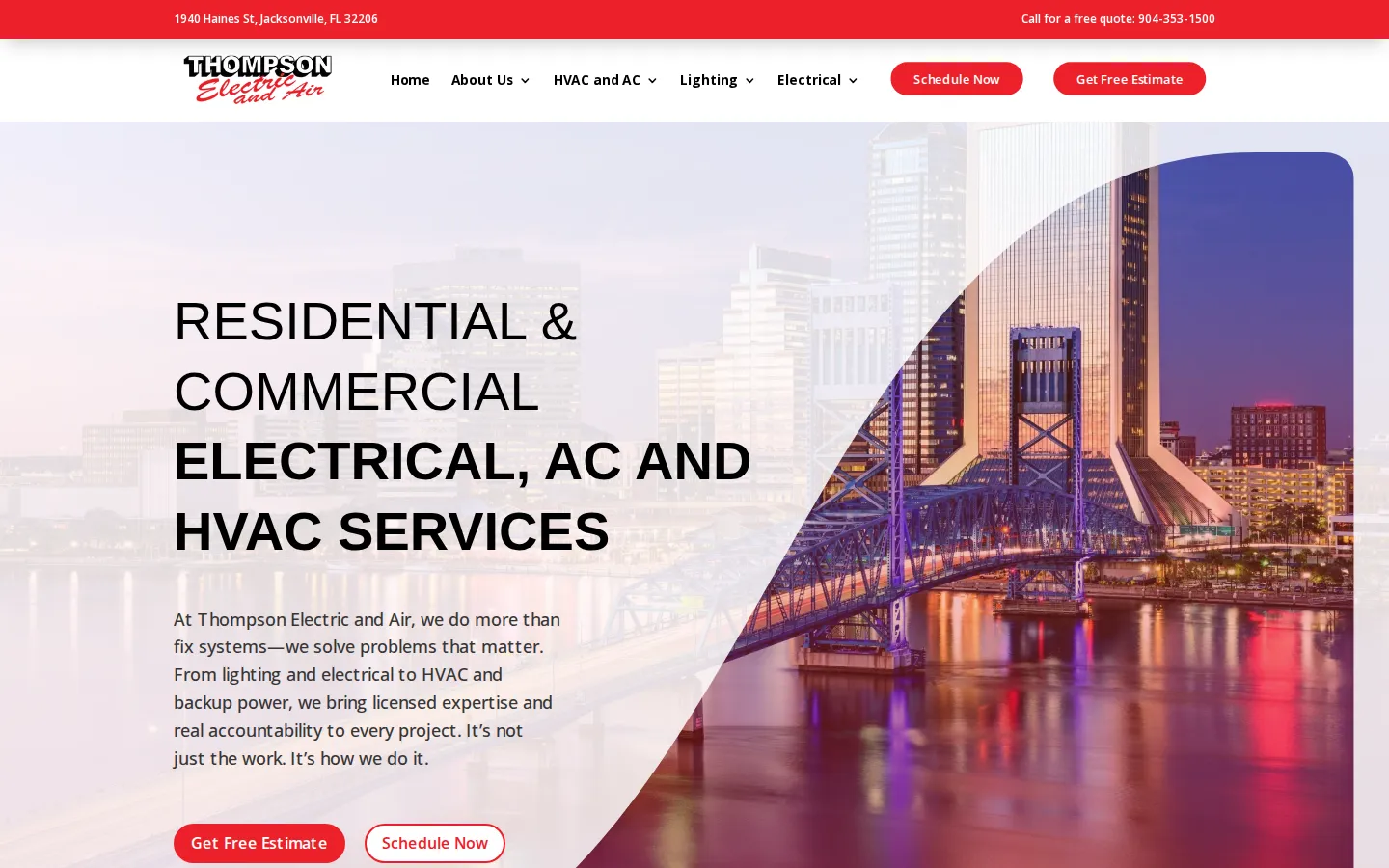
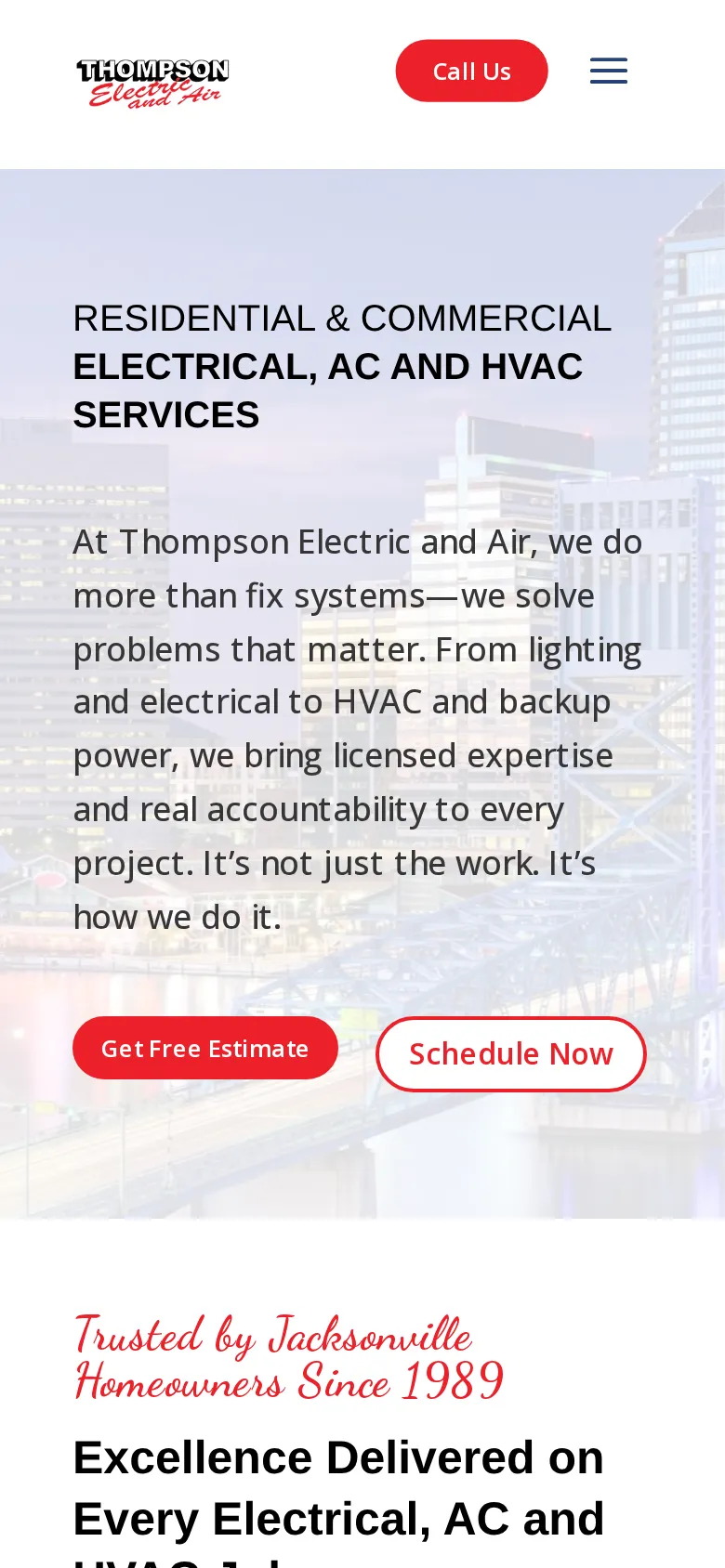
Homepage of thompsonelectricco.com, captured by FlashCrafter on Oct 12, 2026. Jacksonville, FL
Thompson Electric and Air
In the top three on Google Maps for “electrician” at 6 of 9 sampled points around Jacksonville’s center on Oct 11, 2026.
What it does well
- +First screen. The opening headline immediately identifies the core trades and makes clear that both homeowners and businesses are served.
- +Call to action. Visitors can choose between requesting pricing and scheduling work, with both options repeated in the opening section.
- +On a phone. A phone link appears in the first mobile screen, giving visitors an immediate way to make contact.
- +Trust. A prominent local history statement gives visitors a concrete signal of longevity in the community.
- +Services. Specific descriptions help customers recognize whether their project fits, including panel, wiring, and capacity upgrades.
- +Navigation. The desktop header organizes links into clear service groups and keeps the main contact actions alongside them.
To borrow: Pair a clear service headline and specific project descriptions with visible estimate, scheduling, and mobile calling options.
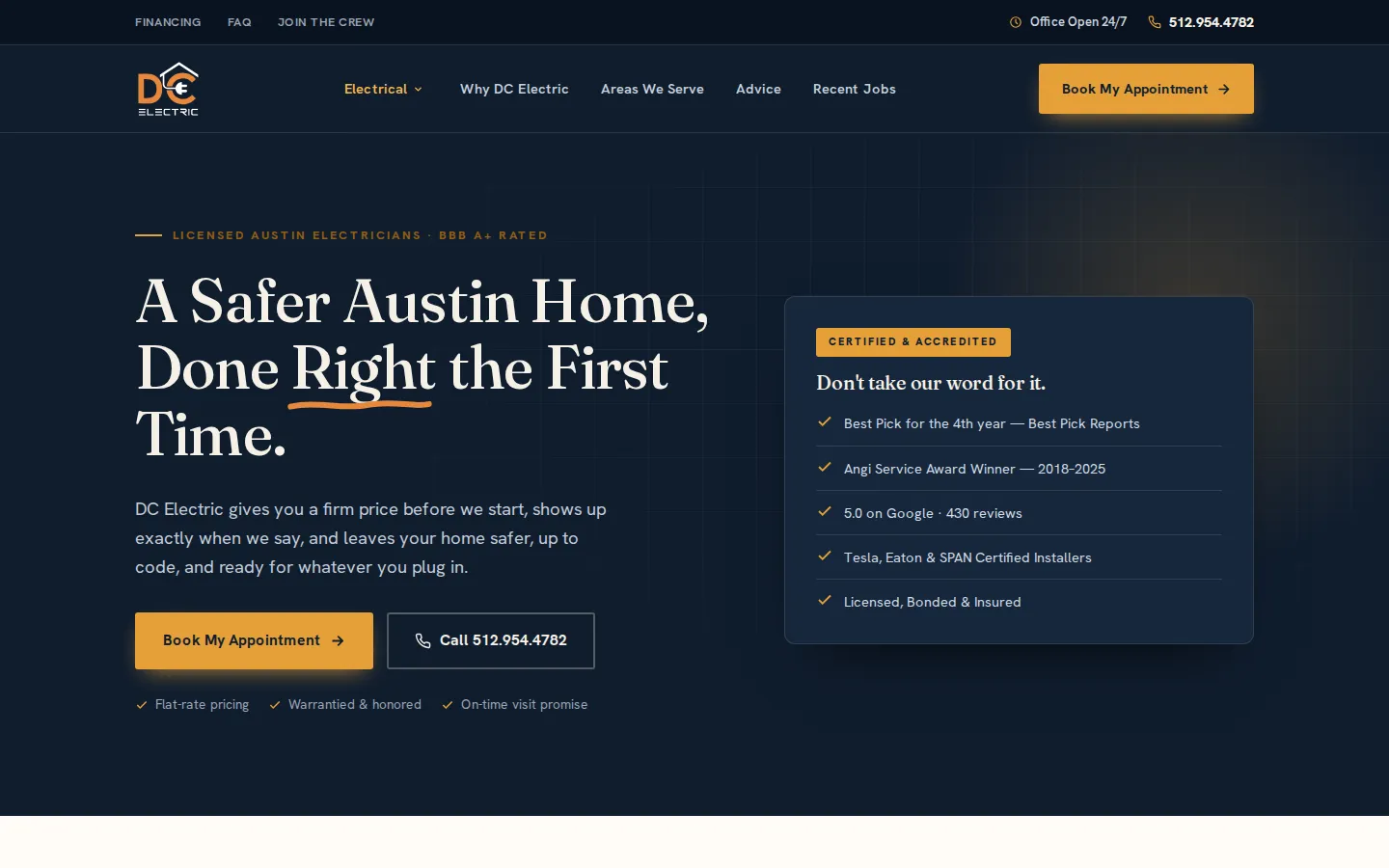
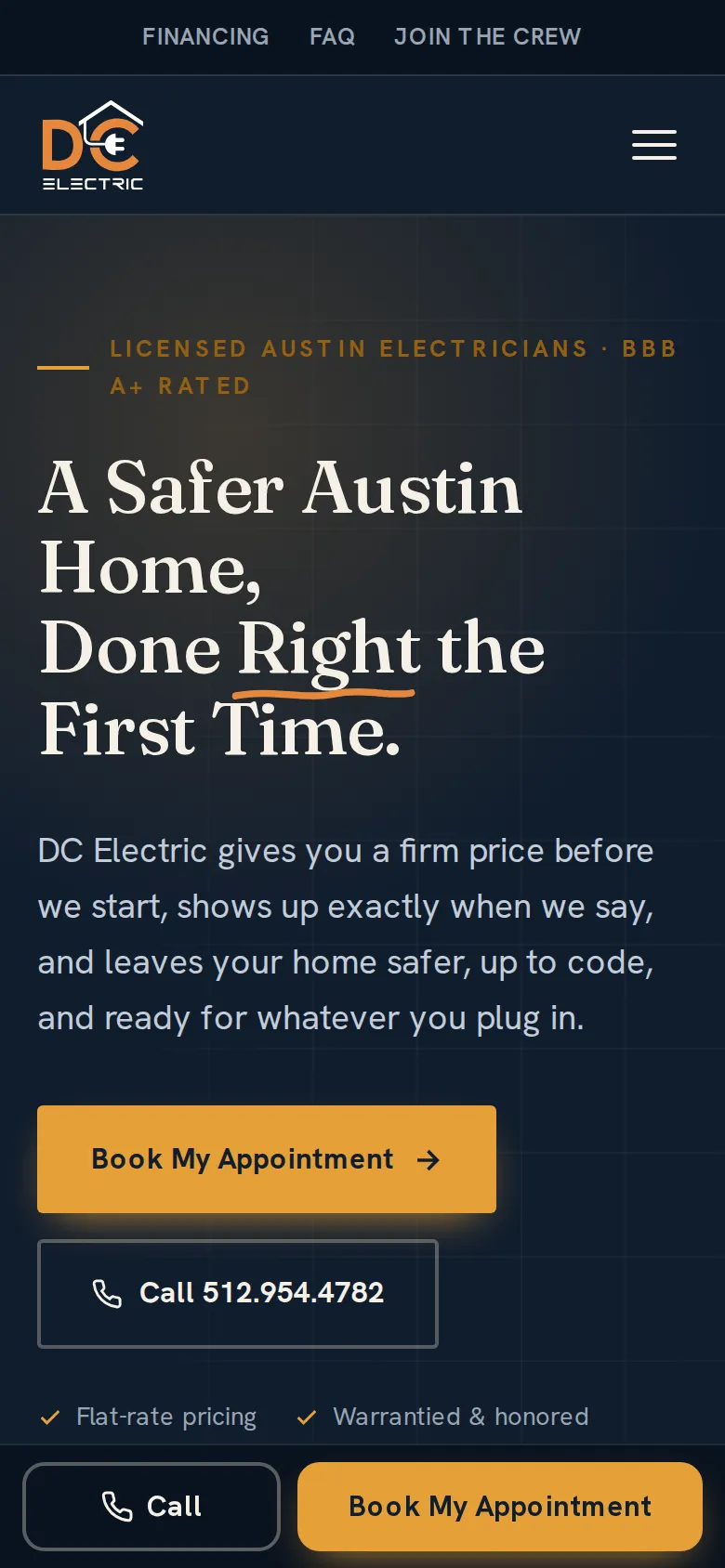
Homepage of calldcelectrical.com, captured by FlashCrafter on Oct 12, 2026. Austin, TX
DC Electric
In the top three on Google Maps for “electrician” at 3 of 9 sampled points around Austin’s center on Oct 11, 2026.
What it does well
- +First screen. A prominent headline, concise explanation, and contrasting buttons make the homeowner benefit and next steps easy to grasp.
- +Call to action. Clickable phone links give visitors a direct route to contact the team.
- +Trust. Specific review counts, award dates, and installer certifications give visitors concrete reasons to feel confident.
- +Services. Service descriptions connect familiar household problems with the electrical work that addresses them.
- +Trust. Clear pricing and arrival commitments reduce uncertainty before a homeowner books.
- +On a phone. Large stacked buttons and a bottom action bar keep calling and booking easy to find on a phone.
To borrow: Pair a clear homeowner benefit with specific trust evidence, straightforward commitments, and prominent call and booking options on both desktop and mobile.
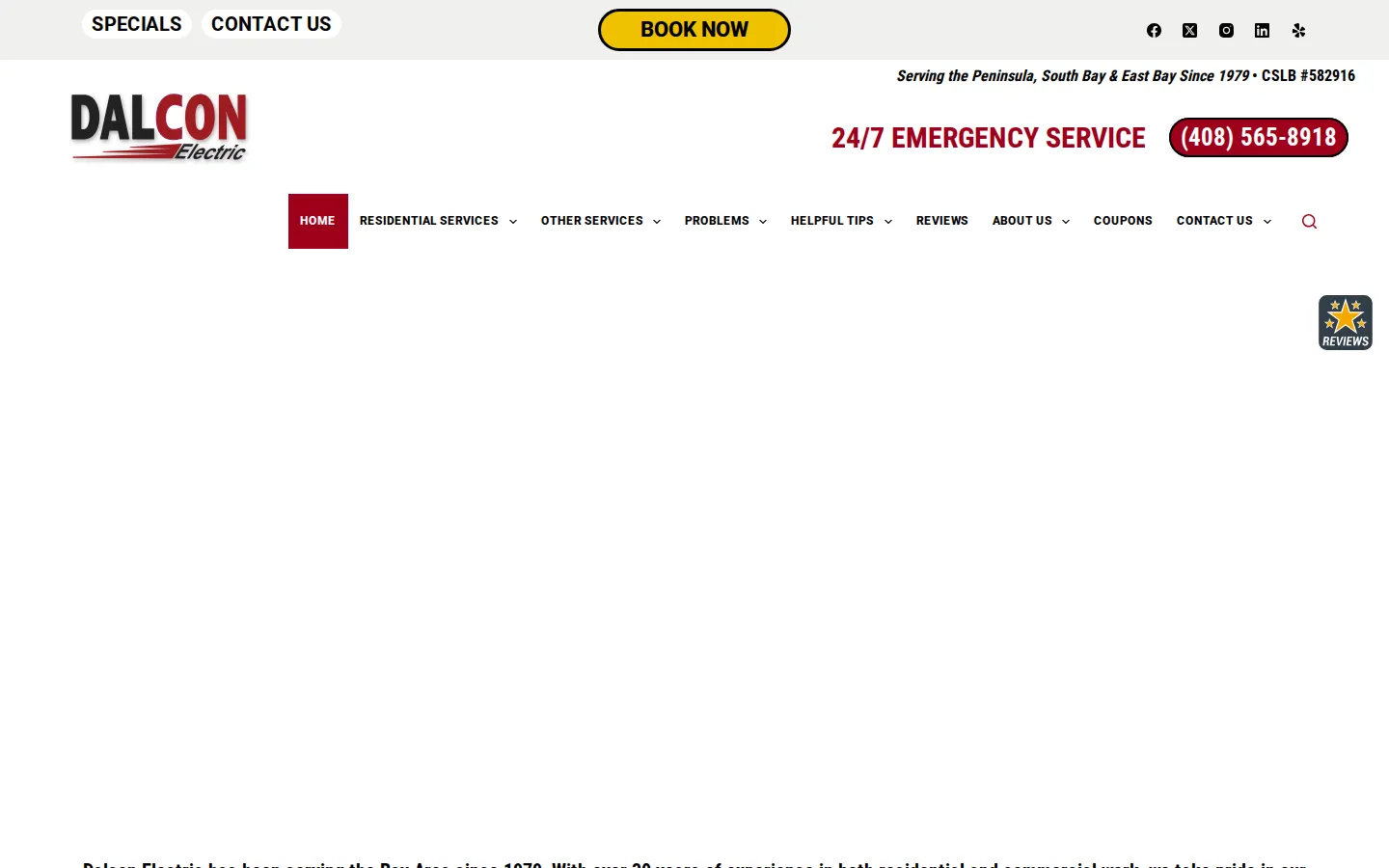
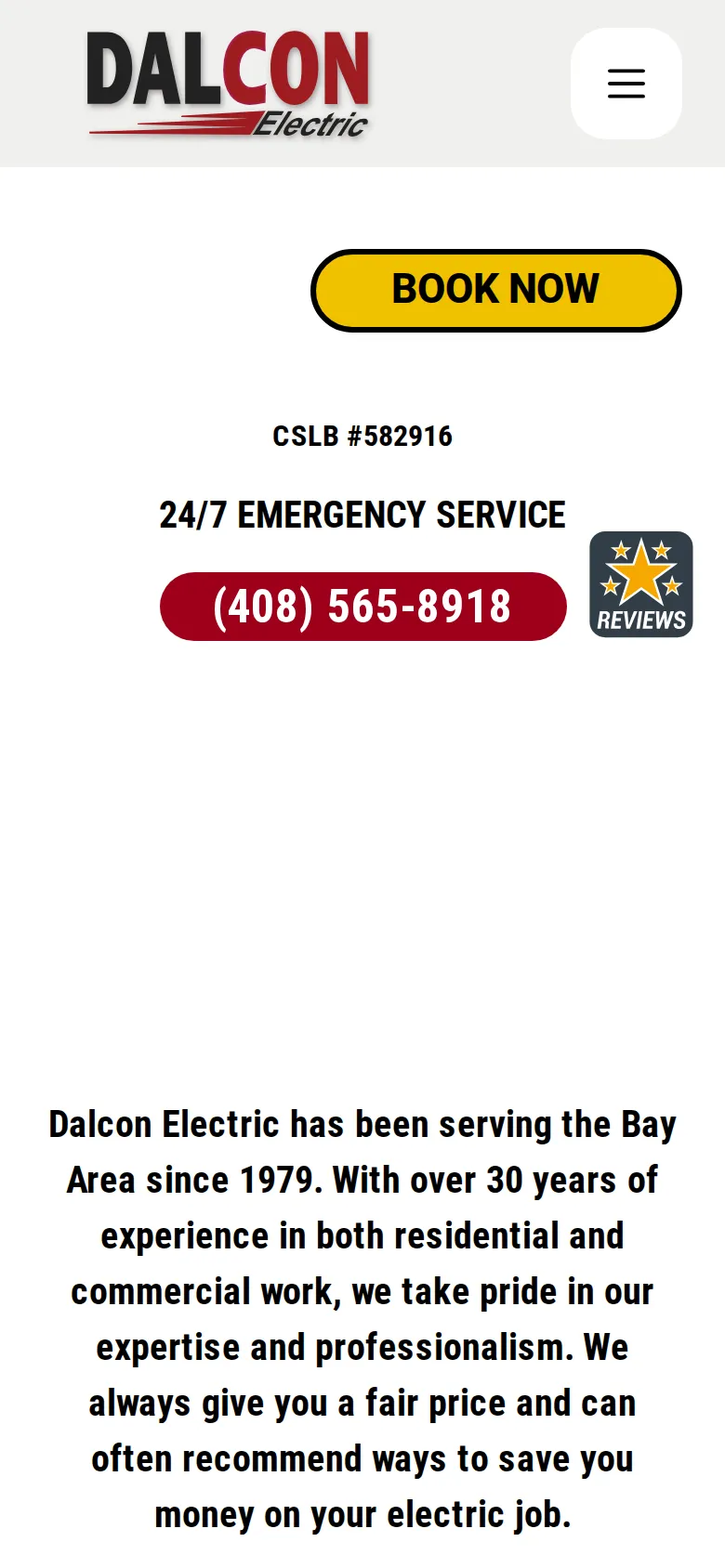
Homepage of dalconelectric.com, captured by FlashCrafter on Oct 12, 2026. San Jose, CA
Dalcon Electric
In the top three on Google Maps for “electrician” at 3 of 9 sampled points around San Jose’s center on Oct 11, 2026.
What it does well
- +First screen. A bright booking button and prominent phone number make the next step easy to spot.
- +Trust. The header pairs a contractor license number with a long operating history and a clear regional service area.
- +Call to action. A clickable telephone number lets visitors move directly from browsing to calling.
- +On a phone. The mobile opening gives booking and calling large, visually distinct targets beneath a simple menu button.
- +Services. Specific service listings help visitors recognize both everyday electrical needs and larger upgrades.
- +Call to action. An inquiry form provides another way to contact the business alongside the phone and booking options.
To borrow: Pair prominent booking and calling options with visible license details and specific service listings to help visitors choose a service and make contact.
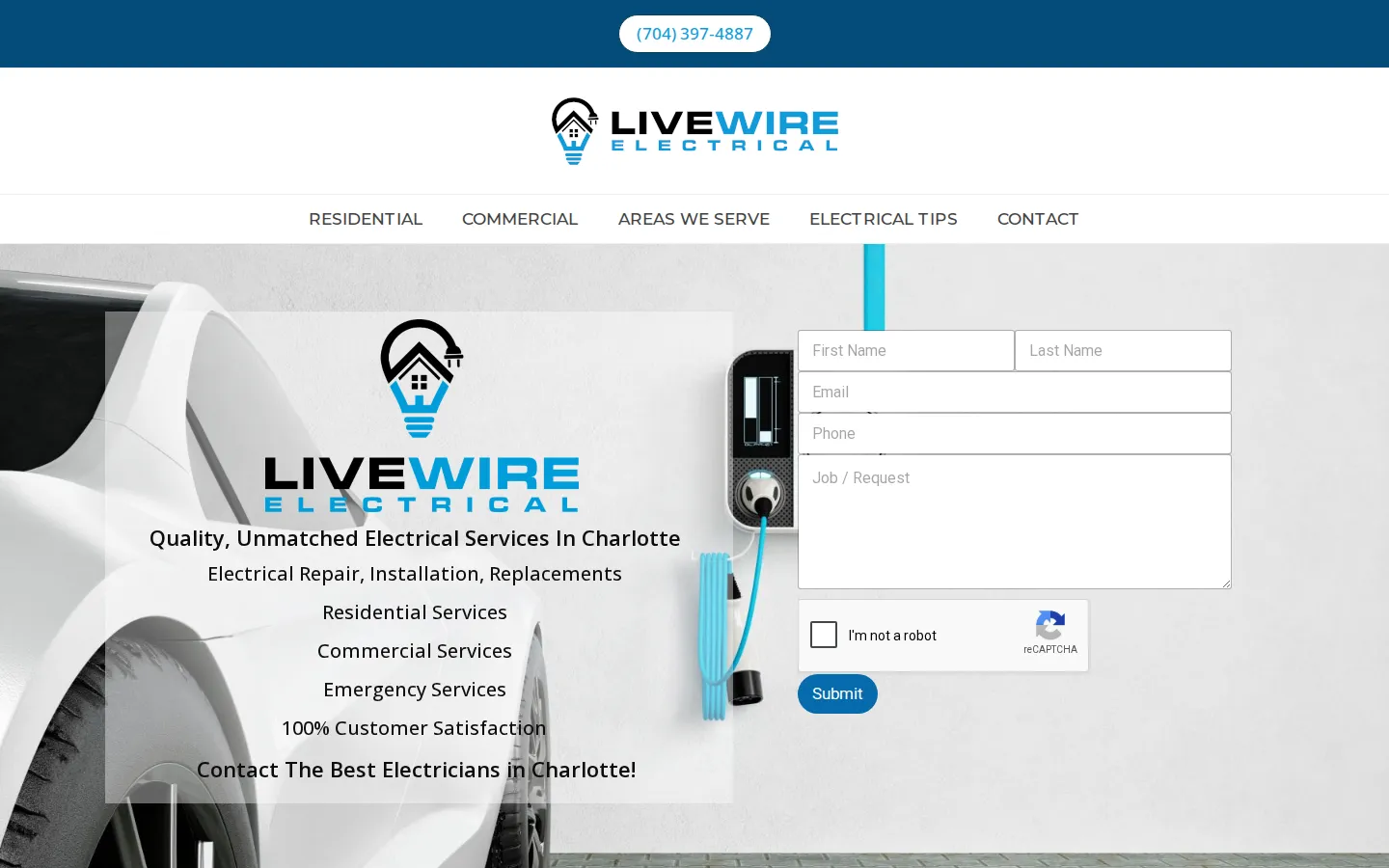
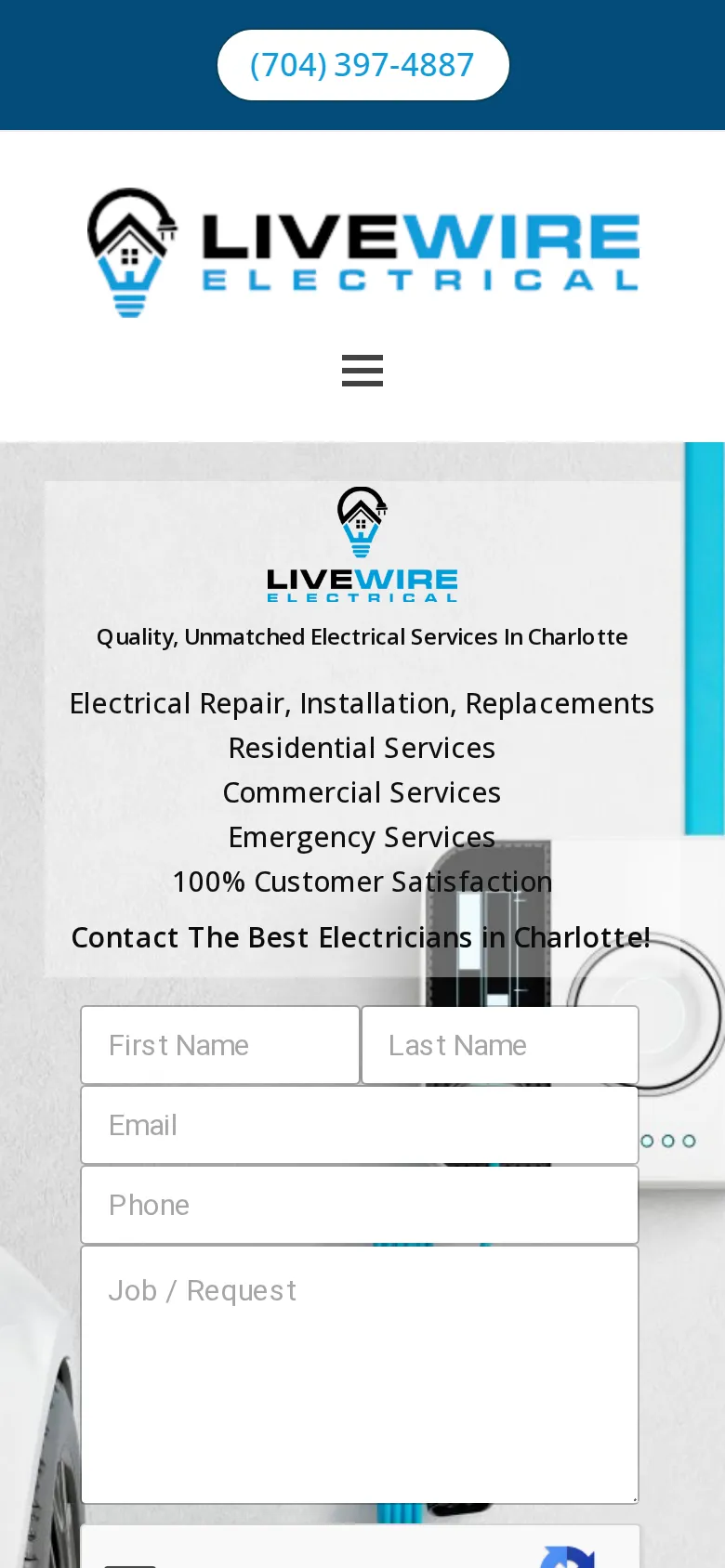
Homepage of livewireelectricalcharlotte.com, captured by FlashCrafter on Oct 12, 2026. Charlotte, NC
LiveWire Electrical
In the top three on Google Maps for “electrician” at 5 of 9 sampled points around Charlotte’s center on Oct 11, 2026.
What it does well
- +First screen. The opening headline immediately identifies the trade and city, helping local visitors confirm relevance.
- +Call to action. A clickable phone number appears in the first mobile screen, giving visitors a direct way to make contact.
- +Call to action. The desktop opening pairs the service introduction with a visible request form, making enquiries easy to start.
- +Services. Specific service choices help visitors recognize both everyday electrical work and specialist installation needs.
- +Trust. A review summary provides a quick reputation signal supported by a substantial review count.
- +Navigation. The desktop menu clearly separates residential work, commercial work, service areas, advice, and contact information.
To borrow: Pair a clear local service headline with a prominent phone number, an enquiry form, specific service choices, and visible review evidence.
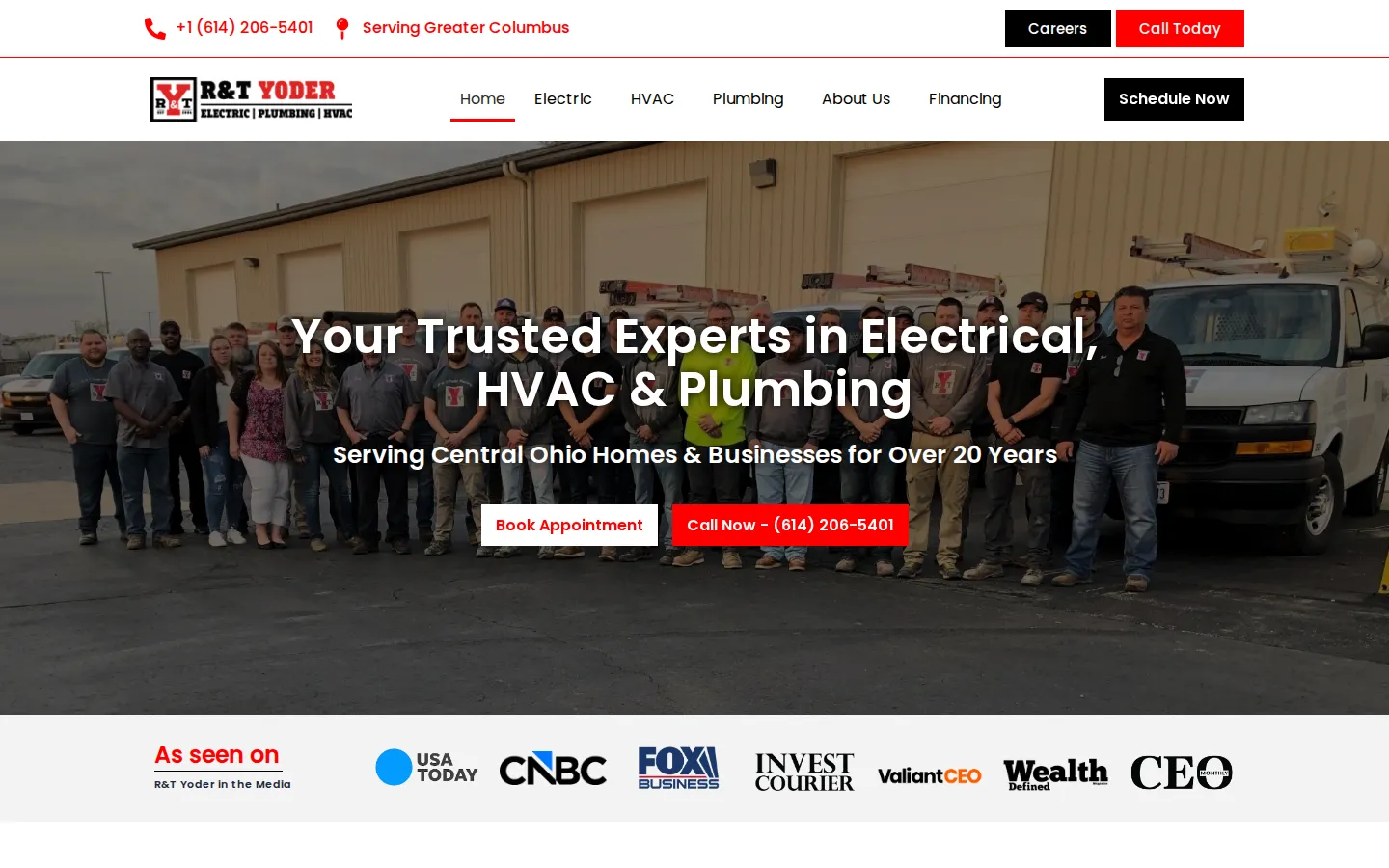

Homepage of rtyoder.com, captured by FlashCrafter on Oct 12, 2026. Columbus, OH
R & T Yoder Electric, Inc - Central Columbus
In the top three on Google Maps for “electrician” at 2 of 9 sampled points around Columbus’s center on Oct 11, 2026.
What it does well
- +First screen. The opening headline quickly establishes the trades offered and the local homes and businesses served.
- +Call to action. Clickable phone access gives visitors a direct route to contact the business.
- +On a phone. Large, vertically stacked appointment and call buttons make the main actions easy to spot on a phone.
- +Navigation. The desktop menu separates the main trades and keeps scheduling prominent beside the navigation.
- +Services. Concrete electrical project examples help visitors recognize whether the team can handle their needs.
- +Trust. Published trade license numbers give visitors specific credentials they can verify.
To borrow: Pair a clear local service headline with prominent call and booking options, concrete project examples, and verifiable credentials.
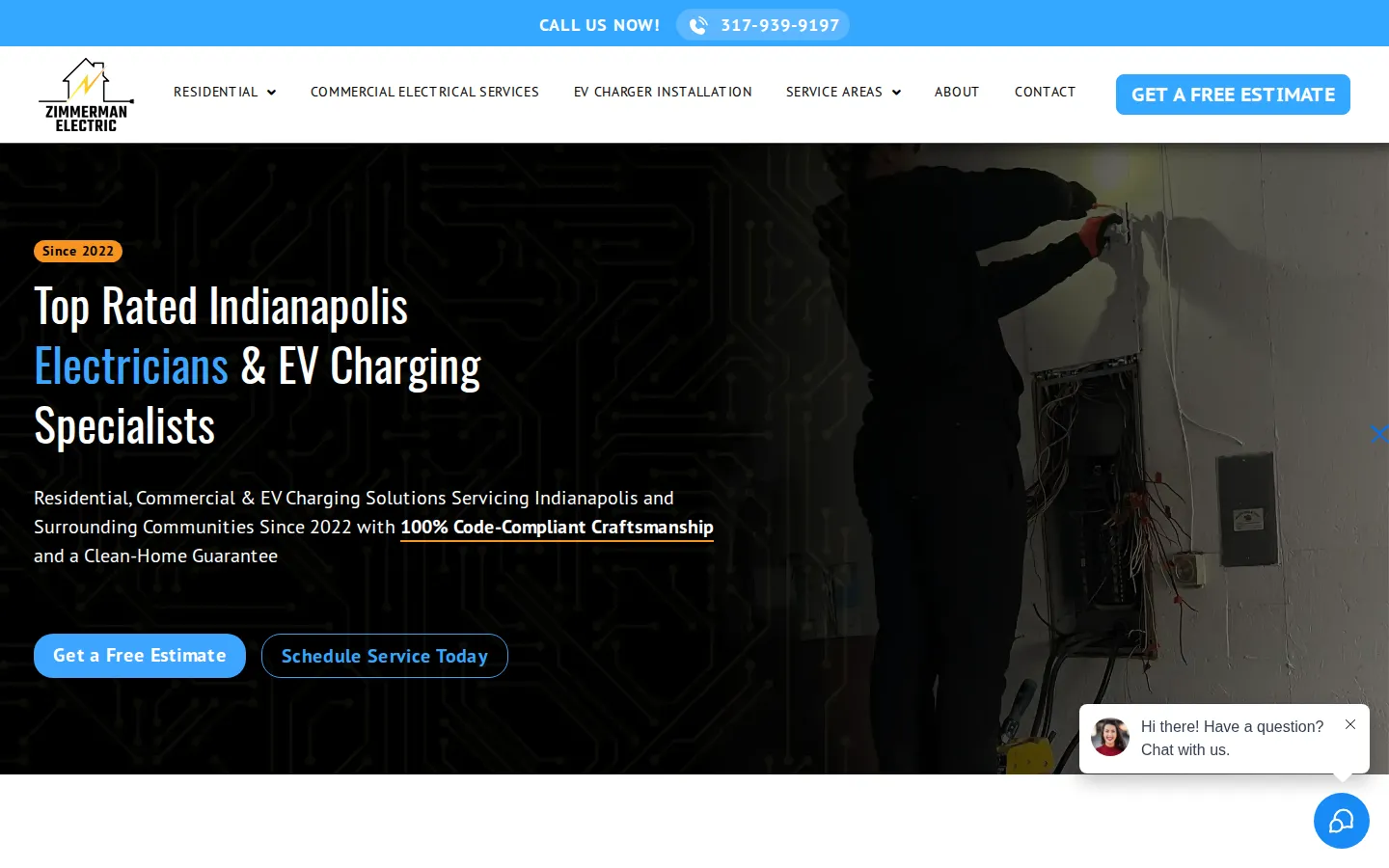
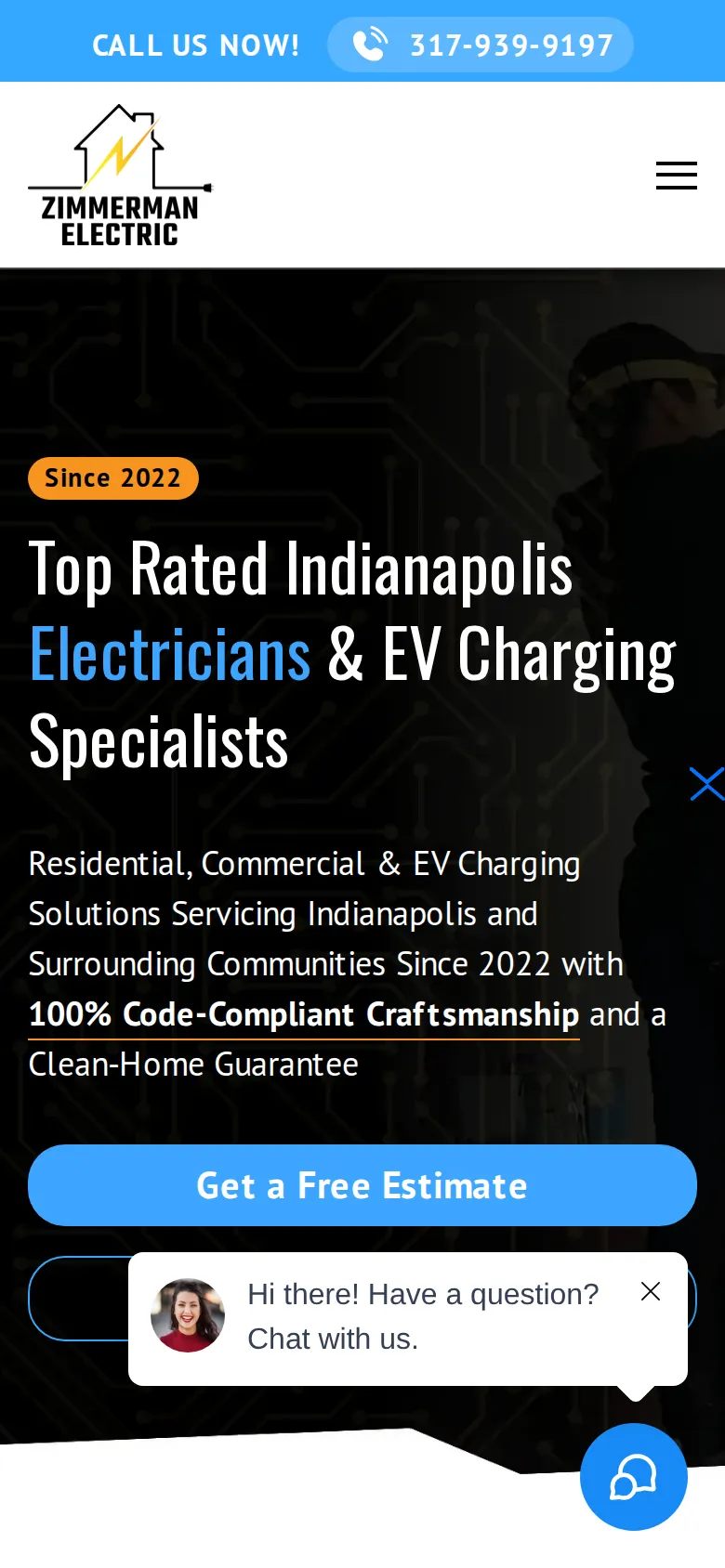
Homepage of zimmermanelectricindy.com, captured by FlashCrafter on Oct 12, 2026. Indianapolis, IN
Zimmerman Electric Indy
In the top three on Google Maps for “electrician” at 6 of 9 sampled points around Indianapolis’s center on Oct 11, 2026.
What it does well
- +First screen. The opening headline immediately identifies the local market and electrical specialties, with strong contrast against the work photo.
- +Call to action. Visitors can choose between requesting an estimate and scheduling service directly from the opening section.
- +On a phone. A tap-to-call option appears in the first mobile screen, making phone contact easy to find.
- +Services. Service descriptions connect electrical work to practical needs, including repairs, remodels, lighting, and safety checks.
- +Trust. Specific workmanship and cleanup promises give visitors concrete reasons to feel comfortable requesting help.
- +Call to action. The estimate section explains the response timeframe and quote terms, helping visitors understand what follows their inquiry.
To borrow: Pair a clear local service headline with prominent contact options, concrete workmanship promises, and a stated response timeframe.
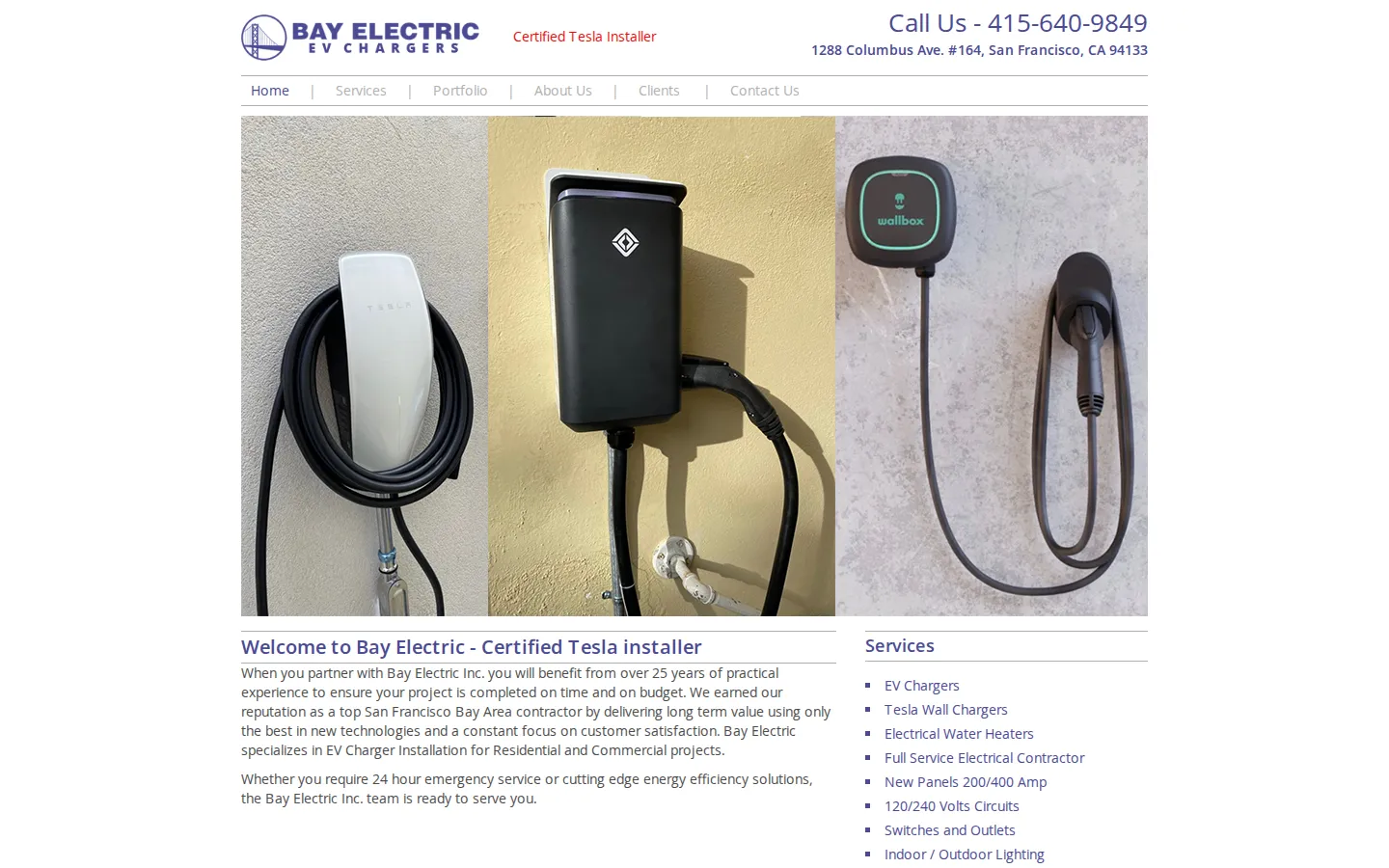
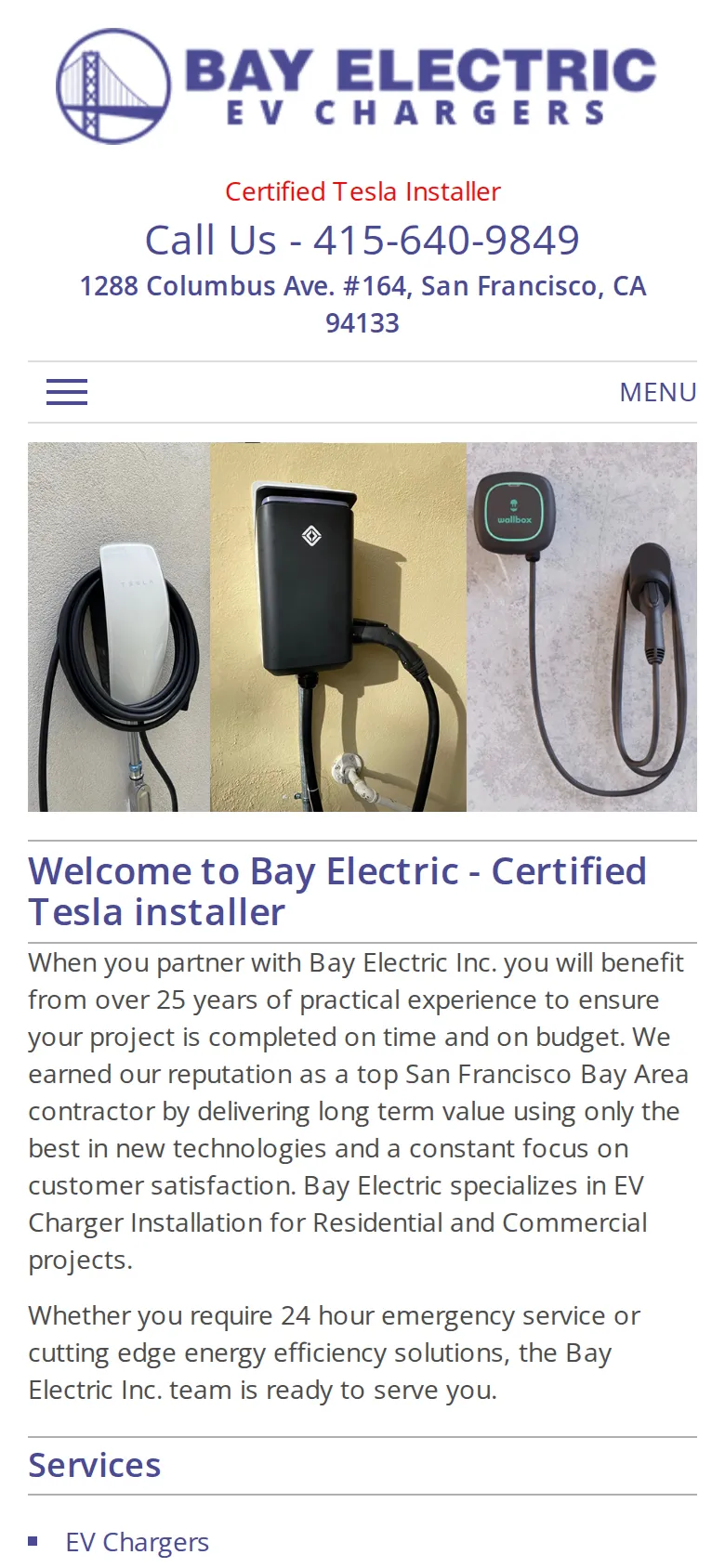
Homepage of bayelectricsf.com, captured by FlashCrafter on Oct 12, 2026. San Francisco, CA
Bay Electric - Electrical Contractors
In the top three on Google Maps for “electrician” at 3 of 9 sampled points around San Francisco’s center on Oct 11, 2026.
What it does well
- +First screen. A large installation photo gives visitors an immediate visual sense of the work, while the header keeps contact details prominent.
- +Call to action. A tappable phone number appears in the first mobile screen, making it easy to start a conversation.
- +Trust. Publishing a license number gives visitors a concrete professional credential to check.
- +Services. Specific service names help visitors quickly match their electrical needs to the work offered.
- +Navigation. Clearly labeled links give visitors direct routes to services, project examples, company information and contact details.
- +On a phone. The mobile layout stacks content into a readable single column and presents navigation through a clearly labeled menu.
To borrow: Pair prominent installation photos with an immediately accessible phone number, clear service names and a visible license number.
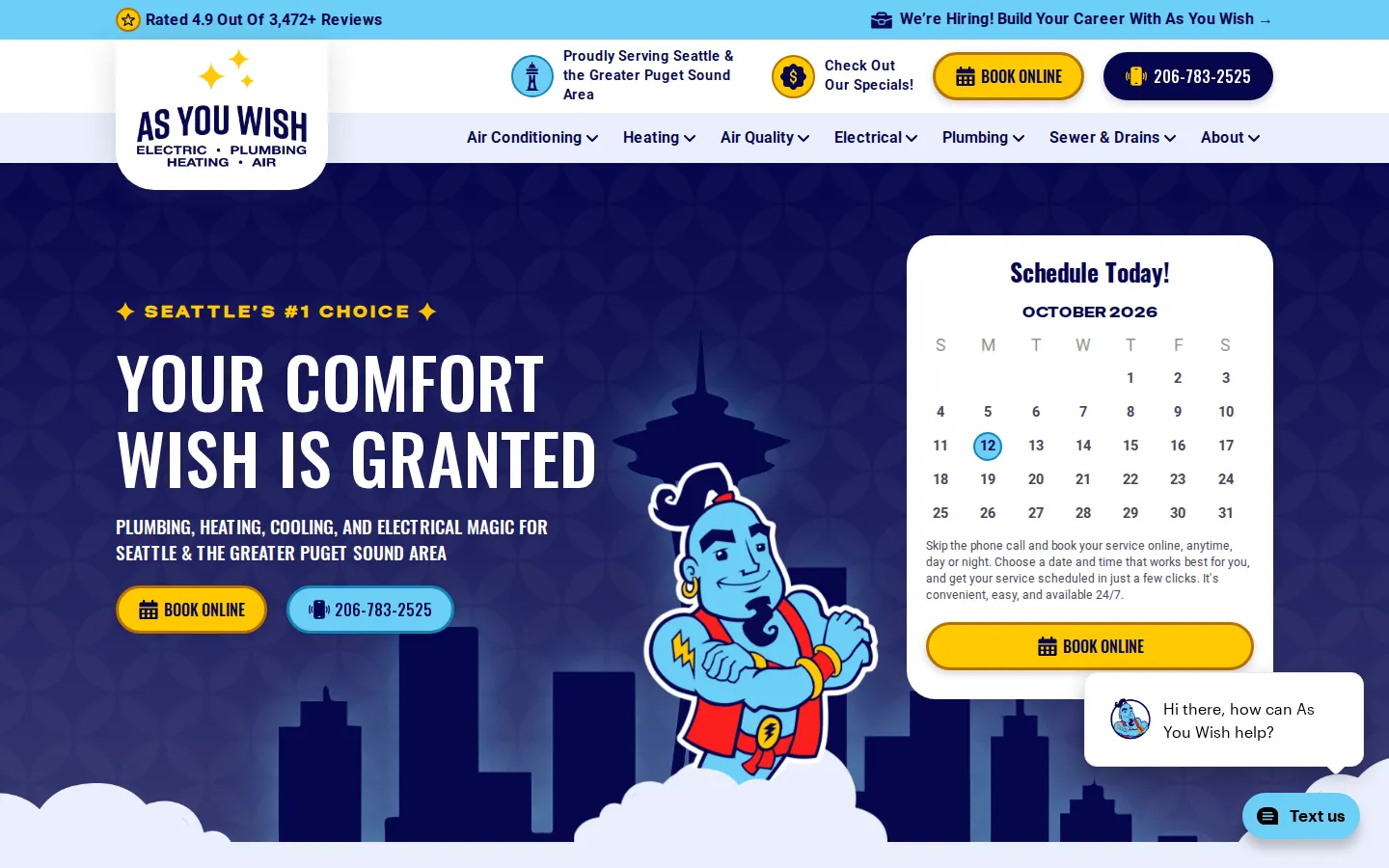
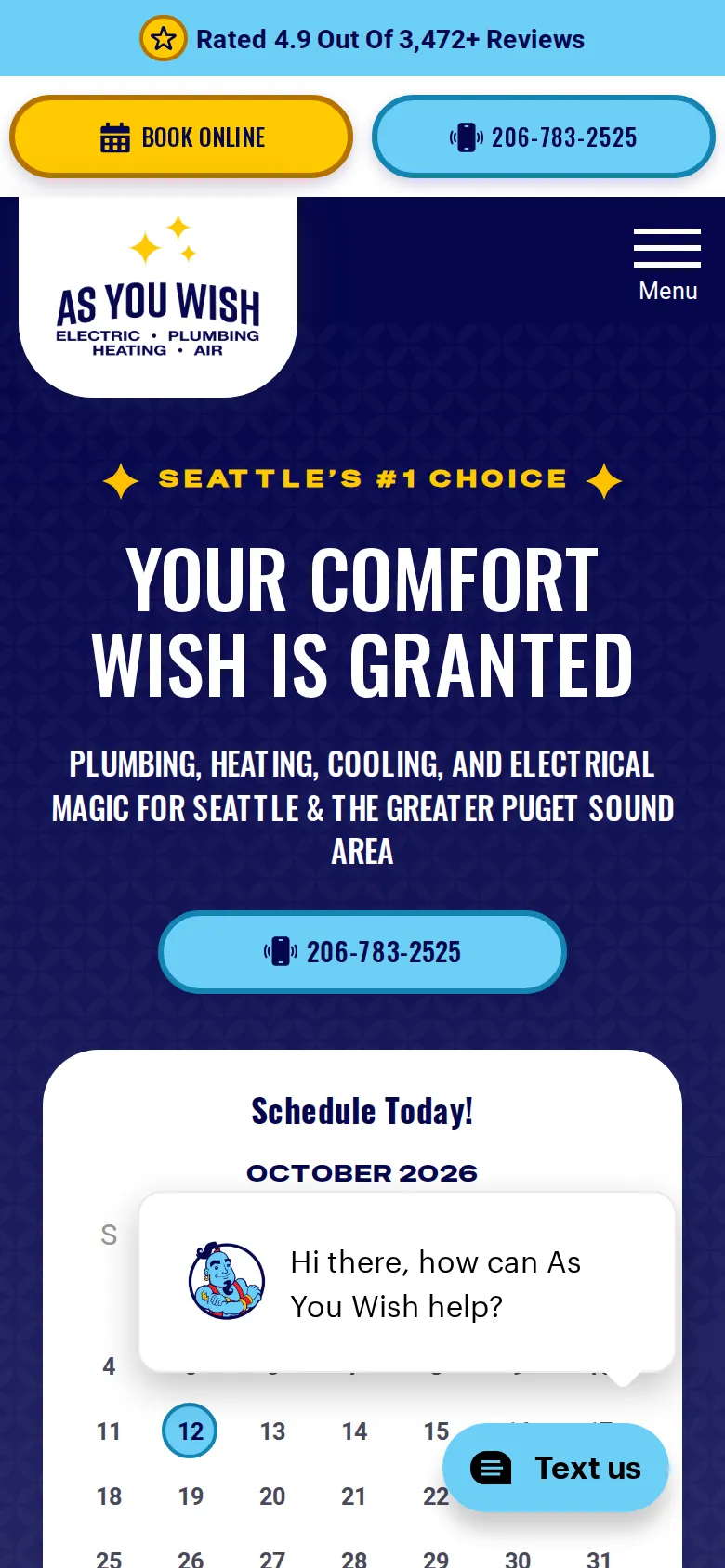
Homepage of asyouwishelectric.com, captured by FlashCrafter on Oct 12, 2026. Seattle, WA
As You Wish Electric, Plumbing, Heating & Air
In the top three on Google Maps for “electrician” at 5 of 9 sampled points around Seattle’s center on Oct 11, 2026.
What it does well
- +First screen. Bold typography, a distinctive mascot, and contrasting buttons give the opening screen a memorable identity and clear next steps.
- +Call to action. Online scheduling lets visitors choose a convenient appointment without needing to call during business hours.
- +On a phone. A phone link appears in the first mobile screen, making direct contact readily accessible.
- +Trust. A prominently stated rating and substantial review count give visitors concrete social proof.
- +Services. Specific electrical service options help homeowners recognize whether their particular project is covered.
- +Trust. An explicit satisfaction guarantee and transparent pricing commitment address common concerns before booking.
To borrow: Pair a distinctive opening screen with visible phone and booking options, specific electrical services, and concrete reassurance about reviews, pricing, and guarantees.
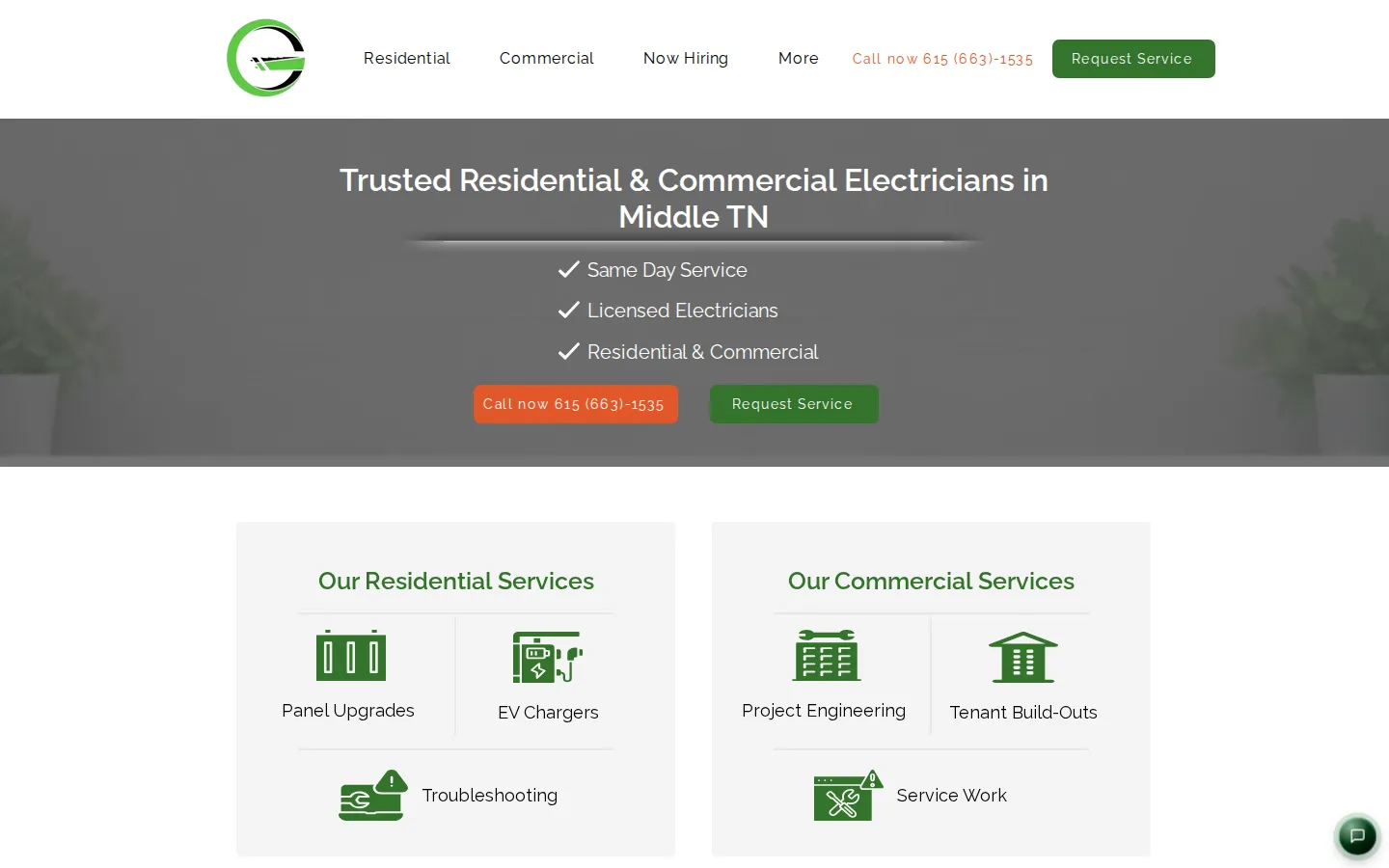
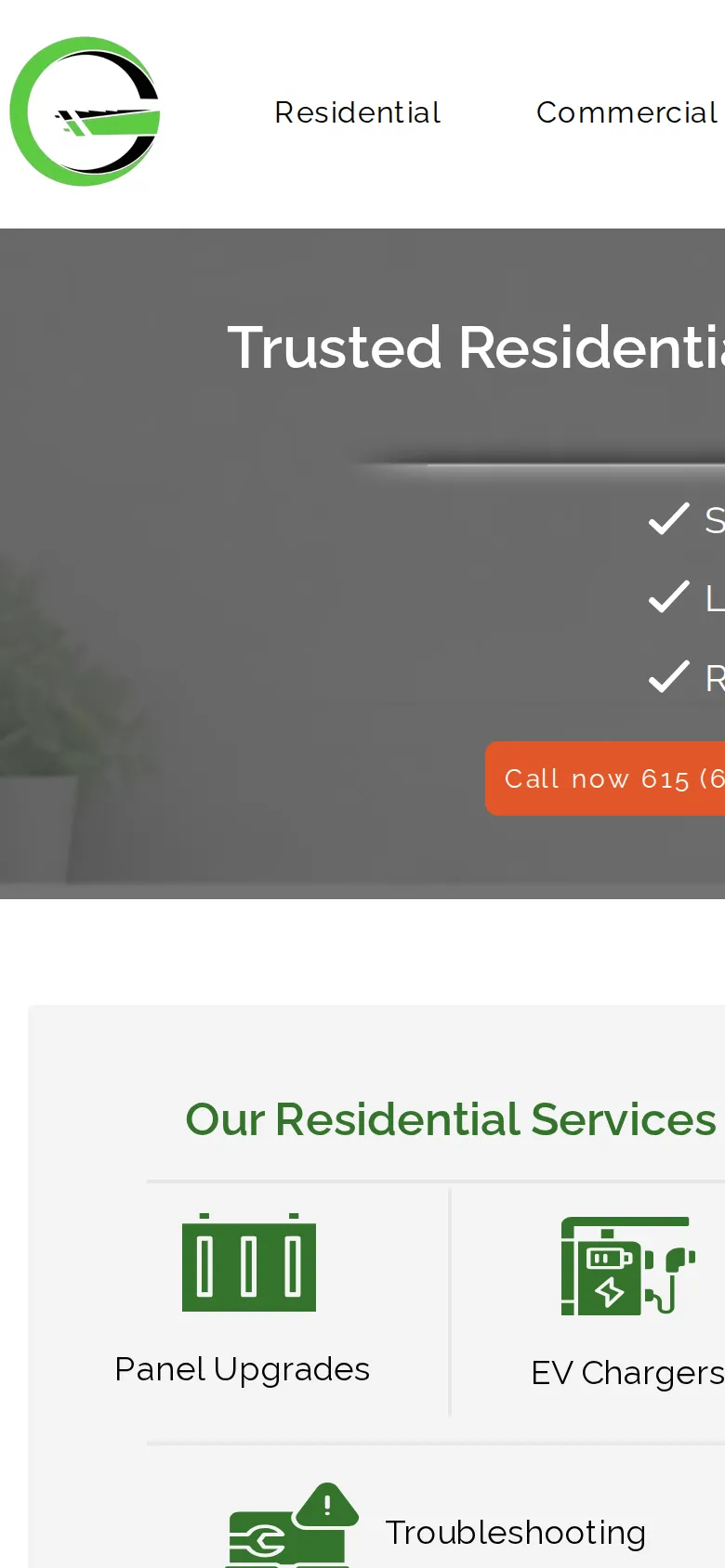
Homepage of greenwayelectric.biz, captured by FlashCrafter on Oct 12, 2026. Nashville, TN
Greenway Electric of Nashville
In the top three on Google Maps for “electrician” at 4 of 9 sampled points around Nashville’s center on Oct 11, 2026.
What it does well
- +First screen. The opening headline identifies both customer types and the service region, helping visitors quickly judge relevance.
- +Call to action. Clickable phone links give visitors a direct way to start a conversation.
- +Services. Separate residential and commercial service groups make the range of work easy to scan.
- +Trust. The page highlights licensing and insurance to reassure homeowners and business customers.
- +Call to action. The contact section offers a free estimate and sets an expectation for prompt replies during business hours.
- +Navigation. The desktop header puts customer categories, hiring, phone contact, and a service request button in one visible row.
To borrow: Pair a clear service-area headline with distinct customer service groups and prominent options to call or request an estimate.
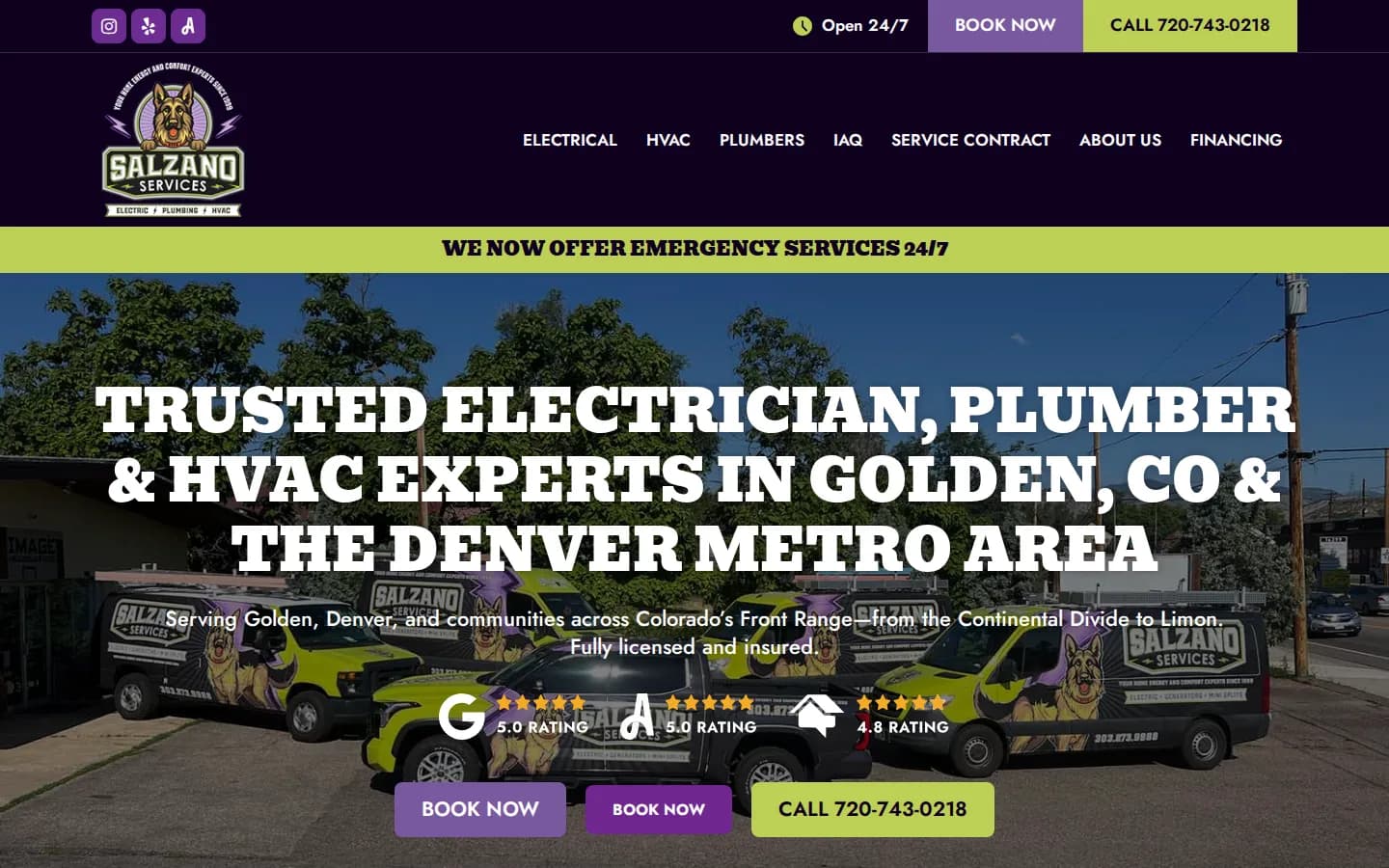
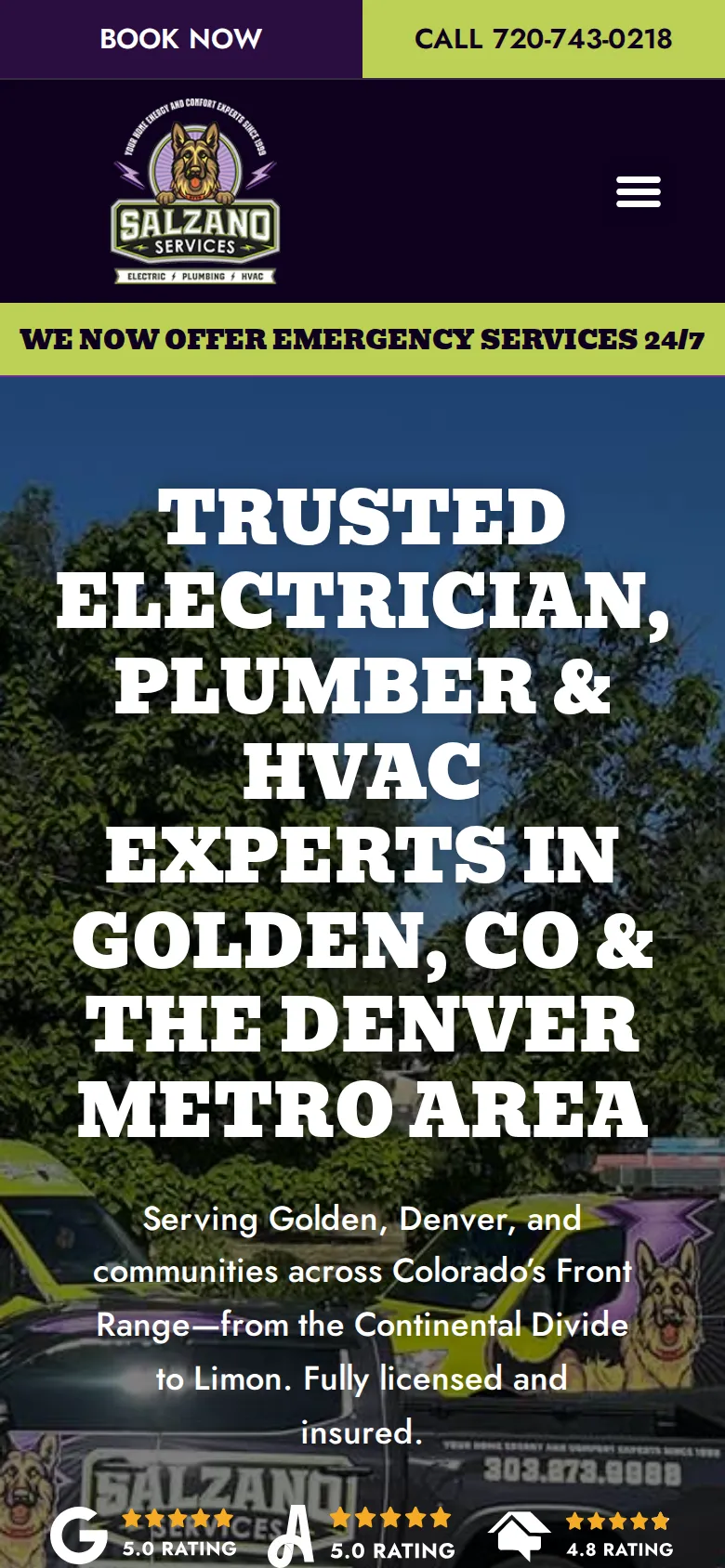
Homepage of salzanoelectric.com, captured by FlashCrafter on Oct 12, 2026. Denver, CO
Salzano Services
In the top three on Google Maps for “electrician” at 3 of 9 sampled points around Denver’s center on Oct 11, 2026.
What it does well
- +First screen. The opening headline immediately identifies the core trades and local coverage, helping visitors judge whether the business fits their needs.
- +Call to action. Clickable phone access gives visitors a direct way to start a service conversation.
- +On a phone. Large, contrasting booking and calling buttons sit at the top of the mobile view, making the next step easy to find.
- +Services. Specific electrical options help customers match their project to an offered service.
- +Trust. A published electrical contractor license number gives visitors a concrete credential they can verify.
- +Trust. Clear pricing and punctuality commitments address common concerns before a customer makes contact.
- +Call to action. Round-the-clock emergency availability gives urgent visitors a clear reason to call immediately.
To borrow: Pair a clear local service headline with prominent mobile contact buttons, specific electrical offerings, and verifiable credentials.
Patterns
What these companies share
- Phone link in the first mobile screen
- Have it18 of 20Without it2 of 20
- Online scheduling embed or link
- Have it5 of 20Without it15 of 20
- Client portal link
- Have it1 of 20Without it19 of 20
- Contact form (message box or three or more fields)
- Have it12 of 20Without it8 of 20
- Structured data (JSON-LD)
- Have it19 of 20Without it1 of 20
- No sideways scrolling on a phone
- Have it16 of 20Without it4 of 20
| Pattern | Have it | Without it |
|---|---|---|
| Phone link in the first mobile screen | 18 of 20 | 2 of 20 |
| Online scheduling embed or link | 5 of 20 | 15 of 20 |
| Client portal link | 1 of 20 | 19 of 20 |
| Contact form (message box or three or more fields) | 12 of 20 | 8 of 20 |
| Structured data (JSON-LD) | 19 of 20 | 1 of 20 |
| No sideways scrolling on a phone | 16 of 20 | 4 of 20 |
Phone links appeared in the first mobile screen at 18 of 20 companies, while online scheduling appeared at 5 of 20 companies, showing different approaches to making contact. Contact forms appeared at 12 of 20 companies, and a client portal link at 1 of 20 companies. Structured data appeared at 19 of 20 companies; 16 of 20 companies had no sideways scrolling on a phone.
Your site
See how your company’s site and local standing compare
Checklist
Check your own homepage
- 01
Check that your opening headline names your electrical trade and service area, with a clear explanation of the household needs you address.
- 02
Open your homepage on a phone and check that visitors can find and tap your phone link within the first screen.
- 03
Make any booking, quote, consultation, or estimate option easy to identify, with wording that clearly describes the action visitors can take.
- 04
Check that your enquiry form is accessible from the homepage and that its purpose is clear beside your other contact options.
- 05
Describe specific electrical services and project examples so visitors can connect your offerings with the work they need.
- 06
Show verifiable license details or business credentials alongside concrete explanations of warranties, guarantees, or workmanship commitments where these apply.
- 07
Use customer review evidence, detailed customer experiences, team photographs, or installation photos to support the claims on your homepage.
- 08
Check your homepage for sideways scrolling on a phone and inspect whether it includes structured data in JSON-LD.
Questions
Frequently asked
Does appearing in Google's top three mean a website is better?
What should I compare in the homepage screenshots?
Should my homepage offer both calling and online booking?
What do the captures show about each business?
Method and limits
How this was measured
FlashCrafter searched Google Maps for “electrician” at 9 points around the center of each of 30 large US cities (cities-us-v2, version 2; US Census Bureau, Vintage 2025 population estimates for incorporated places (July 1, 2025 estimates; file released 2026-05-14)), a 3 by 3 grid 3.2 km apart, on Oct 11, 2026. In each city the electrician that appeared most often in the top three was chosen; ties go to the better average position. 8 of the 20 companies shown were in the top three at two or fewer of the 9 points: the top three is visibility, never first place. If that company’s site could not be captured or did not qualify, the next company in the same city by that measure took its place. A probe samples 9 points, not the whole city, and visibility is not quality.
20 of the 30 cities are represented. Cities were worked through in list order and one company per city is shown, up to 20: 1 city had a company that qualified but was left out at the limit of 20 companies; 1 city had no company that qualified; 8 cities were not reached before that limit.
Before any website was opened, code removed 468 listings with no website; 353 listings that never appeared in the top three; 170 listings in other categories; 63 listings for chains or multi-location businesses (their websites are listed under more than one location or business listing); 13 listings of national franchise or chain brands; 10 listings set aside (directory or social-media pages, or sites that could not be verified as the business’s own). Of 1332 listings considered, 45 sites were tried and 21 qualified; those that did not were 11 sites that could not be opened; 7 sites that blocked the capture; 3 sites that show no licence number, named people or street address; 2 sites that are not businesses of this trade (referral sites, directories or other trades); 1 site that could not be reached. 20 are shown, at most one per city, in city order.
Everything on a card comes from that company’s own website, read on Oct 12, 2026: the page text, a first-screen screenshot at desktop and phone width, and the page structure measured by code. Screenshots are reduced, credited and linked to the company’s site. The notes are FlashCrafter’s own words, each tied to something on the page. Company names are the names on their Google Maps listings. The city on each card is where the Google Maps search was run, which is where the company’s listing appeared; a company may serve clients or be based elsewhere.
These companies are not FlashCrafter clients unless a card says so, did not endorse FlashCrafter, and FlashCrafter does not endorse their services. Nothing here rates or ranks them.
Is this your company? Ask us to remove it or correct something. We act within two business days.
Keep reading
Related
- Electricians marketing
- Best Website Builders For Electricians
- Best CRM For Electricians
- Electricians Marketing Software
- Accountants Website Examples
21 sources, captured 2026-10-12 · show· hide
- Electrified (homepage, captured 2026-10-12)
- United Plumbing Heating Air & Electric (homepage, captured 2026-10-12)
- Mr. Mighty Electric (homepage, captured 2026-10-12)
- Balanced Electric (homepage, captured 2026-10-12)
- Simple Electric (homepage, captured 2026-10-12)
- Prime Electrical Services (homepage, captured 2026-10-12)
- 5G Electric LLC (homepage, captured 2026-10-12)
- Kensington Electric (homepage, captured 2026-10-12)
- Electric Pros (homepage, captured 2026-10-12)
- Buffalo Electric (homepage, captured 2026-10-12)
- Thompson Electric and Air (homepage, captured 2026-10-12)
- DC Electric (homepage, captured 2026-10-12)
- Dalcon Electric (homepage, captured 2026-10-12)
- LiveWire Electrical (homepage, captured 2026-10-12)
- R & T Yoder Electric, Inc - Central Columbus (homepage, captured 2026-10-12)
- Zimmerman Electric Indy (homepage, captured 2026-10-12)
- Bay Electric - Electrical Contractors (homepage, captured 2026-10-12)
- As You Wish Electric, Plumbing, Heating & Air (homepage, captured 2026-10-12)
- Greenway Electric of Nashville (homepage, captured 2026-10-12)
- Salzano Services (homepage, captured 2026-10-12)
- FlashCrafter Briefs: Google Maps probe grid (contract v1)
Vendor pages change. Figures are as published on the capture date; confirm before deciding.